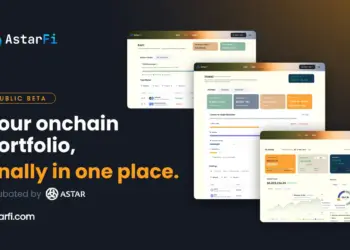




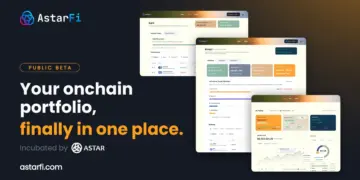






Tokyo, Japan — September 15, 2026 — Astar Fi, the onchain personal finance manager incubated by the Astar Foundation, has officially opened its public beta today, moving the platform from invite-only access to anyone who wants to try it.
The launch targets a problem most crypto holders know intimately: portfolio trackers tell you what you own, but they stop there. Actually doing something with those assets — earning yield, moving into tokenized investments, rebalancing a position — typically means jumping between a handful of DeFi apps, dashboards, and interfaces, each with its own login, risks, and fee structure.
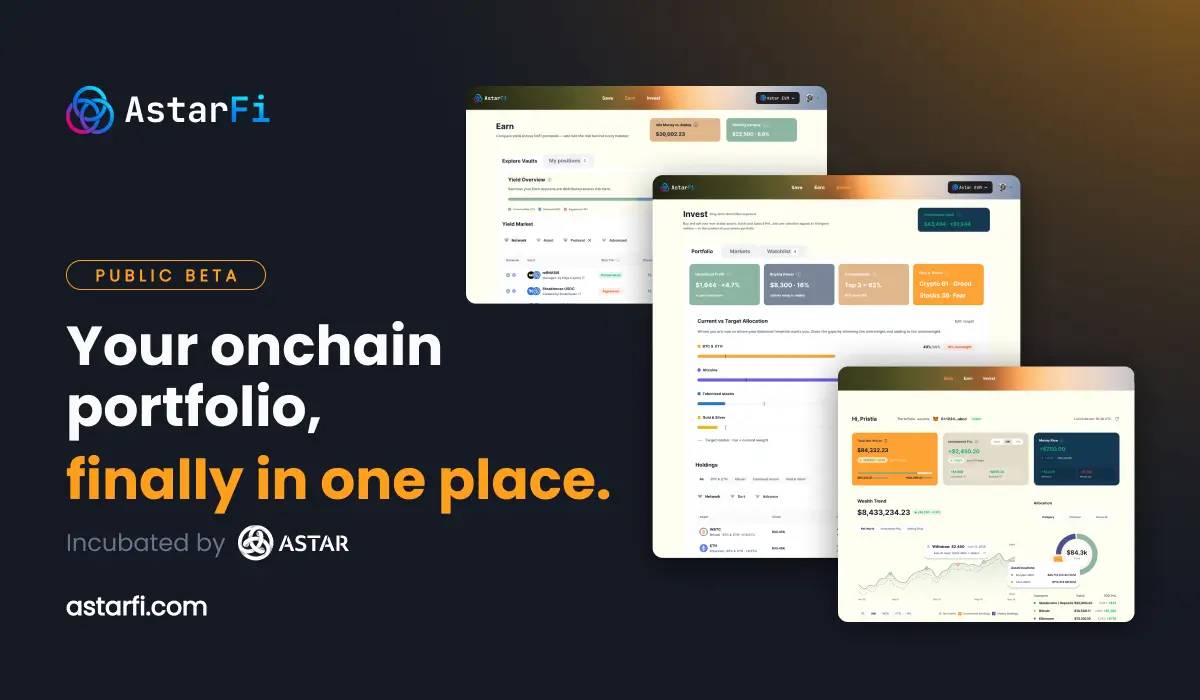
Astar Fi is built to close that gap. It pairs a net-worth dashboard with a curated, risk-rated set of earning and investing opportunities, all accessible from a single interface — and, critically, with assets remaining in the user’s own wallet throughout.
What Astar Fi Actually Does: Three Core Functions
The platform is organized around three distinct experiences, each addressing a different stage of managing onchain wealth.
1. Save — See Everything You Own in One Place
The Save experience is the foundation: a net-worth dashboard that aggregates balances, allocations, trends, inflows and outflows, holdings, and full transaction history. For self-directed holders juggling positions across Ethereum, Base, and other networks, this replaces the patchwork of spreadsheets, block explorers, and half-connected wallet apps that most heavy users currently rely on.
2. Earn — Curated DeFi Vaults With Visible Risk Ratings
The Earn experience provides access to selected DeFi vaults built on three major protocols: Morpho, Aave, and Midas. What distinguishes the presentation is the disclosure layer. Each vault ships with:
Risk tiers and an Astar Fi rating, which can be lowered or have deposits paused if conditions change
Written risk information and key risks, spelled out before you deposit
Fee disclosures, so users know exactly what they’re paying
Named oracles, removing the guesswork about which price feeds a vault depends on
Published contract addresses, allowing anyone to inspect the underlying code before taking action
The current vault set includes 140 Morpho vaults, 31 Aave markets, and 16 Midas products. Curated vaults from firms including Hyperithm, Gauntlet, Steakhouse, Wintermute, and Galaxy are also surfaced.
3. Invest — Crypto and Tokenized Real-World Assets Side by Side
The Invest function brings together 225 crypto assets across Ethereum and Base with 436 tokenized stock and ETF records — a notable bridge between onchain-native holdings and traditional financial products.
The tokenized product lineup reads like a who’s who of institutional finance:
BlackRock through BUIDL
Apollo through ACRED
Fidelity through FDIT
Ondo through OUSG and USDY
Tokenized commodities are represented too: gold via Paxos and silver via Matrixdock. It’s worth being precise here — Astar Fi does not issue or mint any of these assets. It aggregates them, presents them with their underlying information, and lets users act from one interface while custody never leaves their own wallet.
Self-Custody as a Design Principle, Not a Feature
The self-custodial architecture deserves emphasis because it shapes everything else about the product. When assets remain in the user’s own wallet rather than being held by the platform, the risk profile changes fundamentally: there’s no centralized honeypot for attackers, no platform insolvency scenario, and no asking permission to withdraw your own funds.
Access starts with a social login followed by a wallet connection — a friction point deliberately lowered to welcome users who are crypto-fluent but exhausted by wallet management overhead.
Why the Astar Foundation Built This
The rationale comes straight from the top. Maarten Henskens, Head of the Astar Foundation, framed the incubation around a tooling gap he sees across the industry:
“A well-balanced onchain portfolio now holds DeFi positions, tokenized assets, and other digital currencies side by side, and is still managed across different apps. The tools have not caught up with what people are actually holding. That gap is why Astar incubated Astar Fi.”
That quote captures the product thesis in one sentence: the asset side of onchain finance has matured far faster than the management side. Holders now diversify across lending markets, yield vaults, tokenized treasuries, and tokenized commodities — then manage all of it with tools designed for a simpler era.
A Curated Approach Instead of an Open Marketplace
One design choice signals how Astar Fi positions itself relative to DeFi aggregators: it’s deliberately smaller than an open marketplace.
Every asset and vault on the platform is selected and rated by Astar Fi itself. The team can lower a rating or pause deposits if conditions change — a managed, editorial approach to curation rather than the permissionless “list everything” model common in crypto. For the target audience — crypto-fluent, self-directed holders with meaningful onchain assets — this trades some breadth for a meaningful reduction in due-diligence burden.
It’s a philosophy bet: that the next wave of onchain wealth management looks less like an open bazaar and more like a vetted, transparently documented menu.
Public Beta Details: Pricing, Availability, and Roadmap Signals
The practical details for early users:
Pricing: No subscription fee and no trading fee during the public beta
Availability: Open globally, with an initial focus on users in Japan
Access path: Invite-only since August 17, 2026; now open to the public as of September 15, 2026
Architecture: Multichain by design, with network coverage expanding over time
The Japan-first emphasis aligns with Astar’s long-standing roots in the Japanese market, where the foundation has cultivated one of crypto’s most active enterprise and government partnership ecosystems.
Full product documentation is published openly at astarfi.com and astarfi.gitbook.io/documentation — a transparency choice that fits the platform’s disclosure-heavy design philosophy.
Conclusion
Astar Fi’s public beta lands at an interesting moment for the industry. Tokenized real-world assets have gone from curiosity to institutional staple. DeFi lending markets have matured through multiple cycles. Meanwhile, the average holder’s toolkit — a portfolio tracker here, a vault interface there, a DEX aggregator somewhere else — hasn’t kept pace.
By combining net-worth visibility, risk-rated earning opportunities, and institutional-grade tokenized assets in one self-custodial interface, Astar Fi is making a focused argument: the bottleneck in onchain personal finance is no longer access to opportunity, but the ability to evaluate and act on it confidently.
Whether that argument wins over self-directed holders will depend on execution — the quality of the ratings, the reliability of the curation, and how the platform handles the inevitable edge cases of a live multichain product. But as a thesis for what onchain wealth management should look like in 2026, it’s one of the clearest articulations yet. The public beta is live now, and the market will soon render its verdict.
Frequently Asked Questions (FAQs)
What is Astar Fi?
Astar Fi is a self-custodial onchain personal finance manager incubated by the Astar Foundation. It combines a net-worth dashboard with a curated, risk-rated set of DeFi earning opportunities and tokenized investment products, all accessible from a single interface. Users’ assets remain in their own wallets at all times.
When did Astar Fi launch its public beta?
Astar Fi opened its public beta on September 15, 2026. The platform was available on an invite-only basis from August 17, 2026, before opening to the public.
Is Astar Fi free to use?
During the public beta, Astar Fi charges no subscription fee and no trading fee. Pricing beyond the beta period has not been announced.
Which protocols and assets does Astar Fi support?
The Earn experience features vaults built on Morpho (140 vaults), Aave (31 markets), and Midas (16 products). The Invest experience covers 225 crypto assets on Ethereum and Base, plus 436 tokenized stock and ETF records from issuers including BlackRock (BUIDL), Apollo (ACRED), Fidelity (FDIT), and Ondo (OUSG, USDY), along with tokenized gold via Paxos and silver via Matrixdock.
Does Astar Fi custody user funds?
No. Astar Fi is fully self-custodial. Users connect their own wallets, and assets never leave their control. The platform does not hold, issue, or mint any of the assets it surfaces.
How does Astar Fi handle risk disclosure?
Each Earn vault is presented with an Astar Fi risk rating and tier, written risk information, fee disclosures, a named oracle, and the published contract address. Ratings can be lowered or deposits paused if conditions change.
Is Astar Fi available outside Japan?
Yes. The public beta is available globally, though the initial focus is on users in Japan. The platform is multichain by design, with network coverage expanding over time.
Who is Astar Fi designed for?
The product targets crypto-fluent, self-directed holders who manage meaningful onchain assets across multiple protocols and networks, and who want to evaluate and act on earning and investing opportunities without navigating numerous separate DeFi applications.
Where can I find Astar Fi documentation?
Full product documentation is available at astarfi.com and astarfi.gitbook.io/documentation, including details on supported assets, vault ratings, and platform mechanics.