
















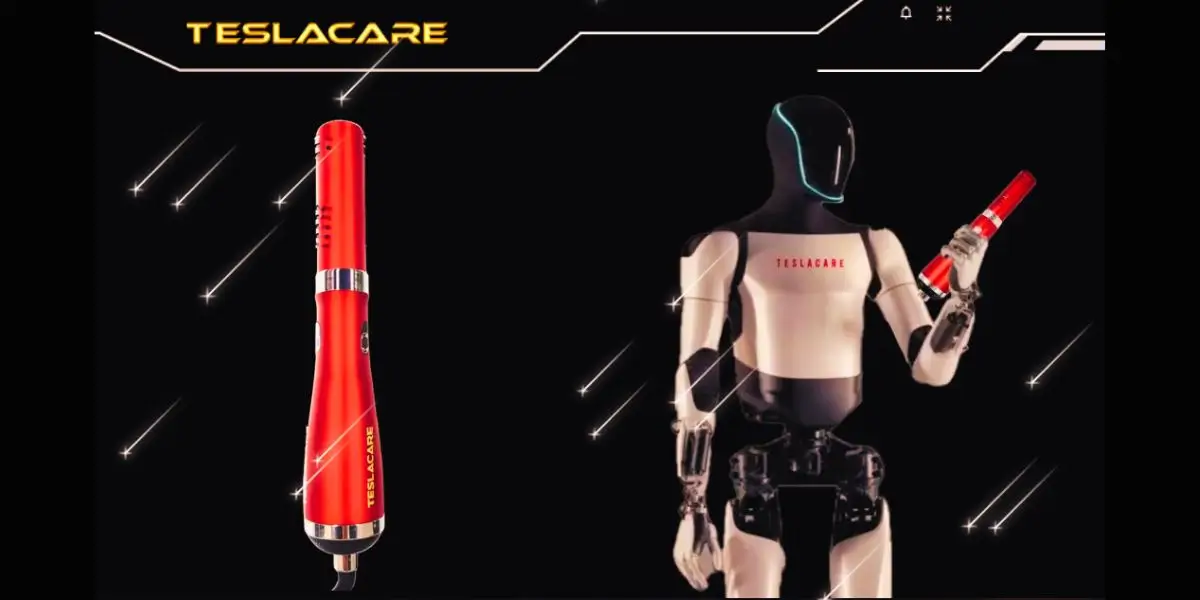
Scroll through wellness tech feeds in 2026 and you’ll see the same promise over and over: a handheld device, a few minutes a day, and your body’s “natural healing potential” unlocked. Brands like Teslacare, iTeraCare, and others are marketing terahertz (THz) technology as the next frontier of home-based health optimization.
But behind the buzzwords—“quantum-inspired”, “frequency therapy”, “energy healing”—there’s a more complicated reality. Terahertz waves are real. The physics is real. The research is real. The question is: how much of what these devices promise is supported by actual science, and how much is marketing running ahead of the evidence?
This article breaks down what terahertz technology actually is, what peer-reviewed research says about health applications, how devices like Teslacare position themselves, and how to think critically about this corner of wellness tech in 2026.
What Are Terahertz Waves?
Terahertz waves live in a narrow slice of the electromagnetic spectrum between microwaves and infrared light, typically defined as 0.1 to 10 terahertz (THz).
Key properties:
- Non-ionizing: Unlike X-rays, THz radiation doesn’t carry enough energy to strip electrons from atoms or directly damage DNA.
- Strongly absorbed by water: This limits penetration depth in biological tissues, making THz most useful for superficial layers like skin, eyes, and teeth.
- Sensitive to molecular composition: THz waves interact with vibrations and rotations of molecules, which makes them valuable for spectroscopy and identifying different materials.
Because of these properties, terahertz technology has serious, established uses in:
- Security screening (airports, scanners)
- Material inspection and quality control
- Spectroscopy for chemistry and pharmaceuticals
- Emerging medical imaging applications
So the technology itself is not pseudoscience. The question is how it’s being applied—and sold—to consumers.
What Does Real Science Say About Terahertz and Health?
When you move from physics labs to health claims, it’s crucial to separate diagnostic and imaging research from therapeutic claims.
Proven and Emerging Applications
Peer-reviewed research and industry reports highlight several areas where terahertz biophotonics shows genuine promise:
- Cancer imaging:
- Distinguishing tumor margins in breast cancer tissue
- Imaging skin cancers (basal cell carcinoma, melanoma) with high contrast
- Tissue and wound assessment:
- Evaluating burn depth
- Monitoring healing in skin and corneal tissues
- Dental and ophthalmic imaging:
- Detecting early caries
- Imaging corneal hydration and structure
- Drug discovery and molecular analysis:
- Studying protein conformations
- Analyzing pharmaceutical formulations
These applications rely on THz as a measurement and imaging tool, not as a “healing ray”. The value is in seeing and characterizing tissues, not in changing them.
Therapeutic Claims: Early and Speculative
Some researchers are exploring whether THz exposure might have biological effects beyond imaging:
- Stroke rehabilitation:
- Small studies suggest THz therapy might improve local blood flow, reduce neuroinflammation, and support motor recovery.
- These are early-stage trials, often with limited sample sizes and short follow-up periods.
- Pain and inflammation:
- Anecdotal reports and small pilots describe reduced pain and improved mobility.
- Rigorous, large-scale randomized controlled trials are still lacking.
The scientific consensus in reviews up to 2026 is cautious:
Terahertz technology has clear potential in healthcare, but there are still big unanswered questions about where it can truly make a clinical impact—especially as a therapeutic modality.
In other words: promising, but not proven as a general treatment.
What Is Teslacare (and Similar Devices)?
This is where the narrative shifts from lab benches to Instagram reels and wellness blogs.
How These Devices Are Marketed
Brands like Teslacare describe their products as:
- Handheld, portable “wellness” devices
- Using terahertz frequency technology, sometimes combined with phrases like:
- “Quantum-inspired technology”
- “Optical quartz technology”
- “Terahertz magnetic wave frequency”
Typical marketing claims include:
- “Unlock your body’s natural healing potential”
- “Support your well-being” and “relaxation”
- “Improve energy flow” and “vitality”
- Safe for home use, no needles, no complicated setups
The devices often look like:
- A wand or blower that emits warm air and light
- Used by waving over different body parts for several minutes a day
- Priced as premium wellness tech, positioned as an investment in long-term health
The Gap Between Marketing and Published Research
If you search for Teslacare or similar brands in scientific databases, you’ll find:
- Lots of social media posts, influencer reviews, and brand videos
- Very few, if any, peer-reviewed clinical trials specifically on these devices
- Limited transparency about:
- Exact output power and frequency spectrum
- Safety testing over long-term use
- Controlled studies showing clinical benefits
That doesn’t automatically mean the devices are useless or dangerous. But it does mean the evidence base is far weaker than the marketing suggests.
Marketing Claims vs Scientific Evidence
Let’s put some common claims side by side with what the science actually supports.
Claim: “Unlock Your Body’s Natural Healing Potential”
- Marketing language: Vague, all-encompassing, implies broad therapeutic effects.
- Scientific reality:
- No large, peer-reviewed trials show that consumer terahertz devices “unlock healing potential” across multiple conditions.
- Most robust data is in imaging and diagnostics, not in triggering systemic healing.
Claim: “Terahertz + Quantum Technology for Well-Being”
- Marketing language: “Quantum” is used to signal cutting-edge, almost magical sophistication.
- Scientific reality:
- Real terahertz biophotonics research talks about molecular vibrations, spectroscopy, and tissue imaging, not “quantum energy” in a mystical sense.
- “Quantum” in this context is often a buzzword, not a precise technical description.
Claim: “Safe, Non-Invasive Therapy for Many Conditions”
- Marketing language: Implies both safety and efficacy across a wide range of issues (pain, circulation, recovery, vitality).
- Scientific reality:
- THz radiation is non-ionizing and generally considered safe at low powers, especially for short exposures.
- Safety ≠ efficacy. Just because something is unlikely to harm doesn’t mean it reliably treats specific conditions.
- For most wellness claims, clinical evidence is preliminary or absent.
Claim: “Improved Energy Flow and Relaxation”
- Marketing language: Taps into familiar wellness concepts (energy, flow, balance).
- Scientific reality:
- “Energy flow” in this context is not a well-defined biomedical parameter.
- Relaxation effects may be real for some users (placebo, ritual, warmth, focused breathing), but they’re hard to separate from the device itself in controlled studies.
The pattern is clear: the science is real, but the storytelling runs well ahead of the data.
Red Flags to Watch For
If you’re evaluating any terahertz wellness device—Teslacare or others—these are warning signs that the marketing may be overpromising:
- Heavy use of buzzwords without clear mechanisms
- “Quantum”, “frequency”, “energy healing”, “vibration” used as catch-all explanations.
- No clear description of how the device is supposed to affect specific biological pathways.
- No published clinical trials
- No randomized controlled trials in recognized journals.
- No clear data on sample sizes, endpoints, or long-term outcomes.
- Reliance on testimonials instead of data
- Before/after stories, influencer endorsements, emotional narratives.
- Little or no reference to independent, peer-reviewed research.
- Broad, cure-all language
- Claims that the device helps “everything from pain to immunity to anti-aging”.
- Real medical technologies usually have specific, narrow indications backed by trials.
None of these automatically make a product a scam, but they do suggest you should lower your certainty and raise your skepticism.
So, Is Terahertz Wellness Tech Worth It?
Here’s the nuanced take.
The Technology Itself Is Real
Terahertz biophotonics is a legitimate, fast-growing field:
- The global terahertz technologies market is projected to grow from around USD 0.89 billion in 2026 to roughly USD 1.77 billion by 2031, at a CAGR of about 14–15%.
- Real, near-term applications are in diagnostics and imaging, not in at-home “energy healing”.
Consumer Wellness Devices Are in a Gray Zone
For devices like Teslacare:
- Safety: At low power and short exposure, THz is unlikely to cause direct harm.
- Efficacy: Claims of broad therapeutic benefits are not yet supported by strong clinical evidence.
- Value: You may be paying a premium for:
- Hardware that emits THz and infrared
- A wellness narrative that feels empowering
- Limited hard data on outcomes
If you choose to try such a device:
- Treat it as a complement, not a replacement, for evidence-based medical care.
- Don’t expect miracle cures or dramatic changes in serious conditions.
- Talk to a healthcare professional if you have chronic pain, neurological issues, or other significant health concerns.
The Risk: Hype Undermining Real Potential
One of the biggest risks isn’t just wasted money. It’s that wellness hype could:
- Create unrealistic expectations
- Trigger regulatory backlash
- Damage public trust in a technology that has genuine promise in medical imaging, early diagnosis, and precision health
The best outcome is a market where:
- Real terahertz diagnostics mature into clinical tools
- Wellness devices are honest about limitations
- Consumers can separate measurable benefits from marketing stories
The Bigger Picture: Future of Terahertz in Healthcare
Looking 5–10 years ahead, the most impactful uses of terahertz technology in health are likely to be:
- Point-of-care diagnostics:
- Handheld or desktop THz imagers for skin, dental, and superficial tissue assessment
- Earlier detection of cancers and lesions without ionizing radiation
- Objective treatment monitoring:
- Tracking wound healing, burn recovery, or therapy response with quantitative THz measurements
- Integration with AI:
- AI models analyzing THz spectral data to classify tissues, detect anomalies, and support clinical decisions
- Combined “THz + AI” systems for faster, more accurate diagnosis
In this future, terahertz tech is less about “energy wands” and more about precision measurement that helps clinicians see what was previously invisible.
Wellness devices may still exist, but ideally in a more honest niche:
- Clear about being experimental or supportive, not curative
- Transparent about power, frequency, and safety data
- Positioned as part of a broader health strategy, not a standalone solution
Ready to test the terahertz hype yourself?
See the latest models, features, and user reviews: Teslacare official store.
Use it as a wellness experiment, track your own results, and never replace medical advice with a gadget.
Conclusion
Terahertz technology is not science fiction. It’s a real, rapidly advancing field with serious applications in medical imaging, spectroscopy, and diagnostics.
Devices like Teslacare borrow the language and legitimacy of that science, but wrap it in wellness marketing that often goes far beyond what current evidence supports. They may be safe at low power, and some users may feel short-term benefits, but the broad therapeutic claims are not yet backed by robust clinical trials.
As a tech-focused audience, the smart move isn’t to dismiss terahertz outright or to buy every new gadget. It’s to:
- Understand the physics and the limits
- Demand data over buzzwords
- Support the development of terahertz tools that actually improve diagnosis and care
The future of terahertz in healthcare is promising. The question is whether the market will grow up fast enough to match the science.
Affiliate Disclosure: This article contains affiliate links. If you purchase through these links, I may earn a commission at no extra cost to you. I only recommend products I believe may be useful, but this content is for informational purposes only and is not medical advice. Always consult a qualified healthcare professional for health-related decisions.
FAQs
What are terahertz waves?
Terahertz waves are electromagnetic radiation between microwaves and infrared light, typically in the 0.1–10 THz range. They are non-ionizing, strongly absorbed by water, and sensitive to molecular composition, which makes them useful for imaging and spectroscopy.
Is terahertz therapy proven to work?
Some early studies suggest possible benefits in areas like stroke rehabilitation and pain management, but the evidence is still preliminary. Most robust research on terahertz in health focuses on imaging and diagnostics, not on therapeutic effects. Large, high-quality clinical trials are still needed.
Are devices like Teslacare safe?
At low power and short exposure, terahertz radiation is generally considered safe because it is non-ionizing and doesn’t directly damage DNA. However, long-term safety data for consumer devices is limited, and safety does not automatically mean the devices are effective for the claimed health benefits.
Can terahertz technology cure diseases?
There is currently no strong clinical evidence that consumer terahertz devices can cure diseases. The most promising applications are in detecting and characterizing conditions like skin cancer, dental issues, and tissue abnormalities, not in curing them.
What should I look for before buying a terahertz wellness device?
Key things to check:
- Are there peer-reviewed clinical trials on the specific device or technology?
- Does the company provide clear information on output power, frequency range, and safety testing?
- Are claims specific and modest, or broad and miracle-like?
- Is the marketing based mostly on testimonials or on data?
If the answers lean heavily toward stories and buzzwords, treat the device as an experimental wellness gadget, not a proven medical treatment.
How is terahertz technology likely to be used in healthcare in the future?
The most impactful uses are expected in:
- Non-invasive imaging of skin, dental, and superficial tissues
- Early cancer detection and margin assessment
- Objective monitoring of wound healing and treatment response
- Integration with AI for automated analysis of THz spectral data
Consumer wellness devices may continue to exist, but the real clinical value is in diagnostic and measurement tools, not in at-home “energy healing”.