
















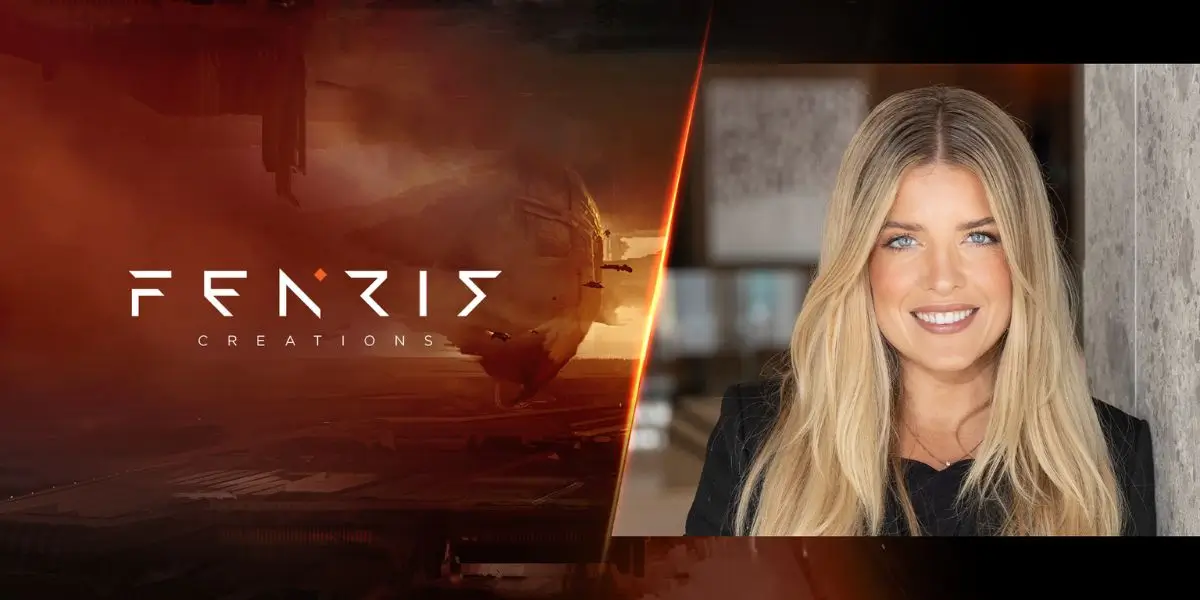
On August 7, 2026, the Icelandic tech and gaming landscape shifted in a remarkable way. Áslaug Arna Sigurbjörnsdóttir, who until recently served as Iceland’s Minister of Justice and before that as Minister of Higher Education, Science and Innovation, has stepped into a role few would have predicted: Senior Director of AI Partnerships at Fenris Creations, the studio formerly known as CCP Games. Her mission is as ambitious as it is unconventional—to build a global network of AI laboratories, universities, policymakers, and strategic collaborators around a bold research initiative centered on EVE Frontier, the next evolutionary step in the legendary EVE universe.
This appointment isn’t just a personnel change. It signals a deliberate fusion of high-level government insight with the frontier of artificial intelligence research, all taking place inside one of the most complex persistent virtual worlds ever created. The role exists to support Fenris Creations’ long-term research program, which asks a question that might reshape how we test, understand, and align advanced AI systems: What if a living, player-driven virtual economy became the ultimate proving ground for autonomous agents?
Who is Áslaug Arna Sigurbjörnsdóttir?
To understand why this hire matters, you need to understand who Áslaug Arna Sigurbjörnsdóttir is. A lawyer by training, she held two of Iceland’s most consequential cabinet positions. As Minister of Higher Education, Science and Innovation, she was deeply involved in research policy, digital infrastructure, and the conditions that allow scientific ecosystems to flourish. Later, as Minister of Justice, she dealt with the legislative and regulatory frameworks that govern data, privacy, and increasingly, the societal implications of algorithmic decision-making.
That dual perspective—the innovation imperative on one hand, and the need for robust governance on the other—is rare. It makes her uniquely equipped to navigate the often fractious intersection where cutting-edge AI research meets public accountability. Her move into the private sector, and into a game development studio no less, is a testament to how seriously Fenris Creations takes the responsible development of artificial intelligence. She is not there to simply sign partnership deals; she is there to shape an entire ecosystem where policy, ethics, and scientific rigor are built into the foundation of a long-term AI testing ground.
Fenris Creations: More Than a Rebrand
Fenris Creations may be a new name, but its pedigree is unmatched. Formerly CCP Games, the Reykjavík-headquartered studio has operated the single-shard universe of EVE Online for over two decades. In that time, EVE has evolved into something far beyond a typical MMO. It is a living economic simulation with trade routes, production chains, commodity speculation, currency fluctuation, corporate espionage, warfare, and genuine political drama—all driven by the unpredictable actions of hundreds of thousands of real human participants.
With EVE Frontier, Fenris is taking that foundational expertise and pushing it further. Described as a hardcore space survival MMO, EVE Frontier is built from the ground up to be an open-ended, player-driven environment where lasting consequences matter. The company’s long-term vision has always been to create virtual worlds more meaningful than real life, and now that ambition has converged with one of the most urgent challenges in technology: creating safe, observable, and realistic environments where autonomous AI agents can be studied over weeks, months, and even years.
The Bold Hypothesis: A Virtual World as an AI Proving Ground
Fenris Creations’ research initiative is anchored in a single, audacious hypothesis: that persistent virtual worlds like EVE Frontier can serve as a live proving ground for advanced AI before those systems become deeply embedded in our everyday lives.
Most AI testing today happens in sandboxed simulations that start, run, and then reset. A reinforcement learning agent plays a game, achieves a score, and the environment is wiped clean for the next attempt. There is no memory, no permanent consequence, no messy entanglement with irrational human actors. Reality, however, doesn’t work that way. Real economies don’t reset. Real trust, once broken, isn’t automatically repaired. Real decisions echo.
EVE Frontier offers the opposite: a persistent world where an autonomous AI agent can set long-term goals, make plans that span days or weeks, and experience the downstream effects of its actions in a system it cannot control. The agent might attempt to corner a resource market, only to find itself facing a coalition of human players who decide to blockade its supply lines. It might try to cooperate, only to be betrayed. Every debt remains on the ledger. Reputation becomes a tradable, losable asset. For AI researchers interested in alignment, multi-agent dynamics, emergent behavior, and long-horizon decision-making, this is a laboratory without parallel.
Why the EVE Universe is Uniquely Suited for AI Research
The EVE universe has always been a sort of accidental experiment in complex systems. For more than twenty years, players have spontaneously generated sophisticated financial instruments, built pyramid schemes, operated intelligence networks, and fought wars that cost hundreds of thousands of real-world dollars in in-game assets. The economy is so intricate that CCP Games (now Fenris Creations) famously hired an economist to monitor inflation, GDP, and market health.
This isn’t just a backdrop; it’s the essential ingredient. Unlike chess, Go, or even StarCraft, the EVE ecosystem has no end state. It cannot be “solved.” The number of possible states, strategies, and human emotional inputs is astronomically larger than any bounded game. That makes it a compelling environment for testing whether an AI can develop robust, generalizable strategies under genuine uncertainty—exactly the kind of capability that will be needed when AI systems move from digital assistants to autonomous economic actors in the real world.
EVE Frontier doubles down on these qualities. With its survival mechanics, resource scarcity, and emphasis on player-built structures and politics, it creates a world where AI agents can’t simply brute-force a solution through computational scale. They have to learn, adapt, and coexist with a population that will actively try to exploit any predictable pattern. It’s adversarial, messy, and profoundly real in its consequences, even if those consequences exist inside a virtual frame.
The Google DeepMind Collaboration and Expanding the Network
This initiative isn’t theoretical. Earlier in 2026, Fenris Creations announced a research partnership with Google DeepMind, one of the world’s most prominent AI research organizations. The collaboration is already active, with joint teams holding intensive workshops to map out concrete research directions. While details remain confidential, the alignment between the two organizations suggests a shared interest in how persistent, multi-agent environments can advance our understanding of intelligence itself.
“Every major advance in AI has required a new proving ground. We believe persistent virtual worlds are the next frontier. EVE Frontier gives us something that doesn’t exist anywhere else: a living economy where intelligent agents can learn, cooperate, compete and make mistakes that have lasting consequences. We’re incredibly excited to welcome Áslaug to Fenris to help build the global partnerships needed to turn that vision into reality.” – Hilmar Veigar Pétursson, CEO
“Having seen firsthand how policy is developed and implemented, I am excited to bring my political experience to this new role. There is no greater opportunity to help shape the future of AI innovation than being part of a testing ground that empowers our partners to make meaningful inroads with regulators, helping ensure safe, practical and reliable AI standards. I look forward to helping Fenris take this work forward responsibly.” – Áslaug Arna Sigurbjörnsdóttir, Senior Director, AI Partnerships
Bridging the Gap Between AI Labs and the Real World
One of the persistent challenges in AI safety research is the “sim-to-real gap”—the disconnect between how an AI behaves in a clean laboratory setting and how it performs in the wild. Virtual worlds that never reset, that are populated by real people with real economic incentives and emotional responses, offer a middle ground. They are controllable enough to instrument and measure, but wild enough to surface the edge cases that simulators miss.
If Fenris Creations succeeds, EVE Frontier could become a reference environment for stress-testing AI alignment techniques. Imagine a future where an AI alignment research group deploys a prototype agent into EVE Frontier and watches it navigate morally ambiguous scenarios: Should it honor a trade agreement when cheating would yield a short-term profit but damage long-term trust? How does it handle a situation where cooperating with one faction means harming another? These are exactly the kinds of dilemmas that paper-based benchmarks can’t capture but that a living virtual economy can.
Áslaug’s Role in Shaping Responsible AI Standards
What makes Áslaug’s arrival so significant is her ability to translate the scientific output of these experiments into the language of policy. The European Union’s AI Act, the OECD AI Principles, and various national regulatory efforts are all grappling with how to mandate transparency and accountability for high-risk AI systems. Fenris Creations, through this initiative, could offer empirical evidence about how autonomous agents behave in complex social settings—data that policymakers desperately need but rarely have access to.
Áslaug’s political experience means she understands the legislative process from the inside. She knows which questions regulators will ask, what evidence they find compelling, and how to build coalitions across disparate stakeholders. Her presence signals that Fenris Creations intends to be a serious participant in the global conversation about AI governance, not merely a game studio dabbling in research. As she puts it, she is excited to bring her political experience to a role that empowers partners to “make meaningful inroads with regulators.”
From a Ministerial Desk to the Virtual Frontier
The career pivot from cabinet minister to Senior Director of AI Partnerships at a video game company might seem unusual, but it reflects a broader trend. As AI becomes a general-purpose technology, the boundaries between public policy, scientific research, and private-sector innovation are blurring. People who can operate at those intersections are incredibly rare and increasingly valuable.
For Iceland, a country that has consistently punched above its weight in technology, art, and governance, this move is a natural extension of its identity. Fenris Creations has always been one of Iceland’s most visible technology ambassadors. Having a former minister join its ranks not only strengthens the company’s strategic capability but also reinforces the idea that persistent virtual worlds are serious infrastructure for the 21st century—infrastructure that demands the same level of thoughtful stewardship as any physical public utility.
The Future: What Success Looks Like
If the research initiative lives up to its promise, the implications extend far beyond Fenris Creations. A successful demonstration that autonomous AI agents can be safely and meaningfully studied in a persistent, human-populated virtual economy would create a new paradigm for AI testing. It would open up a space where academic labs, industry research groups, and regulatory bodies could collaborate on pre-deployment stress tests without putting real-world systems at risk.
For EVE Frontier, success means becoming more than a game. It becomes a scientific instrument—a grand, collaborative experiment where players, developers, and AI researchers co-create knowledge. It could also attract a new generation of players interested not just in spaceships and territory control, but in being part of a living laboratory that might help steer the future of artificial intelligence.
About EVE Frontier®
EVE Frontier is a hardcore space survival MMO. Awakened as a Rider from the static dark of exospace, you are a relic of humanity’s lost age, incarnated into Shells and cast into a galaxy where civilization has rotted in the ruins of its ambition. Feral drone swarms haunt the wastes, ancient machines still hunger, and those who remain fight to control the resources that keep the dark at bay. In the shadow of the Trinary, who will you become? Learn more: www.evefrontier.com.
Website | Press Kit | Twitter/X | Facebook | Instagram | YouTube | Discord
About Fenris Creations
Fenris Creations is an independent video game developer headquartered in Reykjavík, Iceland, with studios in London and Shanghai. Founded in 1997 on the principle of pushing the envelope and breaking new ground on all levels, the company is on a mission to create virtual worlds more meaningful than real life. With the launch of EVE Online in May 2003, Fenris Creations established itself as a pioneer of massively multiplayer online games, earning critical acclaim worldwide for its single-shard universe, player-driven economy, and emergent gameplay. Fenris Creations continues to build deep, persistent virtual worlds designed to evolve over decades in close partnership with their communities.
Conclusion
The appointment of Áslaug Arna Sigurbjörnsdóttir as Senior Director of AI Partnerships at Fenris Creations is much more than a headline about a politician entering the tech sector. It’s a deliberate, strategic step toward turning EVE Frontier into the world’s most advanced test environment for autonomous AI agents. By leveraging a twenty-year legacy of player-driven economies, unpredictable human behavior, and permanent consequences, Fenris is offering the AI research community something it has never had: a real, persistent, and deeply complex social world in which to observe how intelligent systems learn, fail, adapt, and coexist.
With Google DeepMind already on board and Áslaug Arna Sigurbjörnsdóttir poised to expand the partnership network into academia and policy circles, the initiative is positioned to contribute essential knowledge to AI alignment, multi-agent systems, and the responsible development of autonomous technologies. As virtual and real worlds continue to converge, the line between a game and a laboratory may turn out to be no line at all.
Frequently Asked Questions
What is Fenris Creations, and how is it related to CCP Games?
Fenris Creations is the new name for the video game developer previously known as CCP Games. Headquartered in Reykjavík, Iceland, the studio is famous for creating EVE Online and is now focusing on EVE Frontier, a hardcore space survival MMO, alongside ambitious AI research.
Why did a former Icelandic minister join a game company?
Áslaug Arna Sigurbjörnsdóttir’s background as Minister of Justice and Minister of Higher Education, Science and Innovation gives her a unique blend of policy expertise and scientific understanding. Her role at Fenris Creations is to build partnerships between the EVE Frontier AI research initiative, academic labs, universities, and regulatory bodies, helping to develop safe and practical AI standards.
What makes EVE Frontier suitable for testing advanced AI?
EVE Frontier is a persistent virtual world with a player-driven economy, no resets, and lasting consequences for every action. Unlike short-lived simulations, it allows autonomous AI agents to set long-term goals, interact with real people, and face unpredictable social and economic dynamics, making it an ideal environment for studying AI behavior in a complex, realistic setting.
What is the research partnership with Google DeepMind about?
Fenris Creations and Google DeepMind are collaborating to explore intelligence in complex, dynamic systems using EVE Frontier as a research platform. While specific details haven’t been fully disclosed, the partnership involves joint workshops and shared interest in how persistent virtual worlds can support meaningful AI research.
How does Áslaug Arna Sigurbjörnsdóttir’s appointment benefit AI policy?
Her deep experience in government and regulation helps bridge the gap between cutting-edge AI experimentation and the practical needs of policymakers. She can facilitate data-driven conversations about AI safety, alignment, and accountability, potentially shaping future regulatory frameworks with real-world evidence from a controlled yet vivid virtual environment.
Will EVE Frontier players be affected by the AI research?
Fenris Creations has a long history of close community engagement. While autonomous agents may operate within the world, the aim is to enhance the depth and realism of the environment rather than disrupt the player experience. Details of agent integration will likely be communicated transparently as the research develops.
Is this just a publicity stunt, or is the research serious?
The involvement of Google DeepMind, the creation of a dedicated Senior Director role for a former minister, and Fenris Creations’ two-decade track record of complex virtual economies all point to a serious, long-term research endeavor. It addresses real challenges in AI alignment and complex systems research that short-term simulations cannot.