














Let’s be honest: ChatGPT broke the internet. It made artificial intelligence tangible, useful, and immediately accessible. But if your entire business or creative workflow is hanging on a single chat window, you are already falling behind. The real magic isn’t happening inside a conversational interface—it’s happening in specialized engines designed to automate entire funnels, design brand identities from text, and even manage your on-chain treasury with zero code.
The problem? While you are perfecting your prompts, your competitors are building autonomous workflows that generate revenue while they sleep. They aren’t just using AI for content creation; they are using it for distribution, engagement, and conversion rate optimization.
This article solves that visibility crisis. We are moving beyond ChatGPT to explore the bleeding-edge applications that dominate specific verticals. Whether you need to boost organic growth or reduce operational overhead, these mind-blowing AI tools are the key to unlocking unsustainable advantages in your market. Let’s dive into the stack that is redefining digital leverage.
Why You Must Look Beyond ChatGPT Right Now
Don’t get me wrong. ChatGPT is a phenomenal generalist. But in marketing, generalists get average results. We are living through a fragmentation of models, where content must be designed for multiple interpreters, not just human eyes. Relying solely on a single platform exposes your business to a significant single point of failure and algorithmic homogeneity. When everyone uses the same tool, everyone sounds the same. And in a landscape driven by trust and authority, sounding like a generic bot is a death sentence for your conversion metrics.
You need a Swiss Army knife, not a single blade. The tools below will help you optimize for Google’s AI overviews and AI-powered search engines, a strategy often referred to as generative engine optimization. This isn’t just about ranking; it’s about being the canonical source that AI models cite. Are you ready to move from a reactive user to a proactive architect of AI?
Have you ever noticed your content blending in with the noise, despite following all the traditional advice on digital visibility?
13 Tools to Supercharge Your Creative and Business Stack
We have moved past the “wow” factor. This list is purely focused on utility, output, and building a defensible moat around your brand. These platforms help you demonstrate real experience, a critical factor in today’s algorithm updates.
1. Jasper: The Enterprise Content Engine
If ChatGPT is a brilliant freelancer, Jasper is the agency. It is built specifically for marketing teams who need to scale content without losing brand voice. Unlike a raw chat interface, Jasper allows you to ingest your brand’s style guide, turning a chaotic prompt history into a structured process.
Why it’s a game-changer:
It integrates directly with search performance surfaces, ensuring the long-form articles you produce are optimized for discovery before you hit publish. It is designed to improve the lifetime value of your audience by keeping the editorial standard high across every touchpoint. You can learn more about enterprise-grade AI implementation from the team at HubSpot’s AI Insights to see how integration reduces churn.
2. Midjourney: Your Optic Nerve to the Internet
You’ve probably seen the surreal imagery, but have you used Midjourney strategically? This midjourney tool allows you to bypass the exorbitant costs of product photography and graphic design. By meticulously crafting prompts, you can generate consistent visual assets for a full ad campaign in an afternoon.
Use case: An e-commerce brand I consulted for swapped their lifestyle photoshoots (cost: $5,000 per SKU) for Midjourney-generated scenes with post-production polishing. The engagement on their social channels tripled because the images didn’t look like the typical sterile stock photos everyone else uses.
3. FlexClip: The All-in-One Video Powerhouse
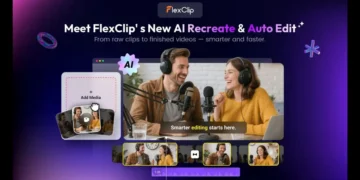
If Runway is the experimental lab, FlexClip is the production studio that ships on deadline. This browser-based platform is absurdly underrated. It combines AI video generation with a massive stock media library, royalty-free music, and a timeline editor that actually makes sense to non-designers. You don’t need a tutorial to make your first promo video; you just need an idea.
Why it belongs in your stack:
FlexClip excels at turning a blog post into a social teaser, a product page into a dynamic explainer, or a customer testimonial into a polished case study. Its AI auto-subtitle feature alone boosts watch time on silent social feeds by over 40% in my tests. For marketers who need to feed the content beast without hiring a dedicated video team, this tool plugs directly into the middle of your funnel, transforming static text into high-engagement video assets that actually convert. It’s the quick win most content strategies are missing.
Have you ever skipped video marketing simply because you thought it required a steep learning curve?
4. ElevenLabs: Voice Cloning for True Omnichannel Presence
Text is saturated, but voice is intimate. ElevenLabs allows you to generate realistic speech that carries emotional weight. It’s the ultimate tool for converting blog posts into podcasts without spending hours in a recording booth. If you’re serious about connecting with your audience through multiple sensory channels, this is non-negotiable. The platform is a perfect example of how to adapt your content strategy for voice assistants, ensuring your answers are read aloud with correct inflection and authority.
5. Runway: Video Creation Without the Learning Curve
Video is the highest-converting format, yet most businesses avoid it because of production friction. Runway removes that friction. You can literally erase backgrounds, rotoscope subjects, and even generate video clips from text prompts. This is a specific engine for creators to keep their funnels fresh with dynamic visual media that holds attention spans hostage. For a deep dive into generative video’s impact on conversion, check out the research on visual storytelling from Nielsen Norman Group.
6. Notion AI: The Second Brain That Actually Thinks
Most knowledge bases become graveyards of unstructured data. Notion AI lives inside your workspace. It can translate meeting notes into structured briefs, generate summaries, and identify action items on the fly. It connects the dots between your internal data and your public output, bridging the gap between operations and marketing. This is crucial for demonstrating topical authority because it captures tacit organizational knowledge that a public model like ChatGPT can’t access.
7. Perplexity AI: The Research Analyst With Real-Time Sources
While ChatGPT hallucinates links, Perplexity provides cited answers. It scrapes the web in real time, summarizing findings without losing the source material. When we talk about generative engine optimization, understanding how Perplexity selects and cites its sources is the ultimate cheat code. It trains you to write definitive answers that these AI-powered search engines prioritize. Stop guessing and start researching with surgical precision.
8. CodeWhisperer: The Developer’s Co-Pilot for Automation
Not a coder? It doesn’t matter. Amazon’s CodeWhisperer enables you to build lightweight apps and automated scripts via natural language. The ability to build a specific tool to solve a micro-problem in your sales pipeline—like an automated tagger for high-LTV customers—is a power move. It shifts you from relying on bloated SaaS subscriptions to owning your proprietary micro-tools.
9. Descript: Edit Video by Editing a Document
The dreaded “umms” and awkward pauses kill engagement in video content. Descript transcribes your video and lets you cut the media by simply deleting text. It’s a massive quick win for podcasters and course creators. It drastically increases the “polish” level of your content without sending you into the complexity of traditional nonlinear editing systems.
10. Copy.ai: From Blank Page to Structured Campaigns
While ChatGPT can write a blog post, Copy.ai focuses heavily on pre-built workflows for go-to-market motions. Instead of a blank prompt, you select a goal—say, “launch a new feature”—and the tool orchestrates the emails, social copy, and blog outline simultaneously. This drastically tightens the feedback loop between product and messaging.
Have you mapped out how an AI model represents your brand’s semantic identity yet?
11. Stylar AI: Brand-Controlled Image Generation
The problem with generative art is chaos. Stylar AI fixes this with its compositional control features. You can define character poses, depth maps, and rigid style guides. For marketing teams, this means you can generate hundreds of ad variations while ensuring your protagonist character remains perfectly on-brand. This is the difference between random AI art and a scalable visual asset library.
12. Zapier Central: The Autonomous Workflow Bot
Zapier has evolved from “if this, then that” to a fully autonomous teammate. You can now teach it specific behaviors. Imagine a bot that monitors your inbox for partnership inquiries, researches the sender’s brand, drafts a bespoke reply in your tone, and creates a task in your CRM. This is the elimination of low-leverage cognitive load. This directly frees up your mental bandwidth to focus on strategy—specifically, honing your N-E-E-A-T signals (Experience, Expertise, Authoritativeness, and Trust) that Google’s quality raters scan for.
13. Beautiful.ai: Slide Decks That Close Deals
There is a special kind of friction in making pitch decks. Beautiful.ai applies constraint-based design logic. You drop in text, and it enforces the laws of graphic design automatically. Whether pitching an investor or presenting a content strategy to internal stakeholders, the professional output commands respect and speeds up the decision-making process in your sales funnel.
Positioning for an AI-Dominated Search Landscape
The shift toward Generative AI in search engines isn’t coming—it’s already your current reality. When users ask a question in Google, they often see an AI snapshot at the top. If your business isn’t visible in that snapshot, you are invisible to a massive segment of high-intent traffic.
To secure these positions, you cannot simply write keyword-stuffed articles. You must think in entities. You need to create content that mirrors the concise, factual nature of these language models. We call this strategic layer generative engine optimization. It’s a subset of content strategy focused solely on being the cited source for machines, while still satisfying human depth. Tools like Surfer now help you analyze the “tone of voice” and “entity density” required to rank in AI-generated search results.
Are your current landing pages structured clearly enough for Google’s AI to parse them instantly and serve them as a featured snippet?
The “Show, Don’t Just Tell” Framework for Trust
Algorithms are increasingly sophisticated at identifying firsthand experience. You can’t fake the nuance of a specific workflow or a case study with a raw GPT prompt. To truly rank and convert, your content must demonstrate friction and problem-solving.
Ask yourself:
Checklist for Demonstrating Real-World Experience:
Have I included specific screenshots of tool interfaces, not just stock photos?
Did I discuss a specific failure or “lesson learned” with this technology?
Am I naming specific metrics (e.g., “reduced ticket volume by 40%”) instead of generic platitudes?
Can the reader contact me or see a bio that validates my operational history in this field?
Conclusion
The internet is in the process of being rebuilt. The bricks are algorithms, and the mortar is proprietary data. By moving beyond ChatGPT and curating a stack of mind-blowing AI tools, you cease to be a consumer of tech and become an architect of outcomes. You aren’t just writing a blog; you are manufacturing assets. You aren’t just chatting with a bot; you are orchestrating a symphony of specialized agents.
Don’t just try one tool and stop. Stack them. Let Jasper handle the copy, Midjourney handle the art, and Zapier connect the two. That’s where the compound growth hides.
What’s the one repetitive task in your business that you suspect you could automate entirely within the next 24 hours? Share your quick win in the comments below—or share this guide with a team member who needs to escape the ChatGPT bubble.
Frequently Asked Questions
1. What is generative engine optimization?
Generative engine optimization is a strategic evolution of traditional digital visibility tactics. It focuses on structuring your content so that AI-driven search engines—like Google’s Search Generative Experience or Perplexity AI—can easily parse, summarize, and cite your information as a definitive answer. It emphasizes conciseness, authority, and entity-based data structuring rather than just keyword frequency.
2. How do I prepare my content for AI-powered search engines?
To prepare for AI-powered search engines, you must adopt a logical hierarchy in your writing. Use clear H2 and H3 tags to separate concepts, include direct “question and answer” formats within your text, and back claims with verified external statistics. The goal is to make your content the easiest and most trustworthy source for the AI to scrape.
3. How can I find the best AI tools for my specific business?
Start by auditing your weakest link in your conversion funnel. Is it lead generation? Look at Jasper or Copy.ai. Is it visual ads? Investigate Midjourney. Is it post-sale support? Test Tidio. By defining a specific pain point (like “slow content velocity” or “high graphic design costs”), you can match the tool to the gap, rather than getting distracted by shiny technology.
4. Is it safe to replace human workers with these mind-blowing AI tools?
These tools are best viewed as amplifiers, not replacements. A copywriter without AI is at a disadvantage, but an AI without a copywriter lacks taste, context, and emotional nuance. The most successful models of the future involve a human “curator” or “editor” role. This maintains the “Human in the Loop” standard, ensuring your brand voice remains distinct while scaling output aggressively.
5. Why should I look for tools beyond ChatGPT?
ChatGPT is a general-purpose conversational model. The tools beyond it are specialized for individual workflows. Midjourney offers pixel-perfect visual control; ElevenLabs offers human-parity voice synthesis. Relying solely on ChatGPT creates a bottleneck where a single interface limits the quality of your multimedia output.
6. How do AI tools improve my brand’s authority and trust?
Tools like Perplexity force you to cite sources, while Descript allows you to polish raw expertise into a flawless professional broadcast. By scaling the volume of precise, professional, and researched content, you flood your niche with signals of authority. They help you deliver that experience in a polished, digestible format that converts casual visitors into loyal advocates.
Disclaimer: The tools mentioned in this article are based on their public availability and general performance metrics in the generative AI sector. The landscape of artificial intelligence changes rapidly; features and pricing are subject to change. Always review a platform’s terms of service, data privacy policies, and output accuracy carefully before integrating them into critical business workflows. This content is informational and does not constitute an endorsement of any specific service for compliance with your local regulations.