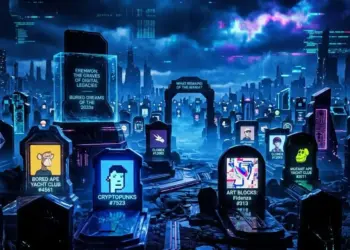


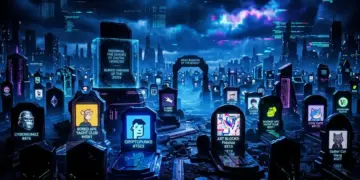
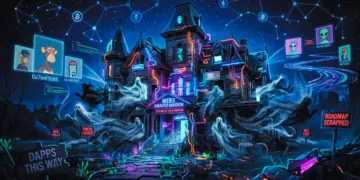




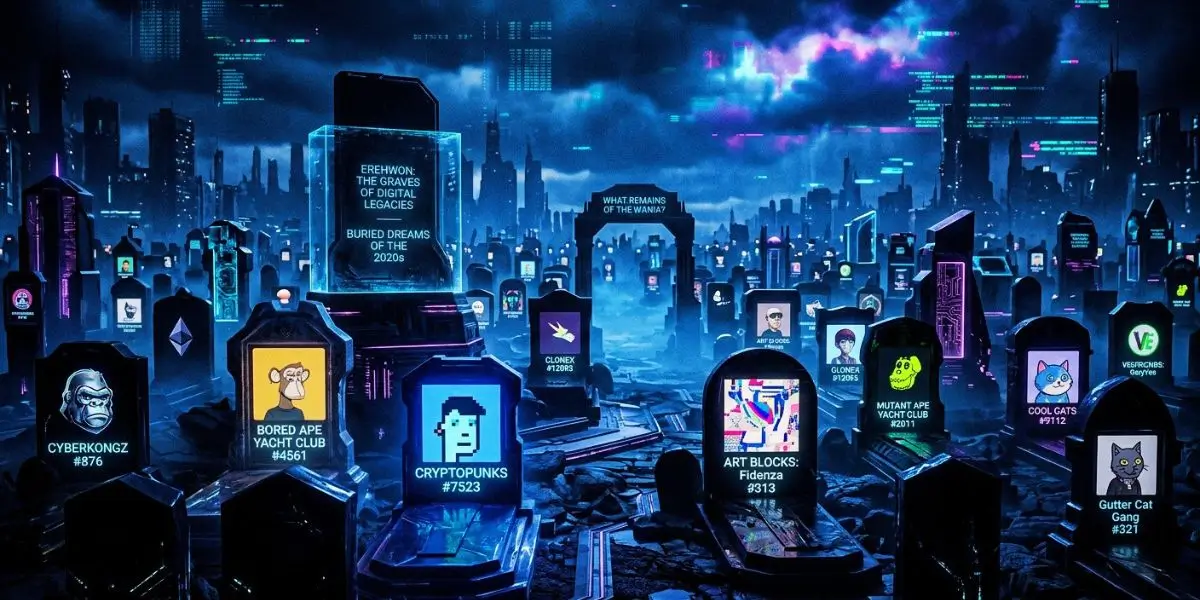
In 2021, people paid millions for cartoon apes, pixel punks, and JPEGs linked to blockchain tokens. Celebrities promoted them. Brands rushed in. Discord servers filled with “WAGMI,” floor-price charts, and promises of metaverse mansions.
Then the music stopped.
Trading volumes collapsed. Once-celebrated collections lost most of their liquidity. Projects disappeared. Discord channels went quiet. The phrase “NFT” became shorthand for overpriced speculation.
So, are NFTs dead?
No—but the version of NFTs that dominated 2021 is mostly dead. The speculative collectibles boom collapsed, yet blockchain-based ownership still exists and continues to find practical uses in gaming, ticketing, memberships, credentials, loyalty programs, and digital provenance.
This article separates what failed from what survived.
What Are NFTs, Exactly?
An NFT, or non-fungible token, is a unique blockchain-based record that can represent ownership of a digital or physical item. Unlike Bitcoin or Ethereum, where one token is interchangeable with another, each NFT is distinct.
An NFT does not necessarily contain the artwork itself. More often, it points to a file stored elsewhere and records ownership on a blockchain. That distinction matters: owning an NFT does not automatically grant copyright, commercial rights, or control over the underlying intellectual property.
What an NFT Can Represent
A digital collectible.
A gaming item.
A concert or event ticket.
A membership pass.
A digital identity or avatar.
A certificate or credential.
A loyalty reward.
A claim to a physical item, depending on the legal structure.
The technology works. The harder question has always been whether people want what the NFT represents.
Why Did the NFT Market Collapse?
The NFT market collapsed because speculation outran utility. Many buyers purchased NFTs expecting prices to rise, not because they needed access, ownership, or a product they would use repeatedly.
During the boom, new collections launched daily. Some had strong communities and recognizable brands. Many did not. They promised future games, tokens, metaverse land, and exclusive benefits—then failed to deliver.
The Main Reasons NFTs Declined
Speculation replaced demand: People bought NFTs to resell them, not to use them.
Liquidity disappeared: When buyers stopped arriving, sellers had few exit options.
Utility was delayed or abandoned: Roadmaps promised more than teams could build.
Royalties became contested: Marketplaces and traders found ways around creator royalties.
User experience remained poor: Wallets, gas fees, seed phrases, and scams excluded mainstream users.
Fraud damaged trust: Fake mints, impersonators, and wallet-draining scams hurt newcomers.
Macro conditions changed: Rising interest rates and a broader crypto downturn reduced risk appetite.
The result was predictable. When an asset’s main value proposition is “someone may pay more for it later,” demand can disappear quickly.
Are NFTs Dead as an Investment?
NFTs are not dead as an investment category, but they are no longer a reliable get-rich-quick market. Some established collections still trade. Some communities remain active. But most speculative projects lost the liquidity that once made quick profits possible.
The important change is psychological. In 2021, many buyers treated NFTs like lottery tickets with community access. In 2026, a more honest framing is: an NFT is a digital ownership record whose value depends entirely on what it gives you access to.
What Determines NFT Value Today?
| Value driver | Strong signal | Weak signal |
|---|---|---|
| Utility | Real access, rewards, or functionality | Vague future promises |
| Community | Active users and ongoing events | Quiet Discord and abandoned roadmap |
| Brand | Established creator, game, or company | Anonymous team with no track record |
| Liquidity | Consistent trading volume | Thin market with wide spreads |
| Scarcity | Meaningful scarcity tied to access | Artificial scarcity with no purpose |
| Rights | Clear ownership and usage terms | Unclear copyright or commercial rights |
| Sustainability | Revenue beyond primary sales | Dependence on new buyers |
If an NFT gives you something valuable—such as event access, a game item, or a membership—its value can exist even if the broader market cools. If its only purpose is resale, it behaves like a speculative asset.
What NFT Use Cases Survived?
The NFT use cases that survived are the ones tied to access, identity, gaming, provenance, and real-world utility. They do not need a speculative market to function.
1. Digital Collectibles
Collectibles remain the most visible NFT category. Established projects still have communities, cultural relevance, and secondary markets. But the market is far smaller and more selective than during the boom.
2. Gaming Assets
NFTs can represent swords, skins, land, characters, or in-game currency. The appeal is player ownership: instead of every asset belonging to the game publisher, players may be able to trade or retain certain items.
The challenge is game design. If an economy rewards speculation more than play, it attracts extractive users and collapses when new buyers stop arriving.
3. Ticketing
NFTs can function as verifiable tickets. They can reduce counterfeiting, enable resale rules, and give organizers a direct relationship with attendees.
A concert ticket, conference pass, or membership card can be represented as a token without needing to be marketed as an investment.
4. Memberships and Loyalty
Brands can use NFTs as digital membership passes. A token might unlock early product access, event invitations, discounts, or community features.
This use case works when the reward is clear and ongoing. It fails when the brand treats the NFT as a one-time cash grab.
5. Credentials and Provenance
NFTs can certify attendance, completion, authenticity, or origin. A university certificate, professional credential, limited-edition product, or artwork provenance record can benefit from tamper-resistant verification.
Again, the blockchain is not the product. Trust, verification, and usefulness are the product.
What NFT Promises Failed?
The NFT promises that failed were mostly the ones built on speculation, vague metaverse visions, and guaranteed returns. The technology could verify ownership; it could not manufacture lasting demand.
Failed Promises
“Every brand needs an NFT collection.” Many did not.
“NFTs will replace traditional tickets immediately.” Adoption has been slower and more selective.
“NFT gaming will replace conventional games.” Fun and retention still matter more than ownership.
“NFTs will make every creator rich.” Most creators still struggle to find an audience.
“The metaverse will make digital land valuable.” Virtual land demand did not sustain itself at scale.
“NFTs are an investment product.” Many behaved like highly volatile speculative assets.
The lesson is not that NFTs were useless. It is that many projects sold a future before building a present.
Are NFTs Still Worth Buying?
An NFT is worth buying only if you value what it provides today—not because you expect someone else to pay more tomorrow. That may sound obvious, but it is the rule many buyers ignored during the boom.
Before buying, ask:
What do I receive when I own it?
Can I use that benefit now?
Is the project actively maintained?
Who is behind it?
What are the fees, royalties, and resale restrictions?
Can I verify the collection and contract?
What happens if the platform disappears?
Would I still want it if the price never rose?
If the answer to the last question is no, you are not buying a product. You are making a speculative bet.
Pro tip: Treat NFTs like event tickets, memberships, or game items—not like stocks. If the utility disappears, the token’s value can disappear with it.
How to Avoid NFT Scams
Most NFT losses do not come from prices falling. They come from fake mints, impersonators, malicious links, and wallet-draining transactions. Security matters as much as market research.
NFT Safety Checklist
Buy only from official websites or verified marketplace pages.
Check the contract address, not just the collection name.
Be suspicious of unsolicited airdrops.
Never share your seed phrase.
Do not sign transactions you do not understand.
Revoke token approvals you no longer need.
Use a hardware wallet for valuable assets.
Verify Discord admins and support agents.
Avoid connecting your main wallet to unknown sites.
Treat “guaranteed returns” as a scam signal.
A wallet drainer does not need your seed phrase if it convinces you to approve a malicious transaction. That is why “do not sign blindly” is one of the most important rules in Web3.
Case Study: Two NFT Projects, Two Outcomes
Project A launches 10,000 avatar NFTs. The mint sells out. The team promises a game, a token, and a metaverse. Trading volume spikes for several weeks. Then development slows, the game is delayed, the token launch disappoints, and the community shifts its attention to floor price. Within two years, the project is inactive.
Project B issues NFT tickets for a recurring music festival. Each token verifies entry, stores attendance history, and gives holders early access to next year’s presale. The organizer controls resale rules and can reward loyal attendees.
Project A depended on speculation. Project B depends on a real event, a real customer relationship, and a real benefit.
Project B is more likely to survive because its NFT has a job to do.
What Comes Next for NFTs?
The next phase of NFTs is quieter and more practical: tokens embedded into products, tickets, games, memberships, and ownership records. They may not always be called NFTs.
That may be a good thing. The term became associated with speculation, scams, and overpromising. The underlying idea—verifiable digital ownership—can survive without the hype.
Expect more focus on:
Tokenized loyalty programs.
Digital event credentials.
Game assets with real utility.
Proof-of-authenticity for physical goods.
Membership and community access.
Tokenized real-world assets.
The winners will not be projects that promise a metaverse revolution. They will be products that make ownership, access, or verification genuinely better.
FAQs
Are NFTs dead in 2026?
No. The speculative NFT boom collapsed, but NFT technology and selected use cases remain active. Digital collectibles, gaming assets, tickets, memberships, credentials, and provenance records still use blockchain-based ownership.
Why did the NFT market crash?
The market crashed because speculation outran utility. Many buyers purchased NFTs expecting resale profits, while many projects failed to deliver lasting products, liquidity, or real-world benefits.
Are NFTs still worth buying?
Only if you value the access, utility, or ownership they provide today. Buying an NFT mainly because you expect someone else to pay more later is speculation, not product ownership.
What are NFTs used for now?
NFTs are used for digital collectibles, gaming assets, event tickets, memberships, loyalty rewards, credentials, provenance, and tokenized access. The strongest use cases provide a clear benefit beyond resale.
Can you lose money on NFTs?
Yes. NFT prices can fall sharply, liquidity can disappear, and scams can drain wallets. Never share a seed phrase, avoid unknown links, and do not sign transactions you do not understand.
Next Steps
NFTs did not die. The fantasy did.
The speculative version—buy a token, wait for a bigger fool, promise a metaverse later—lost credibility. What remains is more useful: verifiable ownership for tickets, games, memberships, credentials, and digital goods.
If you are considering an NFT, ignore the floor-price hype and ask one question: what do I actually get? If the answer is clear, useful, and durable, the NFT may have value. If the answer is “future utility,” proceed carefully.