

















Crypto scams in 2026 have evolved far beyond the obvious phishing emails and Nigerian Prince schemes of the past. Today’s attackers use AI-generated deepfakes, sophisticated social engineering that unfolds over months, and technical exploits that can drain wallets without requiring a single suspicious click from the victim .
The hard truth: blockchain transactions are irreversible by design. Once funds leave your wallet, no central authority—not Vitalik Buterin, not Binance support, not the Ethereum Foundation—can reverse that transaction . This makes prevention not just important; it’s the only real protection you have.
This guide consolidates the most current threat intelligence from blockchain security firms, wallet providers, and on-chain analysts to give you a practical, actionable defense strategy. Follow these protocols, and you’ll eliminate the attack vectors responsible for over 99% of crypto thefts in 2026.
The Four Horsemen of Crypto Theft: Understanding 2026’s Top Threats
Before you can defend your assets, you need to understand exactly what you’re defending against. Here are the four dominant scam categories as of April 2026.
AI-Powered Social Engineering and Deepfakes
Scammers now use real-time AI to impersonate trusted figures during live video calls. An actor’s face and voice can be overlaid with Vitalik Buterin’s, Elon Musk’s, or a project founder’s likeness, making visual verification nearly useless .
The Pig Butchering Evolution: Attackers build romantic or friendly relationships over months on dating apps and WhatsApp before introducing fake investment platforms. A single operation uncovered by Sophos netted over $1 million in three months using fake liquidity pools .
Address Poisoning
This attack exploits human laziness. Scammers generate vanity addresses that match the first and last 4-6 characters of addresses you frequently interact with. They then send you a $0 transaction from this lookalike address. If you later copy an address from your transaction history rather than your saved contacts, you send funds directly to the thief .
The scale is staggering: over 1 million address-poisoning preparations are identified daily on Ethereum alone, with approximately 34,000 attacks occurring every hour .
Unlimited Token Approvals and Silent Drains
When you interact with DeFi protocols or NFT marketplaces, you often grant smart contracts permission to spend your tokens. Many dapps request unlimited approvals by default for convenience. This permission remains active indefinitely—even years after you stop using the app .
If that contract is later exploited or was malicious from the start, an attacker can drain approved tokens without requiring any new signatures or transactions from you. This is why many reported wallet drains show no suspicious outgoing activity initiated by the user .
Fake Liquidity Pools and DeFi Traps
Scammers create fraudulent liquidity pool sites that mimic legitimate DeFi platforms. Victims connect their wallets, sign what appears to be a standard approval, and watch fake dashboards show impressive returns. In reality, the smart contract contains a backdoor that eventually drains the entire wallet .
The Non-Negotiable Foundation: Seed Phrase Security
Every other security measure in this guide becomes irrelevant if you fail at seed phrase protection. This is the single most important section.
Never Share Your Recovery Phrase or Private Keys
No legitimate service, support agent, website, or individual will ever ask for your seed phrase. Anyone who does is attempting to steal your funds. This includes people claiming to be from “Ethereum support” or “MetaMask security”—Ethereum is decentralized and has no customer support department .
Never Take Screenshots of Your Seed Phrase
Screenshots often sync automatically to cloud services like iCloud or Google Photos. Obtaining private keys from compromised cloud accounts is a common attack vector. If you’ve ever screenshotted a seed phrase, consider that wallet compromised and create a new one .
Physical Storage Only
Record your seed phrase on paper or, better yet, a metal backup plate resistant to fire and water damage. Store it in a secure physical location. For high-value holdings, consider splitting the phrase across multiple locations using Shamir’s Secret Sharing .
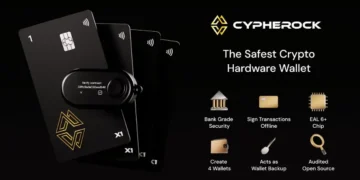
The Hardware Wallet Mandate
For any portfolio exceeding $1,000 in value, a hardware wallet is not optional. It is the minimum acceptable security standard in 2026.
Why this matters: A hardware wallet keeps your private keys completely offline. Even if your computer is infected with malware, even if you accidentally connect to a malicious website, the attacker cannot extract your private keys. Transactions must be physically confirmed on the device itself .
Recommended Practice:
Use hardware wallets from established manufacturers (Ledger, Trezor, Keystone)
Always verify transaction details on the device’s screen before approving
Purchase directly from the manufacturer—never from third-party Amazon or eBay sellers
Update firmware regularly but verify update authenticity first
The Cold Storage Hierarchy:
Hot wallets: Trading capital only (amounts you can afford to lose)
Hardware wallets: Long-term holdings and significant balances
Multi-signature cold storage: Institutional or generational wealth ($100,000+)
The Approval Audit: Your Monthly Security Ritual
Token approvals represent the largest hidden attack surface in crypto. A wallet that has interacted with DeFi for a year may have 50+ active approvals, many unlimited in scope.
How to Check and Revoke Approvals
Use dedicated approval management tools to audit your wallet:
Revoke.cash: Connect your wallet to see all active approvals across multiple chains and revoke with one click
Revokescout: Integrated directly into Blockscout explorers, showing approvals with estimated value at risk
Etherscan Token Approval Checker: Native tool for Ethereum mainnet approvals
The Principle of Least Privilege
When approving tokens for any dapp:
Never accept the default “Unlimited” option
Select “Custom Amount” and approve only what’s needed for the current transaction
For a $100 swap, approve $100—not infinity
Revocation Schedule
Weekly: If you’re an active DeFi user interacting with new protocols
Monthly: For moderate users interacting with established protocols
Immediately: After using any new or unaudited dapp, or after NFT mints
Transaction Verification: The 30-Second Rule
The moment before clicking “Confirm” is your last line of defense. Develop a habit of pausing for 30 seconds to verify three critical elements.
The Three-Point Verification Checklist
Before every transaction, verify:
Contract Address: Does the receiving address match the official contract? Scammers often deploy contracts with addresses similar to legitimate ones. Check the first and last 6 characters against a trusted source (official website, CoinGecko, or DexScreener) .
Transaction Amount: Is the value exactly what you intend to send? Malicious front-ends can inflate amounts.
Gas Fee Reasonableness: Are fees appropriate for current network conditions? Abnormal gas settings can indicate hijacking attempts .
Address Poisoning Defense
Never copy wallet addresses from your transaction history. Always:
Use saved address books in your wallet
Verify the full address by checking multiple character blocks, not just first and last
Enable address poisoning protection features if your wallet offers them (Trust Wallet now provides this on 32 EVM chains)
Clear Signing on Hardware Wallets
When using a hardware wallet, the device screen shows exactly what you’re signing. Read it. If the device shows “Transfer 10 ETH to 0xABC…” but your computer screen shows “Mint NFT for 0.01 ETH,” trust the hardware device—your computer is compromised .
The Dual-Wallet Strategy
The most effective way to contain risk is physical and logical separation of assets.
Implementation
Wallet A (Hot Wallet / Interaction Wallet): Funded with only enough crypto for gas fees and active trading. Used for connecting to dapps, minting NFTs, and testing new protocols. Assume this wallet may be compromised at any time.
Wallet B (Cold Wallet / Vault): Hardware wallet containing 90%+ of your portfolio. Never connects to dapps. Only sends funds to Wallet A or to centralized exchange deposit addresses you’ve verified .
Profit-Sweeping Protocol
When Wallet A accumulates significant value from successful trades or airdrops:
Stop interacting with dapps
Revoke all active approvals
Transfer excess funds to Wallet B
Resume normal activity with a clean, minimal-balance wallet
This compartmentalization ensures that even a worst-case Wallet A compromise cannot touch your core holdings.
Dapp and Protocol Due Diligence
Before connecting your wallet to any website or protocol, perform this 5-minute audit.
The 5-Minute Security Checklist
1. Verify Official Sources
Only access dapps through official website URLs or verified social media accounts. Bookmark official sites. Never click links from Discord DMs, Telegram, or Twitter/X replies—these are flooded with phishing bots .
2. Check Smart Contract Audit
Look for security audits from reputable firms (CertiK, Hacken, Trail of Bits, Consensys Diligence). Don’t just check for a badge—open and read the audit PDF. Verify that “Critical” or “High” severity issues were actually resolved .
3. Analyze Token Holder Distribution
Use a blockchain explorer or DeFi analytics tool to view token holder concentration. If the top 10 wallets hold 80%+ of the supply, the project is highly centralized and vulnerable to rug pulls .
4. Review Vesting Schedules
Check when team and investor tokens unlock. If a massive unlock is scheduled next week, you’re likely being positioned as exit liquidity .
5. Community Quality Assessment
Join the Discord or Telegram. Is discussion technical and roadmap-focused, or is every message “When moon?” and “Buy the dip”? Communities obsessed only with price are mercenary communities that will dump at the first sign of trouble.
Honeypot Detection
Before buying any token, especially low-cap or newly launched ones, verify you can actually sell it:
TokenSniffer: Free honeypot detection
Honeypot.is: Scans contract for sell restrictions
DexScreener: Check liquidity and recent sell transactions
Exchange and Custodial Platform Security
If you use centralized exchanges, their security becomes your security. Evaluate platforms against these criteria.
What to Look For
Proof of Reserves (PoR)
The platform should publish monthly cryptographic verification that it holds the assets it claims to owe customers. If they can’t prove they have the money, don’t deposit there .
Protection Funds and Insurance
Major exchanges maintain dedicated funds separate from operational capital:
Binance SAFU Fund: ~$1 billion
Bitget Protection Fund: $300+ million
These funds exist to compensate users in the event of security breaches. Verify fund size and transparency.
Regulatory Registration
Check registration in reputable jurisdictions. Exchanges registered with AUSTRAC (Australia), FCA (UK), or state-level US money transmitter licenses face ongoing audits and capital requirements .
Cold Storage Percentage
Leading platforms keep 95-98% of user assets in offline cold storage, maintaining only operational liquidity in hot wallets .
Platform-Specific Security Settings
Enable every available security feature:
Hardware 2FA: Use YubiKey or similar hardware security keys, not SMS
Withdrawal Whitelisting: Funds can only be sent to pre-approved addresses
Anti-Phishing Code: Custom code included in all legitimate platform emails
Withdrawal Cooling Period: New addresses require 24-48 hour waiting period before first withdrawal
Recognizing Scam Patterns: The Red Flag Encyclopedia
Train yourself to recognize these patterns instantly. Any single red flag warrants extreme caution; multiple red flags mean walk away.
Guaranteed Returns
In financial markets, risk and reward are inseparable. Any platform promising fixed daily returns (e.g., “1% daily, zero risk”) is mathematically a Ponzi scheme .
Urgency and FOMO Pressure
“Limited time offer!” “Only 3 spots left!” “Sale ends in 10 minutes!” Scammers use artificial scarcity and countdown timers to bypass your rational decision-making. Legitimate opportunities will still exist tomorrow .
Unsolicited Contact
No legitimate project founder, exchange employee, or “crypto expert” will DM you first with investment opportunities. Block and report immediately .
“Send Crypto, Receive More Crypto”
All giveaway scams follow this pattern. You send ETH/BTC/SOL to an address, and they promise to send back double. Vitalik Buterin is not doubling your Ethereum. Elon Musk is not giving away Bitcoin. These are always, without exception, scams .
Fake Support Impersonation
Scammers monitor public Discord channels and social media for users asking support questions, then DM them impersonating official support. Legitimate support will never contact you through private channels first .
Twitter/X Link Spoofing
Scammers exploit Twitter’s link preview mechanism to make malicious URLs appear as legitimate sites. Always check the actual domain after clicking .
Emergency Response: What to Do If You’ve Been Compromised
Speed matters. Follow this protocol within minutes of discovering a breach.
Immediate Actions (Golden 10 Minutes)
Freeze and Revoke: Use Revoke.cash or similar tools to immediately revoke all token approvals on the compromised wallet. This cuts off any ongoing drain .
Create New Wallet: Generate a completely new wallet with a new seed phrase on a clean device. Never reuse a compromised seed phrase.
Move Remaining Assets: Transfer any assets still in the compromised wallet to the new secure wallet. Prioritize high-value tokens .
Change All Related Passwords: If the compromised wallet was connected to any exchange accounts via API, revoke those API keys immediately.
Documentation and Reporting
Screenshot and save all evidence: transaction hashes (TxID), malicious contract addresses, scam website URLs, and communication records
Report the address to Chainabuse, a community-driven scam database
Flag the address on Etherscan or relevant block explorer
Report phishing sites to Google Safe Browsing and PhishTank
File reports with law enforcement: FBI IC3 (US), Action Fraud (UK), or local authorities
What NOT to Do
Never pay “recovery fees.” Anyone claiming they can recover your funds for an upfront fee is running a secondary scam targeting victims. Blockchain transactions are mathematically irreversible .
Never delete the compromised wallet before revoking approvals. Deleting the wallet from your interface does not revoke smart contract permissions. Attackers can still drain tokens from approvals you’ve forgotten .
For significant losses, contact professional blockchain security firms. Organizations like SlowMist, PeckShield, and Chainalysis can trace fund flows and assist law enforcement with asset freezing if funds reach centralized exchanges .
The 2026 Security Stack: Tools and Resources
Bookmark these tools and integrate them into your workflow.
Approval Management
Revoke.cash: Multi-chain approval dashboard
Revokescout: Integrated with Blockscout explorers
Etherscan Token Approval Checker: Ethereum native
Address and Transaction Verification
Blockscout / Etherscan: Verify contract addresses and transaction details
Trust Wallet Address Poisoning Protection: Automated suspicious address detection on 32 EVM chains
Rabby Wallet: Built-in transaction simulation and security alerts
Scam Reporting and Research
Chainabuse: Community scam database
CryptoScamDB: Open-source scam tracking
TokenSniffer / Honeypot.is: Token contract analysis
Threat Intelligence
SlowMist / PeckShield / CertiK Alerts: Follow on Twitter/X for real-time exploit notifications
De.Fi Scanner: Contract risk assessment
Conclusion
The difference between a secure crypto user and a victim is rarely technical knowledge—it’s consistency. Attackers succeed because they exploit human nature: laziness, greed, urgency, and trust.
Implementing every recommendation in this guide once provides temporary protection. But true security comes from building these practices into automatic habits:
Verifying every transaction before signing
Auditing approvals monthly
Never sharing seed phrases with anyone, ever
Maintaining the dual-wallet separation
The crypto ecosystem in 2026 offers unprecedented financial sovereignty. That sovereignty comes with a trade-off: the complete and total responsibility for your own security. No bank will reverse fraudulent transactions. No FDIC insurance covers stolen crypto. No support team can recover lost private keys.
This responsibility is also crypto’s greatest gift. With the protocols in this guide, you control assets with a level of security that no traditional financial institution can match. A properly secured hardware wallet with a geographically distributed seed phrase backup is more secure than any bank account—because no one can freeze it, seize it, or access it except you.
Your next action: Don’t just read this guide. Open your wallet now. Check your active approvals. Verify your seed phrase storage method. Enable hardware 2FA on your exchange accounts. The best time to secure your crypto was before your first purchase. The second-best time is right now.
Frequently Asked Questions (FAQ)
1. Can I recover funds lost to a scam?
No. Blockchain transactions are irreversible by design. Once confirmed, funds cannot be retrieved unless the recipient voluntarily returns them. This is why prevention is the only real protection. Anyone claiming they can recover your funds for a fee is running a secondary scam .
2. What’s the difference between a hot wallet and a cold wallet?
Hot wallets maintain internet connectivity and are suitable for active trading and dapp interaction. Cold wallets (hardware wallets) keep private keys completely offline, providing maximum security for long-term storage. The optimal strategy uses both: minimal funds in hot wallets for daily use, bulk holdings in cold storage .
3. How do I know if a smart contract is safe?
No contract is 100% safe, but you can reduce risk significantly by:
Verifying reputable audit firms have reviewed the code
Checking that audit findings were actually resolved
Avoiding unaudited or newly launched protocols
Using contracts that have operated securely for 6+ months
Limiting approval amounts to only what’s necessary
4. Are centralized exchanges safe for storing crypto?
Reputable exchanges with Proof of Reserves, substantial protection funds, and regulatory registrations are reasonably secure for active trading capital. However, they remain custodial—you don’t control the private keys. For long-term holdings exceeding amounts you’re willing to lose, transfer to a hardware wallet you control .
5. What is address poisoning and how do I avoid it?
Address poisoning occurs when scammers send $0 transactions from addresses that closely resemble ones you use, hoping you’ll accidentally copy their address from transaction history. Avoid this by using saved address books, verifying full addresses before sending, and enabling address poisoning protection features in wallets like Trust Wallet .
6. How often should I revoke token approvals?
Active DeFi users should audit approvals weekly. Moderate users should check monthly. Immediately revoke approvals after using any new, unaudited, or temporary dapp. Make approval audits part of your regular security routine .
7. What should I do if someone DMs me claiming to be crypto support?
Block and report immediately. No legitimate project or platform support will ever contact you first through private messages. All genuine support communication happens through official ticketing systems or public channels .
8. Is SMS two-factor authentication secure enough?
No. SIM-swapping attacks allow criminals to transfer your phone number to their device and intercept SMS 2FA codes. Use authenticator apps (Google Authenticator, Authy) or hardware security keys (YubiKey) instead .
⚠️ Important Disclaimer & Risk Warning
The content provided in this article is for educational and informational purposes only. It does not constitute financial advice, investment advice, or security consulting. The author and publisher assume no liability for any loss of funds resulting from the application or misapplication of the information presented.
1. No Security Guarantee:
While the practices outlined in this guide address the vast majority of known attack vectors, no security protocol can guarantee 100% protection against all threats. Zero-day exploits, novel attack vectors, and undiscovered vulnerabilities in wallet software or smart contracts continue to emerge. Maintaining security requires ongoing vigilance and adaptation to evolving threats.
2. Personal Responsibility for Self-Custody:
Cryptocurrency self-custody places the full burden of security on the individual user. There is no password reset for a lost seed phrase. There is no fraud department to reverse unauthorized transactions. By choosing self-custody, you accept complete and total responsibility for safeguarding your private keys and recovery phrases.
3. Platform-Specific Risk:
Mention of specific wallets, exchanges, hardware devices, or security tools is for informational purposes only and does not constitute endorsement. All platforms carry inherent risks including but not limited to: software vulnerabilities, hardware failures, internal malfeasance, and regulatory action. Conduct independent research before entrusting any platform with assets.
4. Evolving Threat Landscape:
The scams, attack vectors, and security practices described in this article reflect the landscape as of April 2026. Threat actors continuously develop new techniques. Information that is current today may become obsolete. Verify critical security information against multiple authoritative sources.
5. No Professional Liability:
This article does not create a client relationship and is not a substitute for professional security consultation. Organizations and high-net-worth individuals should engage qualified blockchain security firms for personalized threat modeling and custody architecture design.
6. Recovery Scam Awareness:
Be aware that victims of crypto scams are frequently targeted again by “recovery scammers” posing as law enforcement, blockchain analysts, or “ethical hackers” who claim they can recover stolen funds for an upfront fee. Legitimate recovery is extremely rare and typically only possible when funds reach centralized exchanges that cooperate with law enforcement.
This article reflects security best practices as of April 2026. The cryptocurrency security landscape evolves rapidly—verify critical information independently and maintain ongoing awareness of emerging threats.