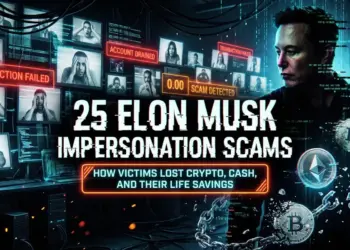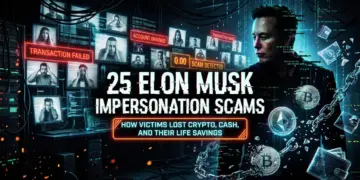












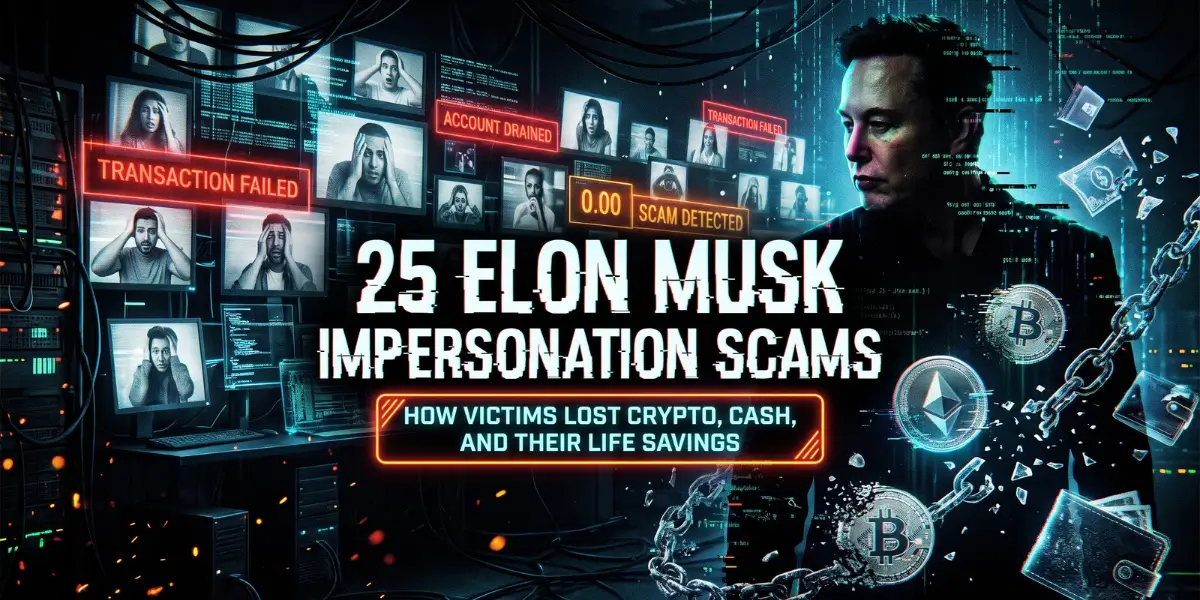
Impersonation scams involving Elon Musk have become one of the most recognisable forms of celebrity fraud online. Scammers use a combination of social media manipulation, cryptocurrency deception, fake investment platforms, romantic tactics and AI-generated deepfakes to make their fraudulent offers appear credible.
They exploit Musk’s reputation and association with Tesla, SpaceX, Dogecoin, Bitcoin and artificial intelligence to promote fake giveaways, investment opportunities, prizes and ‘exclusive’ business deals. Some messages promise free cryptocurrency or doubled deposits, while others claim to offer Tesla investments, private business opportunities, expensive prizes or direct access to Musk himself.
The danger is that these scams are no longer always obviously fake. A fraudulent account may use a copied profile photo, a similar username, fabricated verification signals, professional-looking websites, fake customer support agents and testimonials from other ‘investors’. Some campaigns also use AI-generated videos and cloned voices to make it appear that Musk has endorsed an investment platform or is speaking directly to a potential victim.
In one case investigated by The New York Times, 82-year-old retiree Steve Beauchamp reportedly lost more than $690,000 after being convinced by a deepfake video that a high-return investment opportunity was legitimate.
These scams affect both experienced cryptocurrency users and people with little knowledge of digital assets. Some victims have lost a few hundred dollars’ worth of gift cards, while others have transferred Bitcoin, Dogecoin, USDT or other cryptocurrencies worth tens or hundreds of thousands of dollars.
In one reported case in Ontario, a 51-year-old woman, identified in the media as Denise, allegedly lost approximately CAD $1.7 million after investing through a platform that was promoted using an AI-generated video of Musk.
The scams can begin almost anywhere: Facebook, Instagram, YouTube, TikTok, X, Telegram, WhatsApp, email, dating platforms or online advertisements. A victim may first come across a fake livestream, enter a Tesla giveaway, receive a private message from an alleged Musk account or join a cryptocurrency investment group. Once contact has been established, the fraudster may spend days or months building trust before requesting money.
What is an Elon Musk Impersonation Scam?
An Elon Musk impersonation scam involves criminals pretending to be Elon Musk, Tesla, SpaceX, Neuralink or an affiliated representative in order to obtain money, cryptocurrency, personal information or access to accounts.
The scammer may claim to be:
Elon Musk himself
A Tesla or SpaceX employee
Musk’s assistant, lawyer, manager, or financial adviser
A cryptocurrency investment specialist
A customer-support representative
A charity or giveaway organizer
A blockchain recovery agent
The identity may be fake, but the goal is genuine: to obtain money, cryptocurrency, personal data or access to accounts.
Common payment methods requested by scammers include Bitcoin, Dogecoin, Ethereum, USDT, bank transfers, transfers via payment apps, prepaid cards and Apple or Google Play gift cards. Often, scammers instruct victims to send cryptocurrency to a QR-coded wallet or pay a fee in order to receive a supposed prize or withdraw fake investment profits.
Why are fake Elon Musk accounts so convincing?
Elon Musk is an attractive target for online fraudsters because his public image is associated with wealth, innovation, electric vehicles, space technology, artificial intelligence, cryptocurrency and high-risk investment opportunities.
A scammer can exploit that public image in several ways:
A fake Tesla giveaway appears believable because Musk is associated with Tesla.
A cryptocurrency promotion seems credible because Musk has publicly discussed Bitcoin and Dogecoin.
An AI trading platform appears relevant because Musk is associated with advanced technology.
A SpaceX investment scam gains authority from the company’s global reputation.
A private message feels exclusive because the victim believes they are speaking directly with a billionaire.
The combination of celebrity recognition and emerging technology can lend credibility to a fraudulent offer. While the offer itself may seem unusual, the identity lends it a sense of legitimacy.
How are AI deepfakes used in scams?
Artificial intelligence has made celebrity impersonation scams more persuasive. Criminals can manipulate real interview footage, clone a public figure’s voice and generate realistic facial movements. They can also create entirely synthetic videos that appear to show a celebrity promoting an investment.
A deepfake Elon Musk video may appear in:
A fake YouTube livestream
A social-media advertisement
A fabricated news report
A cryptocurrency giveaway page
A fake Tesla or SpaceX announcement
A private message sent to a potential victim
The video may contain a QR code, wallet address or link to a fraudulent trading platform. It may also display fake comments and transaction counters in an attempt to create social proof.
However, realistic-looking media is not proof of authenticity. It is possible to reproduce someone’s face and voice in a video without that person ever recording or approving the message.
How much money have victims lost?
Reported losses range from less than $200 to more than $1 million. The figures below should be interpreted carefully: some come from police reports or direct media interviews, while others come from consumer complaints submitted to regulators. A complaint documents what a consumer reported, but this does not automatically mean that every detail has been verified independently.
| Reported loss | Type of scam | Source type | Verification level |
|---|---|---|---|
| About $145 | Fake Bitcoin referral code | Consumer complaint | Alleged |
| About $700–$1,000 | Romance and impersonation scam | Consumer complaint | Alleged |
| About $800–$6,000 | Gift cards, fake prizes, impersonation | Consumer complaints | Alleged |
| About $10,000 | Crypto investment impersonation | Victim interview | Reported |
| About $13,000 | Fake Dogecoin giveaway | Consumer complaint | Alleged |
| About $13,500 | Fake Tesla crypto prize website | Consumer complaint | Alleged |
| About $18,880 | Fake Cybertruck crypto giveaway | Consumer complaint | Alleged |
| About $36,000 | Deepfake YouTube giveaway | Better Business Bureau complaint cited by The New York Times | Reported |
| About $150,000 | WhatsApp impersonation scam | News report | Reported |
| About $250,000 | Facebook impersonation and money laundering | Police and court reporting | Strongly reported |
| About CAD $1.7 million | AI video investment scam | Canadian media investigation | Reported |
| More than $690,000 | Deepfake investment scam | The New York Times investigation | Strongly reported |
Why this article matters:
This article is not intended to mock victims or suggest that only inexperienced internet users fall for these schemes. Modern impersonation scams are designed to manipulate normal human reactions, such as trust, excitement, fear, hope and the desire to improve one’s financial situation.
The most sophisticated scams combine:
Celebrity impersonation
Social engineering
Deepfake video
Voice cloning
Fake investment dashboards
Cryptocurrency wallets
Romance tactics
Fabricated legal documents
Impersonated customer support
Advance-fee fraud
Understanding these techniques can help readers to recognise the warning signs before they send money.
Key warning signs:
An alleged Elon Musk account is almost certainly fraudulent if it:
Privately contacts you with an investment opportunity
Promises guaranteed or risk-free returns
Offers to double cryptocurrency
Requests Bitcoin, Dogecoin, Ethereum, USDT, or another digital asset
Asks for Apple or Google Play gift cards
Demands taxes, activation fees, or withdrawal charges
Tells you to keep the conversation confidential
Creates urgency or threatens to close your account
Sends you to an unfamiliar investment website
Displays profits that cannot be withdrawn
Requests your wallet seed phrase or private key
Uses a deepfake video as its only proof of legitimacy
The simplest rule is often the most effective:
Never send money, gift cards or cryptocurrency to someone who claims to be Elon Musk and who has contacted you online.
The following reported cases and schemes demonstrate how these scams operate, how victims are targeted, and which warning signs should raise immediate suspicion.
25 Elon Musk impersonation scams, schemes, and reported cases
1. The $1.7 million AI video investment scam
A 51-year-old woman from Ontario, identified in the media as Denise, reportedly lost approximately CAD $1.7 million after coming across an AI-generated video that appeared to show Elon Musk promoting a cryptocurrency investment platform.
The video claimed that users could start with a deposit of $250 and generate daily profits. After the initial payment, the scammers continued to ask for additional deposits.
This case demonstrates how deepfakes can transform a well-known public figure into a potent social engineering tool. A familiar face and convincing voice can lend legitimacy to a fraudulent platform, even when the business behind it cannot be independently verified. Ai Financial
Warning signs:
Guaranteed or unusually consistent returns
A celebrity promoting a private investment website
Requests for additional deposits before withdrawals
No verifiable company registration
Pressure to act immediately
2. The Texas Woman Who Lost $250,000 to a Facebook Impersonator
A 74-year-old woman from Texas reportedly communicated with someone posing as Elon Musk on Facebook for months and transferred approximately $250,000 to what she believed were Musk-related business ventures.
Court documents later revealed that the funds had been transferred to a Florida man named Jeffrey Arthur Moynihan Jr., who is accused of helping to move and convert some of the money into cryptocurrency. This case demonstrates that celebrity impersonation fraud is not usually a one-off scam involving a single message; it can entail weeks or months of trust-building, emotional manipulation and repeated financial requests.
Warning signs:
A celebrity account initiates private contact
The conversation becomes personal or romantic
The scammer introduces an investment or financial emergency
The victim is asked to send money through crypto, wire transfer, or payment apps
3. The Facebook impersonation case that led to criminal proceedings
The same Texas case resulted in criminal proceedings being brought against an individual alleged to have participated in the scheme. According to reports, the impersonator used Facebook to pose as Elon Musk, communicate with the victim and persuade her to transfer hundreds of thousands of dollars.
The reported pattern followed a familiar sequence:
The criminal created a profile using Musk’s name and images.
The victim received friendly or personal messages.
Trust developed through repeated communication.
The impersonator introduced an investment or financial emergency.
The victim was persuaded to transfer money.
Editorial note: Reporting outlets have described different loss figures in connection with this case. The court reporting reviewed for this article supports approximately $250,000; readers should treat higher figures as unverified unless supported by court records or primary law-enforcement documentation.
4. The Woman Who Sent $150,000 Through WhatsApp
A 71-year-old woman from Nebraska reportedly lost around $150,000 after communicating with someone on WhatsApp who claimed to be Elon Musk.
The conversation reportedly continued for about a year before the victim was persuaded to send cryptocurrency.
A long conversation does not prove that an online relationship is genuine. Scammers can maintain multiple fake identities using scripts, stolen images, translation tools and AI-assisted messaging.
The longer communication continues, the more difficult it may become for the victim to question the relationship emotionally.
5. The Tesla and Apple Gift Card Scam
A man from Victoria, Canada, reportedly fell behind on his rent after being deceived by someone claiming to be Elon Musk.
The scammer allegedly promised the victim a Tesla and millions of dollars, but requested Apple gift cards to activate a supposed tracking or delivery system. The victim sent the gift card codes via WhatsApp and was later evicted.
No legitimate celebrity, car manufacturer, investment company or government agency requires payment via Apple gift cards.
Once the victim has sent the redemption codes, the scammer can quickly drain the balance and become difficult to trace.
6. The Cybertruck Giveaway That Cost Nearly $19,000
According to a consumer complaint obtained by Gizmodo through a Freedom of Information Act request to the Federal Trade Commission, a New Jersey resident encountered a website impersonating Tesla and Elon Musk during an online Cybertruck event.
The website displayed a cryptocurrency QR code and promised to return more crypto to users who sent funds. The complainant reportedly transferred 0.5 Bitcoin—approximately $18,880 at the time—and later noticed spelling mistakes in the transaction confirmation.
The fake website used a live event as social proof. Because the scam appeared alongside a real-world Tesla-related event, the offer may have seemed more credible.
7. The Dogecoin Giveaway That Drained a Wallet
A North Carolina user reportedly encountered a YouTube promotion connected to a Cybertruck event. The advertisement claimed that Elon Musk would double Dogecoin sent to a specific wallet.
The user intended to send a small test amount but reportedly transferred nearly all of their Dogecoin—worth approximately $13,000—to the fraudulent site. Gizmodo
This scam used two psychological triggers:
Fear of missing out on a limited-time promotion
False reassurance from a small test transaction
The basic rule remains simple: never send cryptocurrency to receive more cryptocurrency.
8. The Fake Tesla Investment Platform
Some scammers exploit Musk’s association with Tesla to promote fraudulent investment websites.
The scheme typically begins with an advertisement on platforms such as Facebook, YouTube or TikTok. This may feature a manipulated interview, fake news segment or deepfake video.
After registering, the victim sees a fabricated account balance that appears to grow. When the victim attempts to withdraw the funds, the website demands additional payments for:
Taxes
Processing fees
Account verification
Anti-money-laundering checks
Wallet activation
Insurance
Withdrawal approval
The profits displayed on the dashboard are not real. Paying additional fees will not unlock them.
Gizmodo has documented multiple FTC complaints involving fake crypto platforms, fake Tesla and SpaceX investment offers, and impersonation campaigns using Musk’s name and likeness.
9. The Brazilian Businesswoman Who Reportedly Took Out Loans
According to reports in the Indian media, a businesswoman from Goiás, Brazil, was allegedly deceived by someone posing as Elon Musk.
According to the reports, the scammer claimed to need money to refuel a private jet. The woman reportedly took out loans and considered selling her home before realising she had been deceived. She is said to have lost approximately R$150,000.
Editorial note: This case should be independently verified against Brazilian reports or police records before being presented as fully confirmed. To ensure editorial accuracy, use language such as ‘reported’ and identify the publication making the claim.
10. The Chicago Veteran Who Lost $10,000
Richard Lyons, a Vietnam veteran from the Chicago area, told ABC7 Chicago that someone pretending to be Elon Musk had contacted him via social media.
Lyons reportedly exchanged numerous direct messages with the imposter and received voice recordings and an image of a Cybertruck. He said that he transferred approximately $10,000 worth of cryptocurrency before realising that the investment was fraudulent. ABC7 Chicago
This case demonstrates how scammers combine personal communication with visual ‘proof’. While a voice message, photograph or video call can inspire confidence, none of these materials prove that the account belongs to Musk.
11. The Fake Passport and $600,000 Crypto Balance
A Florida resident reportedly received what appeared to be the first page of Elon Musk’s passport.
The impersonator then allegedly instructed the victim to create a cryptocurrency wallet. Once inside the wallet or on the associated website, the victim saw a balance of almost $600,000.
However, before the money could be withdrawn, the victim was asked to pay a $1,500 fee. This balance was not evidence of a real investment, but part of the deception.
This is a classic advance-fee scam: the criminal first shows the victim imaginary wealth and then demands real money in return.
12. The Abu Dhabi USDT Investment Trap
A resident of Abu Dhabi reportedly met someone on Telegram who later moved the conversation to WhatsApp.
This contact promoted a website that was presented as an investment platform related to Elon Musk or SpaceX. The victim deposited USDT and saw fabricated profits displayed online.
However, when they tried to withdraw the money, the platform demanded additional payments for synchronisation, KYC processing and a supposed SWIFT code.
This scam highlights the fact that a professional-looking dashboard means very little. Fraudulent platforms can display any balance they want.
13. The Fake AI Trading Bot
A Houston resident reportedly joined a WhatsApp investment group that was promoting an AI trading bot which was supposedly designed by Elon Musk.
The group shared trading signals, profit screenshots and apparent withdrawal records. After the victim had deposited money, the scammers allegedly blamed technical issues and wallet anomalies for preventing withdrawals. They then demanded more funds.
The word ‘AI’ is increasingly used as a credibility shortcut. A platform may claim to use artificial intelligence without providing evidence of a legitimate company, audited results, a regulated broker or a verifiable trading history.
14. The Fake Bitcoin Referral Code
A Michigan resident reportedly clicked on a TikTok advertisement claiming that Elon Musk was offering Bitcoin through a referral code.
Although the website displayed a balance, the victim could not withdraw it without first depositing Bitcoin to verify or unlock the account. After sending approximately $145, the victim still could not access the supposed funds.
Remember that a balance shown on an unknown website is not the same as cryptocurrency held in a legitimate wallet or regulated exchange.
15. The Tesla Crypto Prize Website
A Taipei resident reportedly came across a website that claimed Elon Musk was giving away cryptocurrency.
The site had allegedly copied content from legitimate publications and displayed a fake transaction leaderboard to make the promotion appear legitimate. The victim reportedly sent approximately $13,500 worth of cryptocurrency.
Fake leaderboards, animated transaction counters and fabricated comments are all forms of social proof. They are designed to make visitors believe that other users are participating successfully.
16. The Facebook Giveaway That Harvested Personal Data
One person reportedly completed a Facebook form for a supposed Tesla giveaway, providing a name, address, phone number and email address.
They were later asked to pay a $200 registration fee, followed by a request for a further $500 payment. Although no money was sent, the exposed personal information could potentially be used for further fraud or identity theft.
A scam does not need to be financially successful to be dangerous. This personal data could be used for fake loan applications, account takeovers, phishing campaigns and additional impersonation attempts.
17. The Fake Elon Musk Romance Scam
A Nagpur resident in India reportedly communicated with someone who claimed to manage Elon Musk’s account.
According to the complaint, the scammer used romantic language and emotional manipulation before allegedly stealing between $700 and $1,000. They then stopped communicating and blocked the victim after receiving the money.
Romance scams are built on emotional dependency. The fake identity is merely the starting point; the real objective is to make the victim feel responsible for helping someone they believe they love or trust.
18. The Deepfake That Promised to Double Cryptocurrency
A separate group of victims reportedly encountered videos that appeared to show Musk promising to double any cryptocurrency sent to specified wallets.
The scammers edited real interviews and used AI-generated voice and facial manipulation to create the illusion of a live endorsement. At least one victim in Texas reportedly lost approximately $36,000 after sending cryptocurrency to the promoted wallet.
The videos often feature familiar footage with realistic lip movements and a voice resembling Musk’s speech patterns. However, a deepfake can reproduce all of these elements without the person ever having made the statement.
19. The Facebook Tesla Giveaway That Demanded Fees
Several consumers reportedly filled out Facebook forms for alleged Elon Musk or Tesla giveaways.
After submitting their details, they were asked to pay various fees, such as registration, delivery, shipping or processing. In some cases, these demands allegedly increased from a few hundred dollars to larger sums as the scammers continued to pressure the victims.
This is an advance-fee scam disguised as a prize draw. Legitimate prize draws publish clear rules and do not require winners to pay unexpected fees using cryptocurrency or gift cards.
20. The Small-Loss Scam That Started With $800
Not every victim loses tens or hundreds of thousands of dollars.
Consumer complaints have reportedly included losses of approximately $800 and $6,000. In these cases, scammers have allegedly used urgency, flattery, fabricated documents and fake celebrity connections to make relatively small payments seem reasonable.
These examples are important because an initial small payment may be a test. If the victim sends money once, the scammer may follow up with a larger request.
21. The Fake Tesla-Branded Token Presale
Some scams have reportedly used names related to Tesla to promote new cryptocurrency tokens or presales.
Victims were led to believe that they were purchasing an asset connected to Elon Musk or Tesla. They later discovered that the token was not connected to the legitimate company, or that the token and presale did not exist as represented.
Gizmodo has reported on fake promotions for the “Tesla Token”, “Tesla Mining”, “Neuralink Crypto Token” and “SpaceX Token”, emphasising that Musk does not operate a public website for selling cryptocurrencies or shares in his private companies.
Using a celebrity’s name does not make a cryptocurrency legitimate. Before buying a token, verify the issuer, contract address, legal disclosures, independent audits and official company announcements.
22. The Fake Elon Musk Account on Multiple Platforms
Scammers do not always remain on one platform.
A fraudulent campaign may begin with a YouTube advertisement, continue on Telegram and WhatsApp, and eventually direct the victim to a cryptocurrency exchange or wallet.
Moving between platforms creates the illusion of an organised company. It also makes reporting and investigation more difficult.
The same criminal group may control the advertisement, social media account, website, customer support chat and payment instructions.
23. The Fake Assistant or Lawyer
After a victim becomes suspicious, another scammer may contact them while pretending to be:
Musk’s attorney
A Tesla representative
A government investigator
A blockchain recovery specialist
An exchange employee
A cybersecurity expert
The supposed professional promises to recover the stolen funds—but requires an upfront payment.
This is a recovery scam. Victims who have already lost money are targeted because scammers know they are likely to be desperate and emotionally vulnerable.
No legitimate recovery service can guarantee that stolen cryptocurrency will be returned.
24. The Elderly Victim Targeted Through Tesla Branding
The scammers reportedly claimed that Tesla was having financial difficulties and needed assistance with discounted vehicle purchases. The victim then bought Apple gift cards and sent the scammers the redemption codes.
This case underscores the need for families to discuss digital safety practices with older relatives. The conversation should be supportive, not judgmental. Shame often prevents victims from quickly reporting fraud.
25. The Retiree Who Lost More Than $690,000
Steve Beauchamp, an 82-year-old retiree, reportedly saw a video of Elon Musk promoting what appeared to be a high-return investment opportunity.
According to The New York Times, the opportunity initially required a relatively small deposit of $248. Over the following weeks, Beauchamp transferred more than $690,000, including retirement funds, credit card debt, a line of credit, and a loan from his sister.
The scammers then demanded additional payments for administration, commissions, and withdrawals.
This case demonstrates how quickly a fraudulent investment can escalate. The victim does not necessarily lose everything in one transaction. Instead, the scammer creates a cycle:
Show a small early gain.
Encourage a larger deposit.
Display increasing profits.
Block the withdrawal.
Demand another payment.
Repeat the process.
The Most Common Elon Musk Scam Tactics
Fake giveaways
Victims are told that they have won Bitcoin, Dogecoin, a Tesla or a substantial cash prize. However, before they can receive their prize, they must pay a registration, delivery, tax or activation fee.
Celebrity investment endorsements
Deepfake videos, fake interviews, and copied news articles make it appear that Musk supports a cryptocurrency or trading platform.
Romance and emotional manipulation
The scammer builds a personal relationship with the victim before introducing an emergency, investment opportunity, or request for money.
Fake crypto wallets
A website displays a large balance, but the victim is required to make a deposit or pay a fee before they can withdraw the supposed funds.
Gift card payments
Apple, Google Play and other gift cards are requested because the codes can be transferred quickly and are difficult to trace.
Fake assistants and recovery agents
After the initial fraud, a second impersonator contacts the victim and promises to recover the money for another fee.
AI-generated evidence
Scammers use cloned voices, manipulated videos, fake IDs, fabricated screenshots and synthetic images to create the illusion of authenticity.
Why These Scams Work
These schemes are not successful simply because every victim is careless. They work because criminals combine several powerful psychological techniques.
Authority
For example, Elon Musk is associated with Tesla, SpaceX, technology, wealth, and innovation. Using his identity lends an offer of any kind immediate credibility.
Familiarity
A victim may recognise Musk’s face and voice. This can reduce scepticism.
Urgency
Scammers claim that the offer is limited, that the account will close, or that payment must be made immediately.
Social proof
Fake comments, live counters, transaction lists and testimonials make the opportunity appear popular.
Escalation
The victim starts with a small amount. After seeing fake profits, the scammer encourages them to make a larger deposit.
Emotional pressure
Romance, fear, excitement, greed, and sympathy can all cloud judgment.
How to Tell Whether an Elon Musk Account Is Fake
Use the following checklist before responding to any supposed celebrity account:
Check the exact username and profile URL.
Do not trust a verification badge by itself.
Search for the same announcement on official company channels.
Never send crypto to receive more crypto.
Do not pay a prize fee with Apple or Google Play gift cards.
Treat private messages from celebrities as suspicious.
Consider guaranteed returns a major warning sign.
Verify the company through independent government or regulatory sources.
Do not click unsolicited investment links.
Ask someone you trust for a second opinion.
Reverse-search profile images when possible.
Do not share seed phrases, passwords, identification documents, or banking codes.
Remember that realistic video and audio can be AI-generated.
What to Do If You Sent Money
If you believe you have been scammed, act quickly.
Stop communicating with the scammer.
Do not send another payment to “unlock” or recover the funds.
Save screenshots, usernames, phone numbers, emails, wallet addresses, and transaction IDs.
Contact your bank, payment provider, or cryptocurrency exchange immediately.
Report the account, advertisement, and website to the platform.
File a report with local law enforcement or your country’s cybercrime authority.
Report the fraud to the relevant consumer-protection agency.
Change passwords and enable multi-factor authentication.
Monitor bank accounts and credit reports.
Warn close friends and family members about the scam.
Be cautious of anyone offering guaranteed recovery services.
Cryptocurrency transactions may be difficult or impossible to reverse after confirmation. Even so, transaction records can help exchanges, investigators, and law-enforcement agencies trace the funds.
FAQs:
Does Elon Musk send private messages to people asking for cryptocurrency?
There is no legitimate reason for him to do so.
Are Elon Musk Bitcoin giveaways real?
No. Any offer that asks you to send Bitcoin or another cryptocurrency first in exchange for a larger return is a classic scam.
Can AI create a fake Elon Musk video?
Yes. Generative AI can manipulate faces, voices, lip movements, subtitles and backgrounds. However, a realistic video does not prove that the person made the statement.
Are Tesla-branded crypto tokens officially connected to Tesla?
Not necessarily. A token can feature Tesla’s name, logo, or imagery without having any legitimate connection to the company. Always verify announcements through official sources.
Can stolen cryptocurrency be recovered?
It is sometimes possible to recover stolen crypto if funds are frozen quickly, but this is not guaranteed. Never pay an unknown person who promises to recover your cryptocurrency.
Where should victims report an Elon Musk impersonation scam?
They should notify their bank or exchange, report the social media account and advertisement, and contact their local law enforcement agency and the relevant consumer protection agency.
Can a verified social media badge prove that an account is real?
No, as a verification badge only indicates that an account meets a platform’s identity or subscription requirements. It does not prove that the person behind the account is genuinely Elon Musk or an authorised representative.
Final Takeaway
The most important lesson from these reported Elon Musk impersonation scams is simple:
A famous name is not proof of authenticity.
Scammers exploit Musk’s identity because it embodies wealth, technology, innovation and celebrity status. Artificial intelligence now enables them to create convincing videos, cloned voices, fake documents and realistic investment websites, adding to traditional social-engineering tactics.
Before sending money, verify the opportunity through an official, independent source. If the offer promises guaranteed profits, demands secrecy, requires gift cards or asks you to send cryptocurrency first, assume it is fraudulent.
The safest response to an unsolicited celebrity investment offer is usually to refuse and verify independently.
Editorial note: This article distinguishes between independently reported cases and examples drawn from consumer complaints. A complaint is an allegation or account submitted by a consumer and is not necessarily a court-confirmed finding. Where possible, this article links to primary reporting, court records, law enforcement statements or official consumer protection sources.