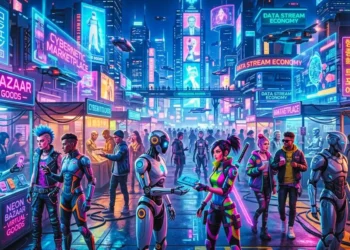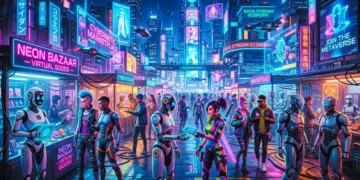

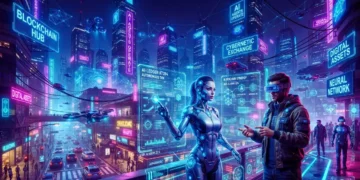
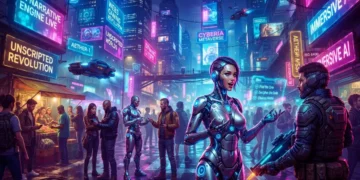








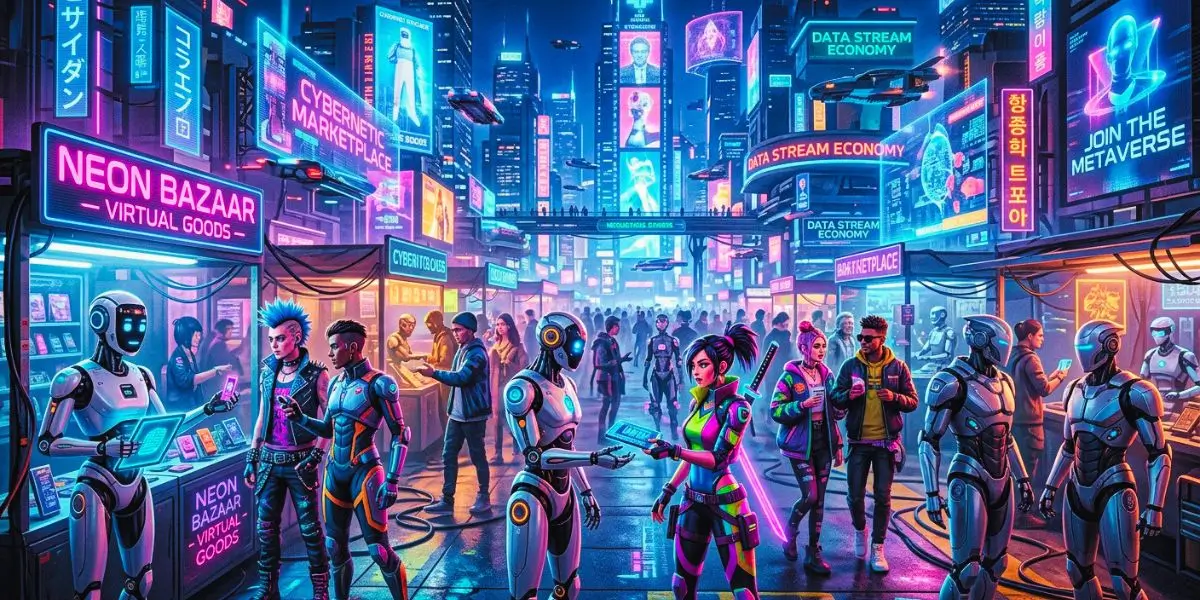
Picture this: you’re walking through a bustling digital marketplace, and you can’t tell if the merchant haggling with you is controlled by artificial intelligence or a real person sitting in their living room thousands of miles away. Welcome to the future of virtual economies, where the line between AI NPCs and human avatars is becoming increasingly blurred. But here’s the million-dollar question—or should I say, the million-Linden-dollar question—who’s really going to be pulling the strings in these digital worlds?
Quick Answer: The next virtual economy will not be controlled by AI NPCs alone, nor will it remain exclusively human. Instead, it will be driven by a hybrid model where human avatars set the direction, build trust, and create cultural value, while AI NPCs scale production, automate services, and handle repetitive economic tasks. The platforms that succeed will be those that make human oversight a core design principle.
The question sounds like science fiction, but it is already playing out inside persistent virtual worlds. For more than two decades, platforms such as Second Life have shown that virtual economies can generate real money, real careers, and real social value. Now, advanced AI NPCs are entering those same spaces. They can chat, trade, create content, and even run businesses. That raises an urgent question: will the next virtual economy be controlled by autonomous AI agents, or will human avatars remain the dominant economic force?
The honest answer is more nuanced than a simple either/or. To understand where virtual commerce is heading, we need to look at what human avatars built in worlds like Second Life, what AI NPCs are now capable of, and how both forces might combine over the next decade.
Understanding the Virtual Economy Landscape
What Defines a Virtual Economy?
A virtual economy is essentially a digital marketplace where people (or artificial intelligences) buy, sell, and trade digital goods and services. Think of it as a real economy, but instead of trading physical items like apples or cars, you’re trading virtual property, digital clothing, in-game currency, and services. The fascinating part? Some of these virtual economies have generated billions of dollars in real-world value.
The virtual economy isn’t just about fun and games anymore. It’s a legitimate economic system with real financial implications. People earn actual money through virtual transactions, and businesses have built empires on digital real estate and virtual goods.
The Evolution from Second Life to Modern Metaverses
If you were online in the mid-2000s, you probably heard about Second Life. This groundbreaking virtual world was revolutionary—it was one of the first platforms where users could create, buy, and sell virtual property using a virtual currency called the Linden Dollar. Some people were making genuine incomes as virtual real estate developers, fashion designers, and service providers.
But Second Life was almost entirely human-driven. Every avatar represented a real person (well, mostly). Fast forward to today, and we’re seeing a dramatic shift. Modern metaverses are integrating AI NPCs—non-player characters controlled by artificial intelligence—that can engage in economic activities, learn from interactions, and even make independent decisions about buying and selling.
The Rise of Virtual Economies
A virtual economy is a system in which digital goods, services, currencies, and assets are produced, bought, sold, and traded inside an online world. These economies are not hypothetical. They have existed for years in games, metaverse platforms, and social virtual worlds.
Second Life, launched by Linden Lab in 2003, remains one of the clearest examples. Residents create nearly all of the content in the world: clothing, buildings, animations, vehicles, scripts, and experiences. They sell these items to other residents using Linden dollars, a virtual currency that can be exchanged for real-world money. Over the years, Second Life has supported a thriving market of creators, landowners, event hosts, and service providers. Some residents have built full-time incomes from their virtual businesses.
What makes this significant is not the technology itself but the economic behavior it enables. Human avatars in Second Life behave like small business owners. They identify demand, design products, market their stores, compete on quality, and build reputations. The economy is social, creative, and deeply tied to human identity.
This is the baseline. Before AI NPCs entered the conversation, virtual economies were already complex, human-driven systems. Any discussion of future control must start from that reality.
Second Life: The Original Human Avatar Economy
Second Life is often cited as the first major user-generated virtual economy. Unlike game worlds where items are created by developers, Second Life gave residents the tools to build their own assets and, crucially, retain intellectual property rights over their creations.
That decision changed everything. It transformed users from consumers into producers. A resident could design a virtual dress, sell it in a marketplace, earn Linden dollars, and convert those earnings into US dollars. Over time, an entire ecosystem emerged.
Second Life demonstrated several principles that still matter today:
Ownership drives investment. When people own what they create, they invest more time and effort.
Reputation is economic infrastructure. Buyers return to sellers they trust. Ratings, reviews, and personal relationships matter.
Creativity has long-tail value. Even niche products can find a market because the world attracts diverse interests.
Social presence fuels commerce. Shopping in Second Life is often a social activity. Human avatars browse together, attend events, and recommend products to friends.
These dynamics are not easy for AI to replicate. An AI NPC can list products and process transactions, but it does not naturally build the kind of social trust that drives repeat business in a human community.
At the same time, Second Life also shows the limits of a purely human economy. Human creators have limited hours. They cannot be online 24/7. They need sleep, breaks, and time to develop new skills. Scaling a human-run virtual business is difficult. This is where AI NPCs enter the picture.
AI NPCs: The Autonomous Agents of Tomorrow
How AI NPCs Are Transforming Digital Worlds
Imagine having thousands of virtual shopkeepers, traders, and service providers who never need sleep, never get tired, and can handle countless transactions simultaneously. That’s the promise of AI NPCs. These aren’t your grandmother’s video game characters that repeat the same three lines of dialogue. Modern AI NPCs are sophisticated, learning entities that adapt and evolve.
AI NPCs can populate virtual worlds at scale. While human avatars require actual people behind the controls, AI NPCs can be deployed infinitely. They can fill out entire cities, run businesses, and create vibrant economies without requiring human supervision for every single interaction.
Learning Behaviors and Adaptive Systems
The really cool part about AI NPCs is that they learn. They observe player behavior, understand market trends, and adjust their strategies accordingly. An AI merchant might notice that certain items are in high demand and raise prices, or they might see that competition is fierce and offer special deals. They’re not just following pre-programmed scripts—they’re genuinely adapting to their environment.
Machine learning algorithms allow these NPCs to improve over time. They can recognize patterns in human behavior, predict what players might want, and position themselves advantageously in the virtual marketplace.
Economic Decision-Making Without Human Input
Here’s where it gets interesting: AI NPCs can make autonomous economic decisions. They can invest virtual currency, take risks, form partnerships with other NPCs, and even engage in complex negotiations without any human telling them what to do. Some experimental virtual worlds have watched AI NPCs create trading strategies that humans hadn’t even considered.
This autonomy raises an intriguing possibility—could AI NPCs eventually make better economic decisions than their human counterparts? After all, they’re not clouded by emotions, fatigue, or irrational impulses.
The Benefits of AI-Driven Virtual Economies
The advantages of AI NPCs in virtual economies are substantial. First, they provide constant economic activity. When humans log off, the economy doesn’t stop—AI NPCs keep trading, working, and creating value. This creates a more dynamic and realistic economic environment.
Second, AI NPCs can handle complex economic simulations. Economists and researchers can use virtual worlds populated with AI NPCs to test economic theories and policies without real-world consequences. Want to see what happens if you introduce universal basic income? Run it in a virtual world with AI NPCs first.
Third, they reduce the friction of finding trading partners. Need to buy something specific? An AI NPC can almost always fulfill your request, without the wait time required when dealing with human players.
What AI NPCs Bring to Virtual Commerce
Traditional NPCs — non-player characters — have existed in games for decades. Most follow simple scripts. They stand in place, repeat dialogue, and offer fixed prices. They are part of the scenery, not real economic actors.
AI NPCs are different. Powered by large language models and generative AI, these agents can hold conversations, understand context, negotiate, generate content, and adapt to changing conditions. In a virtual economy, an AI NPC might:
Run a customer service desk that understands and resolves complex questions.
Create new clothing designs or textures based on current trends.
Manage inventory and adjust prices dynamically based on demand.
Act as a shopping assistant that remembers a customer’s preferences.
Provide services such as translation, guided tours, or event hosting.
Trade goods with other AI agents to balance supply and demand.
The potential is enormous. AI NPCs can operate around the clock, process vast amounts of data, and produce content at scale. They do not need training time, vacations, or emotional support. For platform operators, AI agents promise a more active, liquid, and efficient economy.
But efficiency is not the same as control. An economy that runs entirely on AI may become efficient in a narrow sense, but it can also become hollow. If every store is staffed by bots, every product is AI-generated, and every interaction feels automated, users may lose the emotional connection that makes virtual worlds worth visiting.
Human Avatars: The Personal Touch in Digital Spaces
Why Human Control Matters in Virtual Worlds
But here’s the thing—humans bring something to virtual economies that AI simply can’t replicate: genuine intention, creativity, and unpredictability. When a human avatar creates something, there’s soul behind it. When they negotiate a deal, there’s personality involved. When they take a risk, it’s driven by passion, not algorithms.
Human avatars are the heart and soul of virtual communities. They’re the ones who create the narratives, build the friendships, and generate the organic excitement that makes virtual worlds feel alive. You can’t automate genuine human connection, and that’s what keeps people coming back to these digital spaces.
Creativity and Unpredictability
Humans are unpredictable in the best way possible. A human designer might create something that breaks all the rules and becomes wildly successful. A human entrepreneur might take a crazy risk that pays off spectacularly. These moments of creative brilliance and entrepreneurial daring are what drive innovation in virtual economies.
AI NPCs follow optimization patterns—they’re designed to be efficient and rational. But humans? Humans do weird, wonderful, unexpected things. They form emotional attachments to virtual items. They make trades based on friendship rather than profit. They create art that has no monetary value but tremendous emotional worth.
Building Authentic Communities
Virtual communities thrive on authentic human interaction. When you’re hanging out with friends in a virtual space, you want to know there’s a real person on the other end of that avatar, not just a sophisticated algorithm. The conversations, inside jokes, and shared experiences that define these communities can’t be generated by AI.
The Challenges of Human-Driven Economies
However, human-controlled avatars come with their own set of challenges. Humans can be unpredictable in negative ways too—they scam, manipulate, and exploit systems. The Second Life economy experienced fraud, currency manipulation, and various schemes as users tested the boundaries of what they could get away with.
Humans also require constant engagement. If everyone logs off, the economy stalls. This creates a dependency on active player bases, which can be challenging for maintaining a thriving virtual world.
Head-to-Head: Strengths and Limitations
To understand who controls the next virtual economy, we have to compare AI NPCs and human avatars across several dimensions.
Scalability and Speed
AI NPCs win here. They can produce content, respond to customers, and complete transactions at a speed no human can match. A single AI system can manage thousands of conversations simultaneously. A human avatar can only be in one place at a time.
For platform growth, this scalability is attractive. It means more activity, more listings, and more economic turnover. But raw volume does not guarantee quality or trust.
Trust, Taste, and Emotional Connection
Human avatars win here. Trust in virtual economies is built through repeated social interaction. Buyers return to a human creator because they like that person’s style, values, and personality. They feel a connection that goes beyond the product itself.
AI NPCs can simulate friendliness, but users often know the difference. Even when an AI is polite and helpful, the relationship feels transactional. That matters in a virtual economy where community is part of the product.
Creativity and Originality
This is a more balanced comparison. Generative AI can produce impressive images, 3D models, and text. It can remix styles and generate variations quickly. But AI tends to produce work based on existing patterns. True novelty — the kind that shifts culture — often comes from human experience, contradiction, and personal perspective.
Human creators make things that surprise us. They respond to subcultures, emotions, and lived experience in ways that AI does not yet fully understand. For now, humans remain the primary source of genuine cultural innovation in virtual worlds.
Cost and Sustainability
AI NPCs can lower costs. They do not require a share of revenue, and they can operate continuously. But if platforms rely too heavily on AI-generated content, they risk flooding the market with generic goods. That can drive down prices and reduce incentives for human creators to participate.
A healthy virtual economy needs a mix. Humans provide the creative and social foundation. AI provides the operational scale.
Three Possible Futures for Virtual Economic Control
The debate over AI NPCs and human avatars is not abstract. It points toward different versions of the future.
Scenario 1: AI Saturation
In this future, AI NPCs dominate the virtual economy. They generate most content, run most stores, and provide most services. Human avatars become consumers rather than producers. The economy is fast and cheap, but it is also homogeneous. Fewer people feel motivated to create because AI can undercut their prices.
This scenario may appeal to platform operators who prioritize short-term engagement metrics. But it risks creating a world that feels empty. Users may visit, buy a few AI-generated items, and leave. Without human creativity and social connection, long-term retention suffers.
Scenario 2: Human Creators with AI Tools
In this more likely future, AI NPCs become tools rather than replacements. Human avatars use AI to handle repetitive tasks: generating texture variations, writing product descriptions, answering basic customer questions, and managing schedules. The human creator remains the brand, the decision-maker, and the face of the business.
This is already happening in many creative industries. Writers use AI for drafting, designers use AI for mockups, and customer service teams use AI chatbots. The same pattern will play out in virtual worlds. Human avatars will increasingly work alongside AI agents, not against them.
Scenario 3: Hybrid Economy with Human Oversight
The most sustainable future is a hybrid economy. AI NPCs operate as economic infrastructure: they staff shops, assist shoppers, generate routine content, and help match supply with demand. Human avatars act as entrepreneurs, curators, community leaders, and high-end creators.
In this model, control is shared but not equal. Humans set the rules, define the culture, and maintain trust. AI executes tasks within those boundaries. Platforms enforce transparency by labeling AI agents and AI-generated content. Users know when they are interacting with a bot and when they are buying from a human.
Second Life offers a useful lesson here. Its economy survived for more than two decades because it gave residents real ownership and creative freedom. That human-centered foundation built loyalty that automated systems alone cannot replicate. The next virtual economy should learn from that example.
What Platforms Must Get Right
The future of virtual economic control depends heavily on platform governance. If a platform allows AI NPCs to operate without clear rules, the economy may tilt toward AI saturation. If it restricts AI too aggressively, it may miss opportunities for growth.
Several policy decisions matter:
Transparency: AI agents should be clearly identified. Users deserve to know whether they are talking to a human avatar or an NPC.
Ownership rights: Who owns the output of an AI NPC? The platform, the AI developer, or the user who deployed the agent? Clear rules are essential.
Economic limits: Some platforms may choose to cap the number of AI transactions or require human review for certain types of content.
Content labeling: Products generated primarily by AI should be labeled. This allows consumers to choose human-made goods if they prefer.
Reputation systems: AI agents should not inherit human trust. Separate reputation systems for AI and human sellers can preserve accountability.
Second Life has already dealt with scripted agents and bots. The platform has introduced policies to identify scripted agents and restrict their behavior in certain contexts. That experience shows that virtual economies need governance, not just technology.
The Next Virtual Economy: A Human-Guided, AI-Powered Model
So, who will control the next virtual economy? The answer is not AI NPCs or human avatars alone. The next virtual economy will be human-guided and AI-powered.
Human avatars will continue to create the cultural and social value that makes virtual worlds meaningful. They will design the flagship products, build communities, and set trends. Their reputations will anchor the economy.
AI NPCs will handle the scale. They will keep stores open when human owners are offline, help customers find what they need, generate routine variations, and provide real-time support. They will make virtual commerce more efficient without replacing the human presence that gives it life.
This is not a compromise. It is a practical synthesis. The platforms that embrace both human creativity and AI efficiency will build the most resilient virtual economies.
Second Life proved that people will invest real time and money in a world they help create. AI NPCs can extend that creativity, but they cannot replace the human desire to make something of our own. The future belongs to those who understand that distinction.
Second Life: A Historical Perspective
How Second Life Pioneered Virtual Economies
Second Life deserves special mention because it was genuinely revolutionary. Launched in 2003, it created one of the first fully functional virtual economies where people could make real money. The Linden Dollar, Second Life’s currency, could be exchanged for US dollars, creating a direct link between the virtual and physical economy.
At its peak, Second Life had a thriving ecosystem of creators, builders, and entrepreneurs. People were making six-figure incomes as virtual real estate developers and fashion designers. The economy was entirely human-driven, and while it had its problems, it proved that virtual economies could be economically significant.
The Linden Dollar Revolution
The Linden Dollar was groundbreaking because it represented the first successful attempt at creating a virtual currency with real-world value. This wasn’t just play money—it was actual currency that had to be managed, regulated, and protected. The success of the Linden Dollar paved the way for cryptocurrencies and NFT-based economies in modern metaverses.
The Linden Dollar taught us valuable lessons about virtual economies: they need clear rules, fair systems, and mechanisms to prevent fraud. It also showed us that people are willing to invest real money in virtual worlds if they believe in the value proposition.
The Hybrid Future: Coexistence, Not Competition
Finding Balance Between AI and Human Control
Here’s what I think is going to happen: the future isn’t about AI NPCs vs. human avatars—it’s about them working together. The most successful virtual economies will likely blend both, using AI NPCs to provide stability, efficiency, and constant activity while relying on human avatars to drive innovation, creativity, and authentic community.
Think of it like a real city. You have infrastructure (AI NPCs) that keeps things running smoothly—utilities, basic services, and essential businesses. Then you have creative entrepreneurs and community members (human avatars) who build culture, start interesting businesses, and drive the economy forward.
Imagine a virtual world where AI NPCs run the basic economy, handling routine transactions and maintaining baseline services. Meanwhile, human avatars compete in creative industries, form communities, and pursue passion projects. The two systems support each other—AI NPCs provide a stable foundation, while humans add the magic.
Real-World Examples and Case Studies
Some games are already experimenting with this hybrid approach. Sandbox-style games like Roblox have both human creators building experiences and AI systems managing certain aspects of the economy. World of Warcraft uses AI-controlled NPCs for basic trading, while human players engage in complex player-to-player trading.
More recently, blockchain-based metaverses are experimenting with AI agents that can participate in decentralized economies alongside human players. These experiments are showing us what works and what doesn’t in hybrid economies.
Challenges and Concerns for Both Systems
Regulatory Hurdles
One of the biggest challenges facing virtual economies is regulation. Governments are still figuring out how to tax virtual income, regulate virtual businesses, and prevent money laundering through virtual currencies. Adding AI NPCs to the mix creates even more complexity—who’s responsible for an AI NPC’s transactions? The developer? The player controlling the world?
These regulatory questions need to be answered before virtual economies can truly scale. But they’re being worked on, and I’m optimistic that we’ll see clear frameworks emerge in the next few years.
Security and Trust Issues
Whether you’re dealing with AI NPCs or human avatars, security is paramount. Virtual economies need robust systems to prevent fraud, protect user data, and maintain the integrity of the currency and trading systems. This is especially tricky with AI NPCs, which could potentially be hacked or manipulated in ways that affect the entire economy.
Trust is also a concern. Players need to trust that the system is fair, that their investments are protected, and that the rules of the economy are consistent and transparent. This is true whether the economy is driven by humans, AI, or a hybrid of both.
The Future of Virtual Economies
Predictions and Possibilities
Looking ahead, I think we’ll see virtual economies become increasingly sophisticated and integrated with the real world. The line between “virtual” and “real” is already blurring—people are making real money from virtual activities, and virtual items are being traded for real-world currency.
AI NPCs will likely become more advanced and more prevalent. We might see specialized AI agents for different economic roles—some optimized for trading, others for manufacturing, still others for providing services. These agents could create incredibly complex and realistic virtual economies.
At the same time, human avatars will remain crucial because they provide the creativity, intention, and community that make these worlds worth experiencing. The humans who build, create, and connect will continue to drive the most interesting economic developments.
I predict we’ll see virtual economies that rival real-world economies in complexity and value. Some might become so sophisticated that economists study them as models for understanding real-world economic systems. And the most successful virtual worlds will be those that figure out how to balance AI efficiency with human creativity.
Conclusion
So, who will control the next virtual economy—AI NPCs or human avatars? The answer, I believe, is both. The future isn’t a competition between these two forces; it’s a collaboration. AI NPCs bring efficiency, scalability, and stability. Human avatars bring creativity, authenticity, and community. Together, they can create virtual economies that are richer, more dynamic, and more interesting than either could be alone.
The legacy of Second Life taught us that virtual economies can be real and meaningful. The advancements in AI are showing us that intelligent systems can manage complex economic activities. And the growing interest in metaverses tells us that people are ready for the next generation of virtual worlds.
The next virtual economy won’t be controlled by either AI or humans—it will be orchestrated by both, each playing to their strengths. And honestly? That’s way more exciting than any winner-take-all scenario could be.
Frequently Asked Questions
Can AI NPCs actually become better traders than human players?
In certain contexts, yes! AI NPCs can process information faster and make purely rational decisions without emotional bias. However, human intuition, creativity, and the ability to spot unconventional opportunities often give them the edge in truly competitive environments. The best outcomes typically come from hybrid strategies where humans use AI tools to enhance their decision-making.
Is Second Life still relevant in today’s metaverse landscape?
Absolutely! While Second Life isn’t as dominant as it once was, it still has an active community and continues to generate millions in annual transactions. It serves as an important historical reference point and has actually integrated new technologies like mesh avatars and improved graphics to stay competitive.
How do virtual economies handle inflation and currency manipulation?
Most virtual economies use similar mechanisms to real economies—central authorities (usually the platform developers) monitor currency supply, adjust interest rates on virtual banks, and implement policies to prevent inflation. Some newer blockchain-based economies use algorithmic controls or community governance to manage these issues.
What happens if an AI NPC becomes too dominant in a virtual economy?
This is a real concern! Platform developers typically implement safeguards like limiting how much wealth a single entity can accumulate, implementing transaction taxes, or introducing dynamic market forces that prevent monopolies. Some experimental economies have also tried using AI to simulate regulatory oversight.
Could virtual economy skills translate to real-world financial success?
Definitely! Many successful traders and entrepreneurs have honed their skills in virtual economies. The economic principles are the same—supply and demand, risk management, market analysis, and strategic thinking. Some people have actually leveraged virtual economy experience to launch successful real-world financial careers or businesses.
Will AI NPCs replace human creators in virtual worlds?
Not entirely. AI NPCs will automate many repetitive tasks and generate routine content, but human creators will remain important for originality, cultural relevance, and social trust. The most successful virtual economies will use AI as a tool for human creators rather than as a replacement.
What can Second Life teach us about virtual economies?
Second Life shows that user ownership, creative freedom, and social reputation are essential for a sustainable virtual economy. It also demonstrates that human-driven commerce can generate real-world income and long-term user loyalty when platforms give residents the right tools and protections.
How can human avatars compete with AI-generated content?
Human avatars can compete by focusing on uniqueness, community, storytelling, and personal brand. AI can produce volume, but it struggles to replicate authentic cultural perspective and emotional connection. Human creators who lean into those strengths will continue to attract loyal customers.
Will AI agents be allowed to own virtual property?
This depends on platform policy. Some virtual worlds may allow AI agents to hold property or run businesses, while others will require human oversight or registration. Clear governance will be critical to prevent AI from destabilizing virtual economies.
What is the best strategy for brands entering virtual economies?
Brands should adopt a hybrid approach. Use AI NPCs for customer service, personalization, and scalable content, but pair them with human ambassadors who build genuine community relationships. Transparency about AI use is also essential for maintaining consumer trust.