










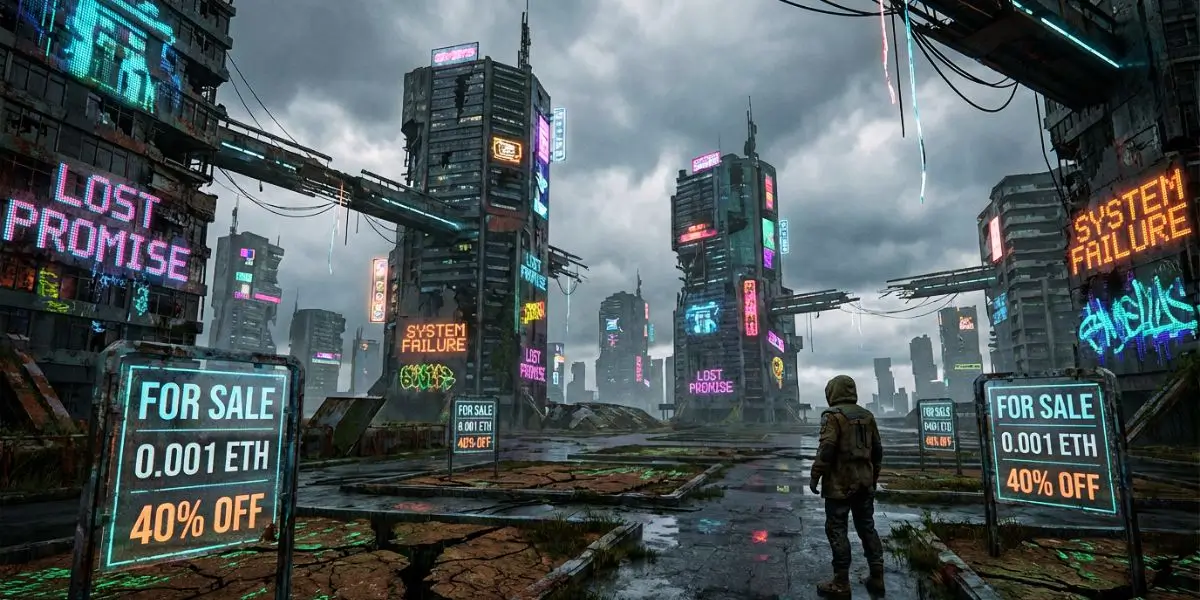
Remember the frenzy of 2021? It felt like the entire world was scrambling to buy a piece of the future. Celebrities were dropping millions on digital real estate, virtual concerts were selling out, and land prices in the metaverse were soaring to astronomical, unsustainable highs. Fast forward to today, and the headlines are brutal. We’ve seen a correction so severe that the average metaverse land price has collapsed by over 99% from its peak.
If you’re an investor, a brand manager, or just a curious observer, you’re probably asking yourself one question: Is the metaverse dead?
The answer is far more nuanced than a simple yes or no. While the speculative bubble has burst, leaving a graveyard of overpriced “ghost towns,” a new, more resilient ecosystem is emerging from the ashes. In this article, we’ll dissect why land prices in the metaverse imploded, who survived the crash, and—most importantly—how you can identify genuine opportunities in this new, post-hype landscape.
The Great Correction: What Happened to Metaverse Land?
To understand where we are going, we first need to understand how we got here. Between 2021 and 2022, the metaverse was the hottest ticket in tech. Platforms like The Sandbox and Decentraland saw metaverse land sales that defied logic. In late 2021, a plot of land adjacent to Snoop Dogg’s virtual estate sold for the equivalent of $450,000. Yes, you read that right.
But by early 2024, the average floor price for these same plots had dropped to a few hundred dollars. According to data from WeMeta and DappRadar, land prices in the metaverse have seen a staggering decline. The reasons for this collapse are multifaceted:
Macroeconomic Shift: The era of “free money” ended. As central banks raised interest rates to combat inflation, investors fled speculative, high-risk assets like crypto and NFTs. The money printer stopped, and liquidity dried up overnight.
Over-Supply: Many platforms minted millions of “land” parcels, creating an artificial scarcity that wasn’t backed by actual user demand. Supply vastly outpaced active users.
Lack of Utility: This is the big one. Most projects sold the dream but delivered a clunky, empty interface. Without compelling metaverse engagement strategies or reasons to visit, early buyers found themselves owning expensive JPEGs in a virtual ghost town.
But here is the critical insight: a market correction does not mean the end of an industry. It means the industry is growing up.
How to Spot the Survivors (And Why Experience Matters)
In today’s digital landscape, platforms and projects that demonstrate real-world value are the ones that endure. If you are looking to invest in virtual real estate today, you cannot rely on hype. You need to apply the same due diligence you would to a physical property. Ask yourself:
Does the platform have a proven track record?
Are the developers actively building and shipping updates?
Is there a vibrant community, or is it a ghost town?
The projects that survived the 99% crash are those that focused on utility over speculation. They understood that metaverse engagement strategies are the true value driver.
Real-World Example: The Survivors
Take a platform like The Sandbox. While its metaverse land price also fell dramatically, it continued to onboard major brands like Gucci, Adidas, and Warner Music. They shifted their strategy from selling land to building metaverse branding opportunities. They created “Game Maker” tools that allowed land owners to actually build interactive experiences. This shift from passive ownership to active creation is the blueprint for the future.
Getting Answers Right: Structuring Content for Clarity
To rank for terms like land prices in the metaverse, your content must answer specific questions clearly and concisely. Readers—and search engines—value direct, well-structured information that gets straight to the point. That’s why we’re breaking down the most critical questions about virtual real estate in the sections below.
Metaverse Land: Is It Truly “Land”?
This is the most common conceptual hurdle. Is land in metaverse truly land? Technically, no. You aren’t buying soil, dirt, or a deed recognized by a government.
Instead, you are buying a non-fungible token (NFT) that represents a parcel of virtual space on a blockchain. Think of it less like physical land and more like a domain name in the early days of the internet.
When you buy metaverse land for brands, you are purchasing three things:
Scarcity: A unique coordinate on a fixed grid.
Ownership: Immutable proof that you control that space.
Utility: The right to build, host, and monetize within that space.
So, while it isn’t “land” in the physical sense, it is a foundational asset class for the next iteration of the internet.
The Highest Land Sale in Metaverse: A Case Study in Euphoria
Let’s look back at the peak to understand the psychology of the market. What is the highest land sale in metaverse? In November 2021, a decentralized autonomous organization (DAO) known as Metaverse Group purchased a massive 116-parcel estate in the Fashion Street district of Decentraland for 618,000 MANA, which at the time was valued at roughly $2.4 million.
This sale became the gold standard for the bull run. It was a masterclass in metaverse branding opportunities. The goal was to create a virtual luxury shopping district. However, when the market turned, the value of that “real estate” plummeted alongside the value of MANA (the native token). This transaction is now taught in business schools as a cautionary tale about the volatility of speculative assets, but also as a pioneering move in digital commerce.
Current Price of Metaverse: Where Are We Now?
So, what is the price of metaverse? The answer is fragmented. The “average” price today is misleading because the market has bifurcated into two distinct categories:
Premium Assets: Land in high-traffic areas of major platforms (like The Sandbox or Decentraland) still holds value. While down 90-99% from the peak, a “blue chip” parcel can still cost between $500 and $5,000. These are the assets held by brands and serious builders.
Speculative “Dead” Assets: Land on abandoned platforms is effectively worthless. You can find parcels for $10 or less, but with no users, they offer no utility.
The metaverse land price today is defined by utility, not hype. If a platform has metaverse engagement strategies that drive users to a specific location, the land there retains value.
Building Your Metaverse Engagement Strategy
If you are a brand or an entrepreneur looking to enter the space now, you have a massive advantage: you are entering a bear market. The competition is gone, the hype is dead, and the builders are still working.
Here is your checklist for a successful metaverse engagement strategy:
Focus on Interactivity: Don’t just buy land and put up a static billboard. Build games, quests, and rewards. Users come for utility, not advertisements.
Leverage AI: Use AI agents to populate your space. Instead of waiting for users to log in, create AI-driven characters that can interact with visitors 24/7, guiding them through your brand story.
Omnichannel Integration: Your metaverse space should connect to your physical retail. Scan-to-earn campaigns, digital twins of physical products, and exclusive IRL (In Real Life) events for virtual land owners create a seamless loop.
Quick Wins for New Investors
Focus on User Numbers: Before buying, check DappRadar for the platform’s “Unique Active Wallets” (UAW). If a platform has low UAW, the land is likely a bad investment.
Look for Revenue Sharing: Some new platforms allow land owners to earn a percentage of the transaction fees generated on their parcels. This turns metaverse land for brands from a cost center into a potential revenue stream.
Avoid “Mint” FOMO: If a new platform is launching a land sale, wait six months. The metaverse land price almost always drops 80-90% after the initial hype dies down. Buy from the secondary market, not the primary mint.
The Role of Blockchain and Smart Contracts
To truly understand the value, you need to grasp the technology. When you buy metaverse land for brands, you are interacting with smart contracts.
Imagine a smart contract as a vending machine. You put in your money (crypto), and it gives you the land (NFT) without needing a real estate agent, a bank, or a lawyer. This automation allows for programmable ownership. For example, a brand could create a smart contract that automatically pays a royalty to the original land owner every time a new user visits a virtual store on their parcel. This is the mechanism that enables sustainable metaverse branding opportunities.
Risks, Regulations, and Good Practices
Let’s be direct: This is not a risk-free venture.
Regulatory Uncertainty: Tax authorities are still figuring out how to classify NFT land sales. Keep meticulous records of your purchases and sales for capital gains tax purposes.
Platform Risk: If the company behind the platform goes bankrupt or shuts down its servers, your NFT—while still on the blockchain—becomes a useless piece of code with no world to render it.
Volatility: As we saw, land prices in the metaverse are correlated with crypto markets. Be prepared for extreme volatility.
Good Practice: Never invest more than you can afford to lose. Treat metaverse land as a high-risk, high-reward startup investment, not a passive real estate holding.
Metaverse Branding Opportunities: Why This Is the Best Time to Build
Despite the 99% crash, the opportunities for branding have never been better.
Think about it: in 2021, you were competing for attention against 10,000 other speculators. Today, the noise is gone. If you build a compelling experience on a surviving platform, you have a captive audience. You can own the narrative.
We are seeing a shift from “marketing in the metaverse” to metaverse engagement strategies that focus on loyalty and customer lifetime value. For example, a coffee chain could issue NFTs that grant a lifetime 10% discount at physical stores. Owning land in the metaverse becomes the hub where these loyalty members congregate for exclusive digital events.
Conclusion: The Bottom Line on Virtual Land
Land prices in the metaverse have plummeted by 99% since their peak in 2021. The speculative bubble has burst, leaving many retail investors holding worthless assets. However, to dismiss the entire sector because of a market correction would be a strategic mistake.
For savvy investors, brands, and digital entrepreneurs, the current low metaverse land price represents a historic buying opportunity. By focusing on metaverse engagement strategies, prioritizing metaverse branding opportunities, and leveraging metaverse land for brands as a utility asset rather than a speculative token, you can position yourself at the forefront of the next digital frontier.
Is this the death of the metaverse? No. It’s the birth of the real metaverse.
Ready to claim your stake? Dive into the platforms, join the communities, and start building. The floor is yours.
Frequently Asked Questions (FAQs)
1. Is land in metaverse truly land?
No, metaverse land is not physical land. It is a non-fungible token (NFT) representing a unique parcel of digital space on a blockchain. It functions more like a domain name or a digital deed, granting you ownership and the right to build or host experiences within that specific virtual environment.
2. What is the highest land sale in metaverse?
The highest publicly recorded sale occurred in November 2021 when Metaverse Group purchased a 116-parcel estate in Decentraland’s Fashion Street district for approximately $2.4 million worth of MANA tokens. This remains a benchmark for the peak of the speculative market.
3. What is the price of metaverse?
The price of metaverse land varies dramatically based on the platform and location. As of 2026, while land prices in the metaverse are down 99% from their peak, premium “blue chip” parcels on active platforms like The Sandbox can range from $500 to $5,000, while assets on inactive platforms are often worthless.
4. Why did metaverse land prices crash so hard?
The crash was driven by a combination of macroeconomic factors (rising interest rates reducing speculation), an oversupply of land parcels relative to user demand, and a lack of utility that led to “ghost towns” where owners had no reason to visit.
5. Is now a good time to buy metaverse land?
For speculators looking for a quick flip, it is risky. However, for brands and builders focused on metaverse engagement strategies, the current low prices offer a strategic entry point to establish a presence without the inflated costs of the 2021 bubble.
6. What are the risks of investing in virtual real estate?
Key risks include platform risk (the company shutting down servers), regulatory uncertainty regarding taxation, and market volatility, as metaverse land prices are closely tied to the fluctuating value of cryptocurrencies.
7. What makes a metaverse platform valuable today?
Surviving platforms prioritize utility and engagement. Look for platforms with high “Unique Active Wallets” (UAW), a functional builder tool that allows land owners to create interactive games or stores, and a strong partnership strategy with established brands.
8. How do brands use metaverse land for marketing?
Brands use metaverse branding opportunities to create immersive showrooms, host virtual concerts, launch digital products (wearables), and build loyalty programs that bridge the gap between digital assets and physical retail, enhancing customer lifetime value.
Disclaimer:
This article is for informational and educational purposes only. It does not constitute financial, legal, or investment advice. The cryptocurrency and metaverse markets are highly volatile and carry a high level of risk. Always conduct your own research (DYOR) and consult with a qualified professional before making any investment decisions.