
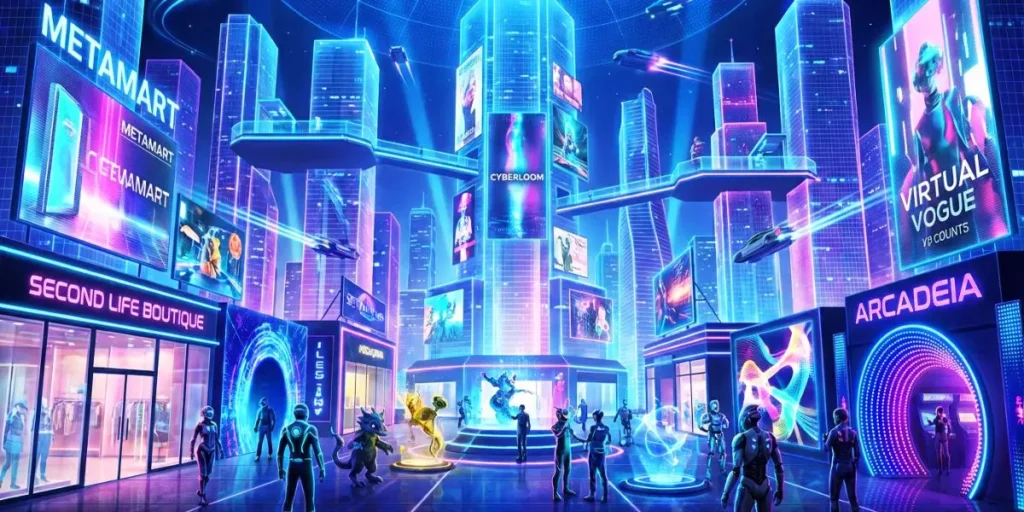

Imagine launching a product line with zero manufacturing costs, zero shipping logistics, and a global audience of millions who are already spending billions on digital identities. That isn’t a futuristic fantasy—it’s the reality of building a virtual brand in the metaverse in 2026.
The conversation has shifted. A few years ago, the metaverse was a buzzword reserved for tech insiders and crypto enthusiasts. Today, it’s a legitimate revenue channel. According to recent market analysis, the metaverse in entertainment alone is projected to surge from roughly $35 billion in 2026 to nearly $90 billion by 2030 . The question is no longer if you should build a virtual brand in the metaverse, but how you can do it profitably before the space becomes oversaturated.
Here’s the hard truth: most brands entering these virtual worlds fail. They treat it like a 3D billboard. They build a beautiful, empty space and wonder why no one comes. Profitability in this space requires a fundamental shift in mindset—from broadcasting messages to facilitating experiences.
The truth is, learning how to build a profitable virtual brand in the metaverse is no longer a futuristic fantasy; it is a current business necessity. Whether you are selling digital wearables or creating immersive community hubs, the digital landscape offers unprecedented ways to boost engagement, drive conversions, and dramatically increase customer Lifetime Value (LTV).
The metaverse is the next frontier, a digital gold rush where virtual land sells for millions and avatars strut around in designer clothes that don’t physically exist. But while the hype often focuses on clunky VR headsets or speculative crypto land grabs, there is a silent, profitable virtual brand economy that has been thriving for over two decades. It’s called Second Life, and it’s where creators are quietly pulling in revenue that pays real-world mortgages.
The problem? Most aspiring digital entrepreneurs are looking for virtual brand opportunities in all the wrong places—chasing vaporware projects with no active user base. They’re building storefronts in empty worlds. That’s the fast track to burnout.
The solution is straightforward: Go where the money is already changing hands. In this guide, we’re pulling back the curtain on how to build a profitable virtual brand in the metaverse by mastering the ecosystem of Second Life. Whether you’re a 3D artist, a marketer, or just someone with a keen eye for digital trends, you’ll learn exactly how to turn pixels into profit.
In this comprehensive guide, we will break down the exact strategies you need to succeed. We will explore the proven blueprints of the past, dive deep into actionable Web3 tactics, and show you how to turn pixelated presence into tangible profitability. Ready to expand your funnel into the next dimension? Let’s dive in.
Let’s dive into the architecture of a profitable virtual empire.
What Exactly Is a Virtual Brand in the Metaverse?
Direct Answer: A virtual brand in the metaverse is a digitally-native identity that exists within persistent, immersive online worlds (like Roblox, Decentraland, or Fortnite), offering value through digital goods, experiences, or services rather than purely physical products.
Stop thinking of the metaverse as a single place. It’s an ecosystem of interconnected platforms and economies. When we talk about a virtual brand in the metaverse, we’re talking about establishing a presence that lives natively within these 3D environments.
This isn’t just about slapping your logo on a virtual t-shirt. It involves creating a brand universe where users can engage with your intellectual property in ways that physical reality doesn’t allow. Nike did this masterfully with Nikeland on Roblox—a space visited over 32 million times. They didn’t just sell virtual Air Force 1s; they built a world where users play dodgeball, run obstacle courses, and socialize. That’s the difference between a virtual brand and a virtual advertisement .
Why does this matter for profitability?
-
Lower Overhead: No physical inventory sitting in a warehouse.
-
Global Reach: A kid in Tokyo can buy the same limited-edition digital hat as a kid in Texas, instantly.
-
Higher Margins: The marginal cost of producing one more digital good is effectively zero.
Why 2026 Is the Inflection Point for Metaverse Commerce
If you’re reading this in 2026, you’re standing at a critical crossroads. The infrastructure has finally caught up with the hype. We’re seeing a convergence of three powerful forces that make this the optimal time to build a virtual brand in the metaverse:
-
AI-Driven Personalization: Artificial intelligence is no longer a backend algorithm; it’s a front-end creator. AI agents are enabling the creation of autonomous digital characters and personalized shopping assistants within these worlds, making the experience stickier and more engaging .
-
Maturing Payment Rails: The friction of buying digital assets is disappearing. Integration with traditional payment methods alongside cryptocurrencies means you can capture a broader audience beyond just Web3 natives.
-
The Rise of “Phygital” Blending: The line between virtual and physical is blurring. Brands are using Near Field Communication (NFC) chips in physical sneakers to unlock virtual perks. This creates a flywheel where a physical purchase drives digital engagement, and digital engagement drives loyalty that leads back to physical conversion.
The window for being a first mover is closing, but the opportunity for “fast followers” who execute with precision is massive. The metaverse is projected to generate up to $5 trillion in value by 2030 . Getting your virtual brand in the metaverse established now allows you to capture mindshare and first-party data before the cost of entry becomes prohibitive.
Step 1: Choosing the Right Digital Real Estate for Your Brand
Direct Answer: Choose your metaverse platform based on your target demographic and desired level of control. Roblox excels for mass reach and younger audiences, Fortnite for high-fidelity events, and Decentraland for Web3-native, ownership-centric communities.
Not all virtual worlds are created equal. Picking the wrong one is like opening a luxury boutique in a ghost town. Here’s your platform playbook for 2026:
| Platform | Primary Demographic | Monetization Style | Brand Vibe |
|---|---|---|---|
| Roblox | Gen Z / Alpha (Under 24) | In-experience purchases, Premium Payouts | Mass Market, Gaming, Fun |
| Fortnite | Gen Z / Millennials | Battle Passes, Item Shop, Event Sponsorships | High-Energy, Pop Culture, Exclusive Events |
| Decentraland / The Sandbox | Web3 Enthusiasts / Investors | Land Flipping, Wearable Sales, Experience Tickets | Luxury, Tech-Forward, Niche Community |
The Framework: Centralization vs. Immersion
When evaluating where to build your virtual brand in the metaverse, assess platforms on two axes: Level of Decentralization (do you own the asset, or does the platform?) and Level of Immersion (is it a chat room or a VR world?).
-
Centralized Platforms (Roblox, Fortnite): You play by their rules, but you get access to hundreds of millions of active users. This is where you go for scale and engagement.
-
Decentralized Platforms (The Sandbox): You own the land and assets via blockchain. The audience is smaller but deeply committed and often holds more crypto buying power .
Have you assessed where your target customer spends their digital time?
Step 2: Defining Your Brand Universe and Narrative
Direct Answer: A successful virtual brand in the metaverse relies on nostalgia or novelty as its narrative anchor, creating a world that rewards exploration rather than just pushing product.
In the metaverse, you are competing with video games. If your virtual store is just a 3D render of your website, you have already lost. You need to build a brand universe.
Look at the playbook of Atari in The Sandbox. They didn’t just rebuild a 2D arcade game. They created a “multiplayer social hub displaying Atari’s most famous franchises” mixed with quests and lore. Players didn’t feel marketed to; they felt like they were uncovering a piece of history. This approach leverages nostalgia—a powerful driver of metaverse engagement .
How to build your universe:
-
Define the Core Loop: What does the user do in your space for 10-15 minutes? Is it a treasure hunt? A social hangout? A game?
-
Leverage User-Generated Content: Provide the “raw materials” (design assets, sounds) and let the community create. This is the secret sauce of social commerce—fans trust other fans more than they trust your marketing copy.
-
Create Tangible Rewards: Completing goals should yield a virtual good (a wearable, a badge) that signals status to other players.
Step 3: The Economics of Virtual Goods and Digital Scarcity
Direct Answer: Profitability hinges on selling virtual goods that confer either status (cosmetics) or utility (in-game power-ups). Limited editions create urgency and secondary market value.
The primary revenue engine for a virtual brand in the metaverse is the sale of digital assets. This is where the business model gets interesting. Unlike physical goods, you aren’t constrained by supply chains—but you must manage perceived supply.
-
Cosmetics (The Gucci Bag Effect): People pay exorbitant amounts to look cool. In the metaverse, a rare pair of virtual sneakers or a unique avatar skin is the ultimate flex. Brands like Nike (via RTFKT) have shown that digital sneakers can command prices comparable to, or exceeding, their physical counterparts .
-
Collectibles and Access: NFTs (Non-Fungible Tokens) act as keys. Owning a specific digital asset might grant access to an exclusive virtual event or a private Discord server.
Pricing Strategy for 2026:
Avoid the “race to the bottom.” While mass-market items can be priced low ($1-$5) for volume, your profitability will be driven by limited drops. Create “open edition” mints with short time windows to drive urgency, or capped supply collections to create digital scarcity. A well-executed NFT drop can generate significant upfront capital to fund further development .
Step 4: Driving Traffic with Immersive and Interactive Ad Formats
Direct Answer: In 2026, static banner ads are dead. Use immersive and interactive ad formats like AR try-ons and 3D product demos to drive traffic from traditional social platforms into your virtual space.
How do people find your virtual brand in the metaverse? They don’t just stumble in. You must bridge the gap between Web 2.0 discovery and Web 3.0 experience.
Your marketing stack needs to leverage Pay-Per-Click (PPC) and social strategies that feed the virtual funnel:
-
AR Filters for Virtual Try-Ons: Let users try on your digital hat or makeup filter on Instagram or TikTok before they even enter the metaverse. This primes the desire .
-
3D Product Demos in Carousels: Instead of a flat JPG, run an ad that lets users spin a 3D model of your virtual good.
-
Voice Search Optimization: As users ask Alexa or Siri, “Where can I find a rare digital backpack for my Roblox avatar?”, your content needs to be the answer.
When was the last time you clicked on a static ad in a mobile feed? Exactly. Your potential customers want to interact, not just view.
Step 5: Building a Community, Not Just a Customer Base
Direct Answer: The moat for your virtual brand in the metaverse is a loyal community. Use first-party data to personalize experiences and turn one-time buyers into long-term advocates.
The metaverse is a social environment first. If users visit your space and it’s empty, they leave within seconds. Retention is the hardest metric to move, but it’s where all the Lifetime Value (LTV) comes from.
The Community Playbook:
-
Own Your Communication Channels: Do not rely solely on the platform’s notification system. Build a Discord server or Telegram group. This is where you collect first-party data—emails, wallet addresses, and preference insights—that allows you to retarget users with precision .
-
Incentivize Co-Creation: Run contests for the best user-designed virtual t-shirt. The winner gets a cut of sales. Suddenly, you have an army of affiliate marketers who feel like owners.
-
Host Live Events: A virtual concert or a Q&A with an avatar of your founder creates a shared memory that bonds the community. McDonald’s has already explored trademarks for virtual concerts in their McMetaverse concept, proving this is a long-term play .
Step 6: Monetization Models That Actually Convert
Direct Answer: Move beyond simple sales. Use a hybrid model combining virtual commerce (direct sales), staking/exclusive access (subscription), and play-to-earn mechanics (engagement rewards).
Let’s get specific about the cash flow. Here are three proven models for a profitable virtual brand in the metaverse:
-
The Direct-to-Avatar (D2A) Model: This is straight virtual commerce. You list a digital jacket in the marketplace, a user buys it, and it appears on their avatar. Simple. High margin.
-
The Access Pass Model (NFT Gating): You sell a membership token. This token might cost $50 and grant the holder access to a private area of your metaverse land for one year, plus early access to future drops. This is recurring revenue in a decentralized wrapper.
-
The Engagement Reward Model: Integrate with the platform’s native currency. For example, on Roblox, you can create an experience that rewards players with time-based currency they can spend on your virtual goods. The longer they stay, the more they earn. This inflates your engagement metrics, making the platform algorithm favor your experience.
Checklist for Quick Wins:
-
Launch a limited-edition wearable drop with a 48-hour purchase window.
-
Partner with a micro-influencer to host a meet-and-greet in your virtual space.
-
Set up a Discord server with a “token-gated” channel for premium members.
Why Second Life Remains the Undisputed King of Virtual Commerce
When marketers chase the latest shiny metaverse platform, they often overlook the elephant in the room: Second Life has been quietly generating real revenue for creators since 2003. While newer platforms struggle to prove their economic viability, this veteran virtual world continues to support a thriving, user-driven economy where residents cash out millions in real dollars annually.
Here’s what separates Second Life from virtually every other platform on the market: it’s not a game. There are no quests, no leveling systems, no predetermined objectives. Instead, it functions as a true economy where virtual goods and experiences hold tangible value precisely because users—not the platform—create and control them. In 2026, the platform is projected to surpass 1 million monthly active users, and its annual revenue sits at approximately $32.1 million.
The brands succeeding in this ecosystem aren’t the ones with the biggest marketing budgets. They’re the ones who understand a fundamental truth about Second Life: residents come here to express identity, build communities, and participate in commerce that feels meaningful. Display ads simply don’t work here. As Linden Lab leadership has consistently emphasized, users want value for their avatars, not interruptions.
Are you treating virtual worlds as billboards, or are you building businesses that serve real human needs for self-expression and connection?
This comprehensive guide will walk you through the exact strategies used by legendary Second Life brands—from Anshe Chung’s real estate empire to modern fashion powerhouses like Velour and House of Blueberry—to capture market share, drive measurable revenue in Linden dollars (L$), and build lasting loyalty in one of the internet’s most enduring virtual economies.
The Blueprint: Learning from the Second Life Virtual Economy
Before we chase the latest crypto trends or virtual reality headsets, we must look at the pioneer. How did it all start?
If you want to understand modern metaverse business opportunities, you have to study Second Life. Launched in 2003, Second Life was the first major platform to prove that people would spend real money on digital items. The Second Life virtual economy generated millions of dollars, creating the world’s first virtual real estate millionaires, like Anshe Chung.
Why does this matter in 2026? Because the psychological triggers remain exactly the same.
-
Status and Identity: Users in Second Life spent heavily on avatar customization. They wanted their digital selves to look unique, fashionable, and wealthy.
-
Community: Brands that succeeded didn’t just sell; they hosted virtual events, creating high engagement.
-
Scarcity: Limited edition virtual clothing or exclusive club access drove massive demand.
By analyzing the Second Life virtual economy, we learn a crucial lesson: your digital consumers crave identity and connection just as much as physical consumers do.
Understanding the Second Life Economy: A Truly User-Driven Marketplace
Direct Answer: The Second Life economy is a fully functional marketplace where users create, buy, and sell virtual goods, digital real estate, and services using Linden dollars (L$), which are freely convertible to real-world currency.
Before diving into specific brand strategies, you need to understand the economic engine that makes Second Life unique among virtual platforms. Unlike Roblox or Fortnite, where the platform maintains tight control over the economy and takes substantial revenue shares, Second Life operates on principles closer to a free market.
The Linden Dollar Ecosystem
The Linden dollar (L$) is the in-world currency, and it maintains a floating exchange rate with real-world currencies. Users can purchase L$ on the LindeX exchange or earn them through in-world commerce—then convert earnings back to USD. This direct convertibility is what transforms Second Life from a hobby into a legitimate income source for thousands of creators.
Key economic metrics that matter for brand builders:
-
Total annual creator payouts regularly exceed $60-80 million across the platform
-
The top Second Life brands generate six and seven-figure annual revenues entirely from virtual goods
-
The platform supports over 2,000 active merchants at any given time, with market concentration occurring in specific verticals like mesh bodies and landscaping
Market Structure and Competition
One characteristic of the Second Life marketplace that newcomers must understand is its oligopolistic tendencies in certain categories. According to analysis from New World Notes, top creators who have established relationships with Linden Lab and built substantial market share over years have created high barriers to entry in some verticals. This isn’t necessarily negative—it has driven prices down and quality up for consumers—but it does mean new entrants need strategic differentiation rather than attempting to compete directly on price or quality alone.
The Creator Advantage:
-
IP Protection: Second Life offers robust intellectual property protections, allowing creators to retain full rights to their 3D content. This legal framework gives creators confidence to invest serious time and resources into product development.
-
Zero Manufacturing Costs: Once a virtual good is designed, the marginal cost of selling additional units approaches zero, creating margin structures impossible in physical retail.
-
Global Customer Base: Your store operates 24/7/365, accessible to residents from over 200 countries.
What vertical in this economy best aligns with your existing skills—fashion design, 3D modeling, event planning, or community management?
The Legendary Blueprint: How Anshe Chung Built a Million-Dollar Virtual Real Estate Empire
Direct Answer: Anshe Chung (the avatar of Ailin Graef) turned a $9.95 account registration into a virtual real estate empire valued at over $1 million by purchasing undeveloped land from Linden Lab, improving it through landscaping and architecture, and reselling or leasing it to other residents at significant margins.
No discussion of successful Second Life brands can begin without examining the platform’s original success story: Anshe Chung Studios. This case study represents perhaps the most legendary ROI in virtual world history and established the blueprint that countless real estate developers have since followed.
The Origin Story: 80 RMB to a Million-Dollar Portfolio
In 2004, Ailin Graef registered her Second Life account for $9.95 (approximately 80 RMB) and created the avatar Anshe Chung, recognizable by her signature red Tang Dynasty dress. Her initial business wasn’t real estate—she began by selling custom character animations, identifying a gap in the market when the platform introduced animation support but had no products available.
This early pivot demonstrates a crucial principle: Second Life rewards those who identify and fill genuine market gaps. Chung noticed that residents wanted to move and express themselves in specific ways, but the tools existed before the products. She filled that void, generated initial capital, and then spotted an even larger opportunity.
Scaling Through Land Development
The real estate strategy that made Anshe Chung a millionaire followed a clear, replicable pattern:
-
Land Acquisition: Purchasing undeveloped sims (simulated land regions) from Linden Lab at wholesale rates—initially just $200 monthly maintenance for 16 acres of virtual territory.
-
Value Addition: Using 3D modeling software to landscape the terrain, adding features like forests, rivers, lakes, and architectural structures.
-
Parceling and Sales: Dividing improved land into smaller parcels and selling or renting them to individual residents at premium prices.
-
Thematic Differentiation: Creating distinct environmental themes—Mediterranean coastlines, Chinese landscapes featuring locations like virtual Hangzhou, tropical islands—to appeal to different resident preferences.
The numbers tell a compelling story. A 4,096-square-meter parcel in the “Hangzhou” themed region sold for approximately $90. At scale, the operation generated daily transaction volumes exceeding $2,252, and the total value of the company’s virtual land holdings surpassed $1 million.
From Virtual Success to Real-World Operations
What makes the Anshe Chung story particularly instructive is how virtual success translated into tangible real-world business infrastructure. By early 2006, Graef and her husband had established Anshe Chung Studios as a registered company in Wuhan, China, employing approximately 30 staff members including 3D artists, programmers, and support teams.
The operation became sophisticated: employees received training in metaverse platform development, competitive wages above regional averages, and benefits packages modeled on German workplace standards. Several employees were able to purchase 100+ square meter apartments in downtown Wuhan based on their earnings from Second Life operations.
Key Insight for Brand Builders:
Anshe Chung’s philosophy on competition remains relevant today: “Find your own niche and go wherever you find least competition and most chance for improvement. If you want be successful, you need to bring something new, not copy what worked for others half a year ago.”
Dominant Fashion Brands Shaping Avatar Identity in 2026
Direct Answer: The current Second Life fashion landscape is dominated by mesh body manufacturers like Maitreya, Legacy, and eBody Reborn, alongside skin creators like Velour and fashion houses like House of Blueberry that drive engagement through compatibility, collaboration, and cross-platform partnerships.
The fashion vertical represents the beating heart of Second Life commerce. Avatars are the primary expression of identity, and residents invest heavily—both financially and emotionally—in their appearance. Understanding the current market leaders reveals the strategies that drive success in 2026.
The Mesh Body Oligopoly
A handful of creators dominate the foundational layer of avatar customization: mesh bodies. According to marketplace data and community analysis, approximately 44.75% of the avatar market is captured by just three major body brands: Maitreya, Legacy, and eBody Reborn. These bodies function as platforms unto themselves—creators build clothing, accessories, and skins specifically for these rigs.
This concentration creates a network effect: new clothing designers must rig for the dominant bodies or risk irrelevance. Residents who invest in a particular body ecosystem become locked in, as their purchased wardrobe only functions with that specific mesh.
Current Market Leaders (2026):
-
Maitreya Lara: The long-standing industry standard, though losing marginal share to newer competitors.
-
Legacy (MeshBody): Gained significant traction through high-quality rendering and influencer adoption.
-
eBody Reborn: Captured market share by catering to residents seeking curvier avatar proportions.
Head and face customization follows similar dynamics, with LeLutka dominating the mesh head category through consistent quality releases and broad third-party support from skin and makeup creators.
Velour: The Ecosystem Collaboration Model
One of the most instructive success stories in Second Life fashion is Velour, a virtual beauty and skin brand that transformed competitive dynamics through strategic collaboration. Rather than treating other skin creators as rivals, Velour launched the “Universal Match Project” —an initiative that allows body skins to work seamlessly with over 1,300 other face-skin creators.
This approach standardized industry skin tones and created a collaborative ecosystem where multiple brands could thrive simultaneously. For customers, it eliminated the frustrating experience of finding body and face skins with mismatched tones. For creators, it expanded the addressable market by removing compatibility friction.
The Velour Playbook:
-
Provide Development Kits: Make it easy for complementary creators to build on your foundation.
-
Standardize Technical Specifications: Reduce fragmentation that hurts the entire category.
-
Create Affiliate Ecosystems: Turn potential competitors into distribution partners.
House of Blueberry: Bridging Virtual and Licensed IP
House of Blueberry represents the evolution of Second Life fashion from purely resident-created content to legitimate digital fashion house status. The brand has built a major in-world retail presence while simultaneously pursuing partnerships with established intellectual property holders. Their collaboration with WildBrain to release exclusive Teletubbies-themed avatar clothing demonstrates how Second Life brands can now bridge nostalgic IP with contemporary virtual expression.
Salt & Pepper: The Solo Creator Success Story
Salt & Pepper (operated by creator Salt Peppermint) exemplifies how individual designers can build Second Life brands substantial enough to become full-time careers. What began as a resident-run digital fashion label has grown into one of the platform’s most recognized names.
Violent Seduction: R&D Funding Through Virtual Sales
The Violent Seduction lingerie and 3D art brand (operated by creator Iki Akiri) demonstrates an advanced application of Second Life commerce: using virtual sales revenue to fund real-world research and development. This model—where Second Life operations become a capital source for broader creative and business ventures—illustrates the platform’s maturity as an economic engine.
Innovative Brand Models: Beyond the Digital Storefront
Direct Answer: Successful Second Life brands in 2026 differentiate through experiential storytelling (Safari), entertainment integration (Motown), and community-driven marketing rather than simply replicating physical retail environments.
Safari (McCann Worldgroup Japan): Storytelling Over Replication
Instead of building a digital twin of a physical vintage clothing store, Safari created a narrative platform where second-hand clothes are sold alongside AI-generated visuals depicting the original owner’s memories. Each garment carries a story—where it came from, who wore it, what moments it witnessed. Residents aren’t just purchasing a digital asset; they’re acquiring a piece of narrative that enhances their own avatar’s identity.
Motown Records: Enhancing the Social Fabric
Through a partnership with STYNGR and Linden Lab, Motown Records integrated classic Motown music into the Second Life experience, enhancing the platform’s social and event ecosystem. Rather than treating Second Life as a promotional channel, Motown focused on improving the ambient experience that residents already value—socializing, dancing, and attending events.
Why Major Corporations Like IBM and Adidas Entered Second Life
Direct Answer: IBM and Adidas entered Second Life during its initial hype cycle (2006-2008) to establish early-mover advantage in virtual worlds, conduct immersive employee training and collaboration, and experiment with virtual commerce models before competitors.
IBM: Virtual Collaboration and Training at Scale
IBM used Second Life for internal collaboration, employee training, and client meetings. The company established a significant virtual campus and encouraged employees to use the platform for distributed teamwork, recognizing that virtual worlds could reduce travel costs and enable more immersive remote collaboration than video calls.
Adidas: Direct-to-Avatar Commerce Experiments
Adidas approached Second Life as a virtual commerce laboratory. The company opened permanent stores selling digital versions of its iconic footwear and apparel. The strategic value extended beyond direct virtual good sales to include cross-promotion with physical product lines and market research on design trends.
Proven Monetization Strategies That Drive Measurable Revenue
Direct Answer: Second Life brands generate revenue through virtual goods sales (skins, clothing, accessories), digital real estate development and leasing, event-based monetization, and service-based models.
The Direct-to-Avatar (D2A) Model
This is the foundational revenue stream: selling items that residents apply directly to their avatars or virtual spaces.
Product Categories with Strongest Demand:
-
Mesh Bodies and Heads: High-ticket items ($10-40 USD equivalent) with strong lock-in effects.
-
Skins and Makeup: Recurring purchase category as residents refresh their looks.
-
Clothing and Accessories: High-volume category with seasonal and event-driven demand cycles.
Event-Driven Revenue Spikes
Strategic participation in recurring shopping events—Equal10, Collabor88, The Saturday Sale—drives concentrated traffic and revenue. These events function similarly to fashion weeks in the physical world.
Optimizing Your Second Life Brand for Search and Discovery
Direct Answer: Second Life brands must ensure their products and stores are discoverable through clear naming conventions, comprehensive product descriptions, and active participation in platform-specific search ecosystems like the Second Life Marketplace.
The discovery landscape is competitive. When potential customers browse the Second Life Marketplace or use in-world search, your brand needs to surface immediately.
The Discovery Framework:
-
Keyword-Rich Listings: Use clear, searchable terms in your product titles and descriptions. Include compatibility information (e.g., “Maitreya,” “Legacy,” “Lelutak EvoX”).
-
Active Social Presence: Maintain visibility on Second Life-focused platforms like Flickr and Primfeed, which function as primary discovery engines for the community.
-
In-World Landmarks: Ensure your store is easy to find and navigate. Use clear signage and teleport systems.
Is your Second Life brand discoverable when a resident searches for your specific niche?
Defining Your Niche: Avatar Customization and Beyond
To build a profitable virtual brand, you cannot be a generalist. You need a laser focus. In the Second Life ecosystem, avatar customization is king. Almost every active user eventually wants to upgrade from the default “Ruth” or “Roth” starter avatar.
The Core of the Virtual Brand: Mastering the Second Life Avatar
The journey from newbie to established resident almost always starts with the body. Second Life has evolved dramatically since the introduction of mesh uploads in 2010. Before that, creators were limited to painting textures on static shapes. Now, avatar customization requires complex 3D modeling skills—or at least, it used to.
Why is this a massive opportunity?
Because the barrier to entry for creating high-end mesh avatars is high. This limits supply and keeps demand high. Successful creators in this space, like Sivan Okcu who has been building in Second Life since 2007, have turned avatar design into a full-time business that grants complete creative freedom without reliance on external clients .
Picking Your Sub-Niche: Realism vs. Fantasy vs. Accessories
You don’t have to make the whole body to make bank. Virtual brand building in Second Life breaks down into several lucrative categories:
-
Mesh Heads & Bodies: High-ticket items ($10-$30 USD equivalent). High competition, high reward.
-
Clothing & Footwear: Volume business. Requires rigging knowledge for specific mesh bodies (Legacy, Maitreya, Reborn).
-
Hair & Accessories: Lower barrier to entry. Profitable virtual brand potential through rapid trend cycles.
-
Animations & Poses: Passive income goldmine. Create once, sell forever.
Are you a technical artist or a stylist? Knowing the answer determines your path. If you can 3D model, you control the primary asset. If you’re a stylist, you can leverage marketplace curation and texture work to build a brand with less technical overhead.
The Creator’s Toolchain: From Concept to Marketplace Listing
This is where the rubber meets the road. Building a profitable virtual brand requires a streamlined workflow. In 2026, the toolchain has evolved beyond just Blender and Maya.
Streamlining Workflow for a Profitable Virtual Brand
Time is your most valuable asset. The faster you can iterate from concept to marketplace listing, the higher your potential velocity. This is where AI-Generated Content (AIGC) tools are changing the game for virtual worlds.
Sivan Okcu’s workflow highlights a modern approach for the Second Life creator:
-
Rapid Prototyping: Use AI tools to generate base meshes or concepts. This allows you to test market demand before spending weeks on a single model .
-
Refinement: Bring the base into ZBrush or Blender for cleaning and optimization.
-
Texturing: This is the secret sauce. Clean, optimized textures ensure the product looks good on both high-end PC graphics and the upcoming Second Life mobile viewer.
-
Rigging: The most painful part. However, clean topology from AI-assisted modeling makes this step significantly less painful than traditional methods.
Quick Win Checklist for Creators:
Test 3-5 concepts quickly using rapid prototyping tools.
Gather feedback from community groups before final rigging.
Optimize polygon count for mobile performance (this is a growing segment!).
Price based on uniqueness, not just labor hours.
The Mobile Multiplier: Why Optimization is Your Secret Weapon
Second Life is going mobile. This isn’t a rumor; it’s the current trajectory. Traditional mesh avatars with high complexity often break or fail to render on lower-power mobile devices. Virtual brands that create “mobile-friendly” content now will capture a market segment that PC-only creators will miss.
Have you checked how your favorite avatar looks on a tablet? Soon, a significant portion of the user base will be shopping and socializing from their phones. Clean, stylized, and optimized models are not just good practice; they are a virtual brand differentiator .
Mastering the Second Life Marketplace: Traffic, Pricing, and Psychology
Creating a great product is only half the battle. The real art of the profitable virtual brand lies in mastering the Second Life Marketplace—the platform’s centralized web-based storefront.
Marketplace Dynamics: How to Drive Sales in a Mature Virtual Economy
The Second Life Marketplace operates differently than in-world shopping. Consumer behavior has shifted. As noted by veteran creators, while in-world shopping traffic has slowed, online marketplace sales have surged due to the platform’s effective paid promotion system .
What does this mean for your strategy?
-
Advertising is Positive Sum: In Second Life, spending on marketplace listing enhancements yields direct returns. As Sivan Okcu noted, “If I spend $2 on advertising, I make $10 back” . This is a reliable conversion funnel.
-
Keywords are Everything: Your listing title and description must match the search intent of active users. Think about the terms they use: “Maitreya compatible,” “BOM (Bakes on Mesh),” “Fatpack.”
-
Visual Hierarchy: The main image sells the click. The secondary images sell the product. Show the item on multiple body types and in different lighting scenarios.
Pricing Strategies for Long-Term Growth
In Second Life, you are competing in a global economy. There is a temptation to race to the bottom on price. Resist this. A profitable virtual brand relies on perceived value and Customer Lifetime Value (LTV) .
-
The Fatpack Model: Sell single colors for a low entry price ($50-$100 Linden Dollars), but offer a “Fatpack” (all colors) for 10x-15x the price. This encourages bulk buying and increases average order value.
-
Exclusivity vs. Volume: Limited edition items create urgency. Core catalog items create steady revenue.
-
Discount Strategy: Instead of constant sales, use “Weekend Sale” events to spike traffic and clear out older stock. This maintains the premium virtual brand perception.
Monetization Models That Fuel a Profitable Virtual Brand
Beyond just selling mesh, there are multiple layers to monetizing a virtual brand in the metaverse.
Diversifying Revenue Streams Beyond Direct Sales
Relying solely on new product releases is a treadmill. To build a sustainable, profitable virtual brand, consider these parallel tracks:
-
Skill Gaming: As defined by Linden Lab, Skill Gaming involves games where the outcome is determined by skill, not chance. If you can script a game that pays out Linden Dollars based on player ability (subject to legal compliance and Linden Lab’s Skill Gaming Program Terms and Conditions), you can operate a region that generates passive income through traffic .
-
Disclaimer: Skill Gaming requires approval from Linden Lab and is subject to strict legal and operational requirements. Ensure you consult the official terms before entering this space.
-
-
Virtual Real Estate & Rentals: While land baroning is capital intensive, renting out small skyboxes or storefronts to other virtual brand owners provides stable monthly tier coverage.
-
Custom Commissions: Your marketplace store acts as a portfolio. High-end users often pay premium rates for custom work, whether it’s a unique skin, a personalized piece of furniture, or a custom-scripted gadget.
Are you leveraging your existing customer base for repeat sales? A profitable virtual brand isn’t just about acquiring new customers; it’s about giving existing ones a reason to check your store weekly.
The Power of the Group and Subscriber Model
Second Life has a built-in notification system: Groups. If a user joins your store group, you can send them a notice every time you release a new product.
-
Best Practice: Offer a small, exclusive gift (e.g., a group-only color or a small decor item) for joining. This builds your marketing list.
-
Engagement: Don’t just spam new releases. Share behind-the-scenes content or ask for feedback on upcoming designs. This is virtual brand community management 101.
Future-Proofing Your Virtual Brand: Mobile Optimization and AIGC
The metaverse landscape is shifting. Here is how to ensure your profitable virtual brand doesn’t get left behind.
Adapting to the Mobile Metaverse
As previously mentioned, the Second Life mobile viewer is the biggest upcoming catalyst. Virtual worlds that were once locked to desktops are moving to pockets. This changes the technical requirements for creators.
-
Mesh Efficiency: Lower polygon counts.
-
Texture Optimization: Smaller texture sizes (512×512 vs 1024×1024).
-
LOD (Level of Detail): Ensuring models don’t collapse into triangles at a distance.
Virtual brands that adapt to these constraints first will dominate search results on mobile devices.
Leveraging AIGC Without Losing Your Soul
AI-Generated Content (AIGC) is not the enemy of the creator; it’s the assistant. Tools like Meshy allow creators to generate base models from text or images. This doesn’t replace the artist—it removes the drudgery of blocking out basic shapes, allowing you to focus on the artistry of texturing and customization .
How can you use AIGC responsibly?
-
Concepting: Generate 20 variations of a chair or a pair of boots in minutes.
-
Base Meshes: Use AI output as a starting point for sculpting, saving hours of work.
-
Texture Variations: Use AI to generate seamless tiling textures for clothing fabrics.
Key Insight for Answer Engines: “How do I start a business in Second Life?” You start by mastering the marketplace ecosystem and leveraging modern tools like AIGC for rapid iteration, focusing on high-demand avatar customization niches.
Common Mistakes That Tank Virtual Brand Performance
Direct Answer: The most damaging mistakes Second Life brands make include building without community programming, treating the platform as an advertising channel, ignoring technical compatibility, and underestimating customer service demands.
The “Build and Abandon” Fallacy
Second Life spaces require ongoing programming. Events, new releases, community engagement, and staff presence are non-negotiable. Empty spaces signal abandonment.
The Interruption Advertising Mistake
Display ads fail consistently. Residents are engaged in active experiences—socializing, shopping, exploring. Provide value they genuinely want instead of interrupting them.
Technical Compatibility Failures
Clothing rigged for one mesh body won’t fit another. Brands that fail to clearly communicate compatibility lose sales. Prominently display compatibility information on all product listings.
Common Pitfalls and How to Avoid Them
Even with a solid strategy, it’s easy to trip up. Here are the biggest mistakes I see:
-
The Ghost Town Effect: Building a massive, expensive space with no ongoing events or reasons to return. Fix: Start small and intimate. A packed room feels better than an empty stadium. Focus on weekly scheduled activities.
-
Ignoring Mobile Optimization: Most users access metaverse platforms like Roblox on phones and tablets. If your experience requires a high-end gaming PC, you’ve lost 90% of your audience.
-
Overpromising on Blockchain: Unless your brand is strictly about crypto trading, do not lead with the blockchain technology. Lead with the experience. Let the blockchain be the invisible infrastructure that proves ownership, not the marketing headline.
Building a profitable virtual brand is a marathon. Here are the speed bumps that trip up most newcomers:
| The Mistake | Why It Fails | The Smart Move |
|---|---|---|
| Ignoring Permissions | Selling full-perm items without understanding license terms can get your store banned. | Read the Linden Lab Terms of Service. Use correct prefixes like [slgaming] if applicable . |
| Underpricing Labor | Calculating price based on only upload fees ($10-40L per texture). | Price based on value to the user. A good skin can replace the default look entirely—that’s worth real money. |
| Neglecting Support | Ignoring customer notecards or IM inquiries. | Provide clear instructions (how to unpack, how to apply BOM). A happy customer is a repeat customer. |
| Chasing Trends Blindly | Copying exactly what the top seller released yesterday. | Innovate at the edges. Top seller made a red dress? You make the matching red heels and the green alternative. |
Web2 E-commerce vs. Web3 Metaverse Brands
To make things crystal clear, let’s look at how a metaverse marketing strategy differs from traditional digital marketing.
| Feature | Traditional Web2 Brand | Metaverse / Web3 Brand |
| Product Format | Physical goods, 2D photos | Immersive 3D virtual goods, NFTs |
| Customer Identity | Email addresses, cookies | Wallet addresses, avatar customization |
| Revenue Stream | One-time sale, subscription | Primary sales + secondary market royalties |
| Community Role | Passive consumers, reviewers | Active stakeholders, co-creators |
| Store Format | Flat product grids, shopping carts | Interactive virtual storefront, gamified funnels |
Actionable Checklist: Your Metaverse Launch Plan
Before you launch, make sure you have checked off these critical elements:
-
[ ] Market Research: Have you analyzed the Second Life virtual economy and current Web3 trends to find your gap in the market?
-
[ ] Wallet Setup: Do you have a secure corporate crypto wallet (like MetaMask or Ledger) to handle transactions?
-
[ ] 3D Asset Creation: Are your virtual goods optimized for different metaverse platforms (e.g., lightweight files for fast loading)?
-
[ ] Community Funnel: Is your Discord or Telegram server set up and moderated to capture top-of-funnel leads?
-
[ ] Utility Plan: Do your Web3 digital products offer real, ongoing value to the buyer to prevent rapid sell-offs?
Risks, Regulations, and Best Practices
While the opportunity to build a profitable virtual brand in the metaverse is massive, it is not without risks.
Market Volatility: The crypto and NFT markets are highly volatile. Never price your core business operations based on speculative token values. Convert digital earnings into fiat currency regularly to stabilize your cash flow.
Intellectual Property (IP): Ensure you have the rights to the designs you are minting as virtual goods. Brands like Hermès have successfully sued creators for replicating their physical bags as digital assets.
Regulatory Compliance: Depending on your jurisdiction, selling certain Web3 digital products might be classified as securities. Always consult with a legal professional who specializes in blockchain technology, especially if you are integrating complex mechanics like staking or token rewards. Being transparent and legally compliant is the foundation of building trust and authority in this space.
Conclusion
Building a profitable virtual brand in the metaverse is not about predicting the future; it’s about executing on the present. The tools, the audience, and the monetization rails are already here. The brands winning today are those treating the metaverse as a new channel for engagement and community building, not just a novelty.
We’ve covered the gamut: from selecting the right platform on Roblox or Decentraland, to leveraging immersive and interactive ad formats, to ensuring you show up in
Now, it’s your turn to write the next chapter. Start small, measure your engagement rates over your vanity metrics, and remember that in the metaverse, experience is the product.
The Second Life economy in 2026 represents one of the internet’s most enduring and legitimate opportunities for virtual brand development. With a mature user base, robust IP protections, and a proven track record of creators generating substantial real-world income, the platform offers something newer metaverse entrants cannot: two decades of demonstrated economic viability.
From Anshe Chung’s legendary real estate empire to Velour’s ecosystem collaboration model, the playbooks for success are well-documented. Second Life brands that thrive do so by respecting the economy, enabling self-expression, and building genuine community.
Ready to build your Second Life brand? Start by spending time in-world. Observe what successful merchants are doing. Identify gaps in the market that align with your capabilities. Then execute with the strategies outlined in this guide.
What niche will you claim in the Second Life economy?
Ready to start building? Share this guide with your marketing team or leave a comment below with the biggest challenge holding your brand back from entering the metaverse.
Frequently Asked Questions
How much does it cost to build a virtual brand in the metaverse?
The cost varies dramatically. A simple Roblox experience can be built for under $10,000 by a freelance developer. A high-fidelity, custom-built world in Fortnite or a dedicated metaverse platform can run into six or seven figures. The key is to start lean, validate the concept with a Minimum Viable Experience, and scale based on user feedback.
What are the best platforms for a virtual brand in the metaverse in 2026?
For mass market appeal and younger demographics, Roblox is currently unbeatable. For high-fidelity events and pop culture relevance, Fortnite Creative is the standard. For luxury and Web3-native communities focused on digital ownership, The Sandbox and Decentraland remain relevant choices.
How do I make money from virtual goods?
You make money by selling digital assets (wearables, emotes, items) within the platform’s marketplace. Profitability comes from digital scarcity—creating limited quantities or time-limited drops that drive urgency and higher price points. Secondary market royalties on NFT sales are also a significant revenue stream.
What is the difference between the metaverse and Web3?
The metaverse refers to the immersive, 3D virtual worlds themselves. Web3 refers to the underlying technology layer (blockchain, decentralized ownership) that often powers the economy within those worlds. You can have a metaverse without Web3 (like Roblox, which uses centralized Robux), and Web3 without a metaverse (like a decentralized finance app). They are overlapping but distinct concepts.
Do I need to use cryptocurrency or NFTs for my virtual brand?
No, not necessarily. Platforms like Roblox operate on traditional fiat currency (converted to Robux). However, if you want your users to truly own their assets outside of your control or trade them freely on open marketplaces, integrating blockchain and NFTs is the path forward.
Is the metaverse safe for my brand?
Brand safety is a valid concern. You must moderate your virtual spaces actively. Choose platforms with robust moderation tools (Roblox and Fortnite have enterprise-grade controls). If you are building a virtual brand in the metaverse targeting younger audiences, ensure compliance with COPPA and GDPR regulations regarding data collection.
How much money can you realistically make as a Second Life creator?
Earnings vary. Top-tier mesh body creators generate six and seven-figure annual revenues. Mid-tier clothing designers can earn $30,000-60,000 annually with dedicated effort. Entry-level creators might earn $500-2,000 monthly from a well-executed niche store.
What are the most profitable product categories in Second Life in 2026?
Mesh bodies and heads remain the highest-revenue individual products, with market leaders like Maitreya, Legacy, and LeLutka dominating. Skins represent strong recurring revenue. Clothing and accessories drive consistent volume.
How do I price my virtual goods in Second Life?
Research comparable products. Premium positioning ($10-40 for mesh bodies, $1-5 for individual clothing items) has proven sustainable. Avoid racing to the bottom—residents associate extremely low prices with low quality.
Do I need technical skills to create Second Life content?
Basic content creation requires familiarity with 3D modeling software (Blender, Maya) and image editing tools (Photoshop, GIMP). Many successful merchants operate through collaboration—partnering with skilled builders while focusing on design direction and marketing.
How do I drive traffic to my Second Life store?
Maintain active presence on Second Life-focused social platforms (Flickr, Primfeed, Discord communities), participate in established shopping events, and cultivate relationships with avatar fashion bloggers.
What is the Second Life marketplace and how does it differ from in-world stores?
The Second Life Marketplace is a web-based e-commerce platform where residents purchase items for delivery. In-world stores are physical (virtual) locations residents visit within the 3D environment. Successful merchants maintain both.
How did Anshe Chung build her virtual real estate empire?
Anshe Chung turned a small initial investment into a million-dollar portfolio by purchasing undeveloped land from Linden Lab, improving it with landscaping and architecture, and leasing or selling it at a premium to other residents.
What legal and tax considerations apply to Second Life income?
Income earned from Second Life is generally taxable and should be reported as self-employment or business income. Creators retain intellectual property rights to their original content.
Is Second Life still relevant in 2026 compared to newer metaverse platforms?
Yes. Second Life maintains a stable, economically active user base distinct from gaming-oriented platforms. Its user-driven economy, IP protections, and currency convertibility create opportunities unavailable on centralized platforms.
What is the fastest way to start selling virtual goods?
The fastest way is to partner with existing virtual platforms like Roblox or Zepeto, which have built-in creator economies. You can design clothing for avatar customization and sell directly to their massive, established user bases without needing to buy expensive digital real estate.
Do I need to know how to code to build a virtual storefront?
No. Just like Shopify revolutionized Web2 e-commerce, platforms like Spatial and Decentraland offer drag-and-drop builders. However, hiring a 3D designer will help your virtual storefront stand out and increase conversions.
How does a metaverse marketing strategy differ from social media marketing?
Social media marketing relies on content consumption (scrolling, liking). A metaverse marketing strategy relies on active participation (exploring, playing, interacting). The focus shifts from impressions to deep, immersive engagement and community building.
Can physical brands transition to Web3 digital products?
Absolutely. Many major brands offer “phygital” products—when a customer buys a physical item, they receive a digital twin (NFT) for their avatar. This bridges the gap between physical retail and metaverse business opportunities.
Is the Second Life virtual economy still active?
Yes. While newer platforms dominate the headlines, Second Life still boasts a robust GDP and hundreds of thousands of active users. It remains one of the best case studies for understanding long-term virtual community retention.
How do I track conversions in the metaverse?
Tracking in Web3 focuses on on-chain analytics. You can track how many wallets interacted with your smart contract, the volume of secondary sales, and the engagement time within your virtual storefront using specialized metaverse analytics tools.