
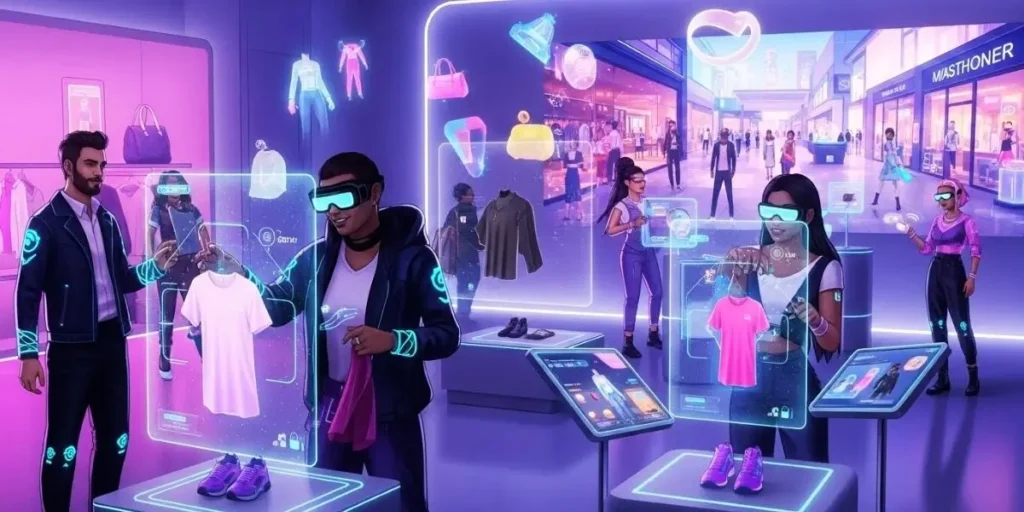

What happens when the line between your online cart and your local store disappears entirely? If you’re a retailer in 2026, your survival depends on the answer. Consumers, led by digitally-native Gen Z and Alpha, no longer see a distinction between “click” and “brick.” They expect a single, fluid journey—a world where they can virtually try on sneakers via augmented reality during their commute and then pick up the perfect pair from a store locker minutes later. This is the new battleground: phygital retail.
The concept isn’t just a buzzword; it’s a fundamental evolution. Phygital experiences strategically fuse physical and digital engagement to create something greater than the sum of its parts. It’s about leveraging technology not to replace the human touch, but to amplify it, creating deeper emotional connections and unlocking unprecedented data insights. In a landscape where AI is omnipresent and consumer loyalty is fleeting, a sophisticated phygital strategy is your key to differentiation, conversion, and long-term customer value (LTV). This guide will dissect the 2026 blueprint for winning in this space, moving beyond basic QR codes to the seamless integration of phygital AR and immersive metaverse platforms.
What Are Phygital Experiences and Why Do They Matter in 2026?
-
Definition: A phygital experience is an integrated retail strategy that merges the tangible benefits of a physical store—like touch, instant gratification, and social interaction—with the intelligence, personalization, and convenience of digital commerce. This approach is about creating a single, fluid customer journey, not just having separate online and offline channels.
-
The 2026 urgency: Today’s consumers, especially digitally-native Gen Z and Gen Alpha, do not see a distinction between digital and physical. Their shopping journey is fluid: they might discover a product on a social media livestream, research it via an AI chatbot, use an AR tool to try it on at home, and then go to a store for an immersive brand event before purchasing. By 2026, retailers that fail to offer this cohesive journey risk becoming irrelevant.
-
The metaverse connection: The phygital concept is the bridge to the metaverse. It prepares customers and businesses for a future where digital twins of products and virtual stores exist parallel to physical ones. This isn’t about replacing physical retail but amplifying it, turning shopping from a transaction into an explorative, emotional adventure.
The Psychological and Business Case for Phygital Retail
Why This Model Resonates with Shoppers
From a psychological standpoint, phygital experiences succeed because they engage customers on a deeper, multisensory level. A study highlighted that immersive, multisensory retail can increase brand recall by 80% and emotional loyalty by 60%.
-
Emotional Connection: When a customer uses an AR mirror to see themselves in a new outfit or explores a product’s origin story through a scannable QR code, they are not just browsing—they are interacting and forming a memory. This emotional engagement is the “holy trinity of modern brand success”.
-
Empowerment and Confidence: Digital tools in-store reduce purchase anxiety. For example, 71% of consumers are more likely to buy when they can visualize a product in their own space. This reduces returns and builds trust.
The 2026 Retail Landscape: Why Phygital Is Non-Negotiable
Retail in 2026 is defined by a powerful convergence of technological capability and shifting consumer demand. Uncertainty remains the persistent refrain, but the strategic response is clear: integration. The brands that thrive will be those that successfully bridge worlds.
The Consumer Mandate: Today’s shoppers, especially younger cohorts, demand seamlessness. They are “digital natives who are socially conscious” but also crave “unscripted, real-world interaction”. Their journey might begin with an AI-powered agent suggesting a recipe, continue with an AR view of ingredients in their kitchen, and culminate in a quick in-store pickup where their preferences are already known. This expectation for a unified journey makes physical and digital engagement the key to phygital experiences. A disjointed experience is a fast track to abandonment.
The Competitive Benchmark: Look at leaders like Walmart, which has achieved “everything, everywhere, all at once” status by relentlessly integrating channels. From AI-driven personalization across apps and stores to “endless aisle” kiosks that let customers order online-only items in-person, they’ve set the standard. Furthermore, experiential destinations like Netflix House in malls prove that physical spaces are being reinvented as multisensory platforms for engagement, driving foot traffic through immersion. For every other retailer, this sets the bar. A basic online presence and a static storefront are no longer competitive.
The Phygital Powerhouse: Core Technologies Redefining Retail
Building a winning phygital strategy requires a stack of interoperable technologies. These are not standalone gadgets but interconnected tools that feed data into a central customer profile.
1. Augmented Reality (AR): The Bridge to Confidence
AR is the most direct tool for merging digital information with the physical environment. Its power lies in solving the core e-commerce problem of uncertainty, directly impacting the bottom line by increasing conversion and reducing return rates.
-
Virtual Try-On & Preview: This goes beyond simple overlays. Advanced phygital AR allows for realistic visualization. For example, IKEA’s apps let customers place true-to-scale 3D furniture in their rooms, answering the critical “Will it fit?” question and dramatically reducing returns. In beauty, Sephora’s Virtual Artist uses 3D face recognition to allow users to try on hundreds of makeup shades accurately.
-
In-Store Activation & Gamification: AR transforms physical stores into interactive playgrounds. PacSun used an AR storefront display featuring crashing waves, creating a viral, immersive backdrop for a collection launch. Similarly, brands like 19 Crimes use AR bottle labels to tell stories, turning a product on a shelf into a shareable experience.
2. The Metaverse: The Persistent Engagement Layer
While AR enhances the physical world, the metaverse offers a parallel, persistent virtual space. Think of it not as a replacement for your website, but as an immersive 3D flagship store that’s always open, where community and identity are central.
-
From Transaction to Experience: In the metaverse, shopping becomes social exploration. Brands like Nike and Adidas have established virtual worlds where users, represented by avatars, can not only buy digital wearables (NFTs) but also participate in launch events, games, and concerts. Gartner predicts that by 2026, 25% of people will spend at least one hour a day in the metaverse for activities including shopping.
-
The New Loyalty Program: Ownership in the metaverse, often through NFTs, creates a powerful new form of loyalty. A virtual sneaker or piece of art becomes a badge of belonging, fostering community and generating user-generated content that fuels further engagement.
3. AI & Data: The Central Nervous System
AI is the omnipresent intelligence that makes phygital experiences feel personalized and magical. It’s the engine behind the scenes.
-
Hyper-Personalization: AI analyzes data from all touchpoints—online browsing, in-store location data, past purchases—to serve real-time recommendations. Imagine a smart fitting room mirror that suggests a belt based on the jeans you just scanned, or an app that remembers you looked at a blender online and guides you to its aisle in the store.
-
Agentic AI & Autonomous Operations: The next frontier is AI “agents” that act on behalf of the customer and the retailer. For consumers, this could be a smart assistant that reorders household staples. For operations, it’s predictive analytics that autonomously rebalances inventory across a network of stores to meet localized demand.
The 2026 Phygital Tech Stack in Action
| Technology | Primary Role in Phygital | Key Consumer Benefit | Key Business ROI |
|---|---|---|---|
| Augmented Reality (AR) | Visual confidence & in-store immersion | “Try before you buy” from anywhere; interactive discovery | Reduced returns; increased conversion; enhanced brand perception |
| Metaverse Platforms | Persistent community & identity building | Social shopping; digital ownership & expression | New revenue streams (NFTs); deep brand loyalty; rich engagement data |
| Artificial Intelligence (AI) | Ubiquitous personalization & automation | Frictionless, predictive service; curated journeys | Optimized operations; higher average order value (AOV); improved LTV |
Building Your 2026 Phygital Strategy: A Step-by-Step Framework
Transforming into a phygital retail leader requires more than tech procurement. It demands a strategic overhaul centered on the customer journey.
Step 1: Audit and Map the Unified Customer Journey
Forget separate online and offline paths. Map a single journey. Identify every touchpoint—social media ad, website browse, email, store visit, customer service call—and pinpoint where the experience currently fractures. Where do data and context get lost? These fracture points are your priority investment zones.
Step 2: Start with a “Phygital Quick Win”
A full-scale metaverse build isn’t the entry point. Begin with a high-impact, scalable use of phygital AR.
-
Implement a WebAR “View in Your Room” for your top 10 products. Like Saatchi Art’s feature that led to a 70% increase in sales, this allows customers to visualize products in their space directly from a browser, no app required.
-
Create an AR-driven in-store scavenger hunt for a new product launch. Use QR codes or image targets to unlock exclusive content, discounts, or entries into a giveaway, boosting dwell time and social shares.
Step 3: Integrate Data Silos with a CDP
A Customer Data Platform (CDP) is your foundational investment. It unifies anonymous and known data from all channels into a single, actionable customer profile. This is what enables the store associate to know your online cart and the website to know what you tried on in-store.
Step 4: Pilot a Metaverse Community Initiative
Don’t buy virtual land immediately. Instead, host a product launch or exclusive interview with a designer on an existing platform like Roblox or Decentraland. Focus on community building and gathering data on how your audience interacts in 3D spaces. Use this to inform a larger, branded virtual space strategy.
Step 5: Equip and Empower Your Human Team
Phygital retail elevates the role of store staff. Equip them with mobile POS (mPOS) systems to check inventory, process payments anywhere on the floor, and access rich customer profiles. Train them as brand experts and tech guides who can enhance the physical and digital engagement, not just process transactions.
Measuring Success: The Phygital KPI Dashboard
Move beyond last-click attribution. Measure the holistic impact of your phygital experiences with a blended dashboard:
-
Unified Conversion Rate: The percentage of customers who interact with both physical and digital channels before purchasing. This measures journey cohesion.
-
Return Rate Reduction: Track the decrease in returns for categories where AR try-on or preview is implemented. This is a direct ROI metric for phygital AR.
-
Customer Lifetime Value (LTV) Increase: Monitor the LTV of customers who engage with 3+ touchpoints (e.g., app + email + in-store) versus single-channel customers.
-
Social Amplification & UGC: Volume of user-generated content (photos, videos) from in-store AR activations or metaverse events. This measures experiential impact.
-
Dwell Time & Engagement Depth: In physical stores with digital integrations, measure how long customers interact with AR displays or consult digital kiosks.
The Road Ahead: Future-Proofing Your Phygital Vision
The phygital evolution won’t slow down. Looking beyond 2026, prepare for:
-
Spatial Computing & Wearables: As devices like Apple’s Vision Pro mature, AR will become a hands-free, ambient layer over reality, making product visualization and information access even more seamless.
-
AI-Generated Personalized Worlds: Imagine an AI that doesn’t just recommend a product, but generates a custom virtual showroom or a piece of digital art based on your unique taste, further blurring marketing and experience.
-
Blockchain-Verified Authenticity & Ownership: Blockchain will move beyond NFTs to provide transparent product provenance (from factory to closet) and enable true ownership of digital assets across platforms, strengthening trust and community.
The Tangible ROI for Retailers
The business case is equally powerful. Phygital is a direct driver of key performance indicators.
Table: The Business Impact of Phygital Strategies
| Metric | Impact of Phygital/AR | Source/Example |
|---|---|---|
| Conversion Rate | 94% higher for products with AR visualization. | Shopify AR Commerce Index |
| Average Order Value | Customers engaging with AR spend 40% more per transaction. | Deloitte Retail Experience Study |
| Customer Retention | AR engagement leads to 2.3x higher retention. | Deloitte Retail Experience Study |
| Online Sales Lift | Opening a new physical store can boost online sales in that region by 29%. | INFORMS Journal Study |
| Personalization Efficacy | Leaders in personalization see up to 40% more revenue. | Industry Analysis |
Beyond direct sales, phygital experiences generate rich data. Smart mirrors, app interactions, and VR showrooms provide insights into customer preferences and behaviors that are impossible to gather in a traditional store, enabling unprecedented levels of personalization and inventory forecasting.
Core Technologies Powering Phygital in 2026
Augmented Reality (AR): The Try-On and Visualization Engine
AR has evolved from a novelty to essential retail infrastructure. It overlays digital information onto the physical world, typically through smartphone cameras or smart mirrors.
-
Virtual Try-On (VTO): This is the most established use case. Beauty leaders like Sephora and L’Oréal use VTO to simulate makeup on a user’s exact skin tone, boosting digital engagement by over 200%. In fashion, Warby Parker and Nike use it for glasses and sneakers.
-
In-Home Visualization: Apps like IKEA Place let users drop true-to-scale 3D models of furniture into their rooms. This application is expanding into home decor, appliances, and even garden planning.
-
Interactive Storytelling: Luxury brands like Gucci and Balenciaga create AR experiences that overlay art, music, and narrative onto physical products or locations, transforming a simple viewing into an immersive brand moment.
Key platforms are ARKit for iOS and ARCore for Android, which continuously improve with features like improved object tracking and real-world occlusion. The rise of WebAR—which runs in a browser without an app—makes these experiences even more accessible.
The Metaverse and Virtual Reality (VR): The Immersive Destination
If AR enhances the physical world, VR constructs entirely new ones. The metaverse refers to persistent, shared virtual spaces. For retail, this means building digital flagship stores, showrooms, and brand worlds.
-
Virtual Flagship Stores: Brands can create stunning, persistent virtual stores accessible globally via VR headsets or even 2D browsers. NikeLand and Tommy Hilfiger’s metaverse fashion week (which drew 2.5 million visitors) are prime examples. These spaces aren’t just for viewing—users can attend live events, play games, and make purchases that sync to their real-world profiles.
-
Hyper-Realistic Product Exploration: Advancements in 3D rendering and volumetric video allow customers to examine products in photorealistic detail from every angle, building confidence for high-value purchases in luxury, automotive, and real estate.
-
Spatial Computing: Devices like the Apple Vision Pro and Meta Quest 3 blend VR and AR, allowing digital objects to interact convincingly with the user’s real environment. This enables applications like virtual home design where digital furniture stays locked in place as you walk around your actual living room.
Artificial Intelligence (AI): The Brain Behind the Experience
AI is the connective tissue that makes phygital experiences intelligent, personalized, and scalable.
-
Hyper-Personalization: AI analyzes a customer’s past behavior, preferences, and even real-time context (like location in-store) to serve tailored product recommendations, offers, and content. Walmart and other leaders use AI-driven engines to personalize the shopping journey across app, web, and in-store displays.
-
Intelligent Assistants: AI-powered chatbots and virtual shopping concierges can guide customers in a physical store via an app, answer complex product questions, and even complete checkout. The shift is toward “agentic” AI that can take actions on behalf of the user.
-
Operational Intelligence: AI optimizes the phygital backbone by managing inventory across physical and digital fulfillment centers, powering cashier-less checkout systems, and predicting demand to ensure popular items are in stock both online and on shelves.
How to Build a Winning Phygital Strategy: An Actionable Framework
Principle 1: Define the Experience First, Technology Second
The most common pitfall is starting with a cool technology and trying to force it into the store. Instead, follow this process:
-
Map the Customer Journey: Identify key moments of friction, discovery, and decision.
-
Ask “How Can We Enhance This?”: For a friction point like long checkout lines, the solution may be scan-and-go app technology. For a discovery moment in the beauty aisle, it could be an AR mirror.
-
Select the Simplest, Most Robust Tech: Choose technology that solves the problem without creating new ones (like complicated hardware that breaks).
Principle 2: Leverage the Device in the Customer’s Pocket
Your customers already carry powerful computers—their smartphones. A mobile-first strategy lowers your hardware costs and meets customers where they are. Use your app or a mobile-optimized web experience to enable:
-
QR code scanning for product info and reviews.
-
Mobile checkout and payment.
-
AR try-on and visualization features.
-
In-store navigation and personalized offers.
Principle 3: Create “Sticky” and “Frictionless” Experiences
A balanced phygital strategy serves two masters:
-
Frictionless: Removing pain points (e.g., endless aisle kiosks for out-of-stock items, BOPIS/BOPAC pickup, just-walk-out checkout).
-
Sticky: Creating memorable, engaging moments that build brand love (e.g., AR-powered scavenger hunts for loyalty points, Instagrammable immersive art installations, VR product storytelling).
Principle 4: Bridge the Online-Offline Divide
Use each channel to drive traffic to the other.
-
Online to Offline (O2O): Promote in-store-only events or exclusive products online. Use social media to drive foot traffic to pop-ups.
-
Offline to Online (O2O): Use in-store digital signage or QR codes to encourage app downloads, social follows, or newsletter sign-ups. Implement BORIS (Buy Online, Return In-Store) to bring online shoppers into the physical location.
Principle 5: Keep it Human-Centered
Technology should empower staff, not replace them. Equip associates with tablets or smart glasses connected to clienteling apps, giving them customer purchase history and preference data to provide superior, personalized service. The best phygital experiences use tech to enable a more human connection.
Real-World Success Stories and Future Outlook
Case Studies in Action
-
Nike’s House of Innovation: These flagship stores are pure phygital. Customers use AR booths to design custom sneakers, see digital prototypes, and sometimes even watch them being 3D printed on-site. The Nike app integrates deeply, allowing mobile checkout, product scanning, and exclusive access.
-
Sephora’s Virtual Artist: This industry-leading AR tool lets customers try on thousands of makeup shades virtually. It’s integrated into the app and in-store kiosks, creating a seamless journey from discovery at home to confident purchase in-store.
-
IKEA’s Phygital Planning: In-store, customers can work with staff using tablets and the IKEA Place app to design a room in AR and see products in their home. This blends expert human advice with powerful digital visualization.
What’s Next: The 2026 Horizon and Beyond
As we look forward, phygital will become more intuitive, anticipatory, and integrated:
-
AI-Powered Context Awareness: Stores will sense a shopper’s mood or intent and adapt lighting, music, and digital displays in real-time.
-
Sensory Marketing: Emerging tech will integrate scent, haptic feedback, and temperature control to create unforgettable multisensory brand environments.
-
The Physical Metaverse: With lighter, more affordable AR glasses, digital overlays on physical stores will become commonplace, creating a persistent layer of information, entertainment, and commerce on the real world.
Conclusion
The future of retail isn’t physical or digital—it’s phygital. It’s a strategic fusion where phygital AR builds buying confidence, the metaverse builds lasting communities, and AI builds intuitive, personalized journeys. The brands that will dominate 2026 and beyond understand that physical and digital engagement are two sides of the same coin. They are investing not in disparate technologies, but in a cohesive system designed for a customer who lives in both worlds simultaneously.
Start today by mapping one customer journey and identifying one “quick win” integration. The goal is not perfection, but progress towards a truly unified, immersive, and human-centric phygital retail experience.
FAQs
What is a Phygital experience?
A phygital experience is a seamless blend of physical and digital interactions designed to create a unified and enhanced customer journey. It integrates technology like AR, AI, and mobile apps into physical environments (and vice-versa) to provide greater convenience, personalization, and engagement. For example, scanning a QR code in-store to access an exclusive video tutorial or using an app to see how a sofa looks in your living room before buying it are both phygital experiences.
What is Phygital retail?
Phygital retail is the business strategy and implementation of creating phygital experiences within the commerce sector. It refers to retailers deliberately merging their online and offline channels to operate as a single, fluid entity. This includes tactics like buy-online-pickup-in-store (BOPIS), AR try-ons, in-store digital kiosks with endless aisle inventory, and loyalty programs that work identically across all touchpoints. The goal is to meet the modern consumer’s expectation for a frictionless journey wherever they choose to engage.
Are physical and digital engagement the key to Phygital experiences?
Absolutely. Physical and digital engagement are the key to phygital experiences. The core philosophy of phygital is that neither channel is superior; their strategic integration creates the most value. The physical store offers tangibility, instant gratification, and human connection. The digital world offers infinite aisle, convenience, and rich data. A true phygital experience leverages the strengths of each to cover the other’s weaknesses, creating a holistic journey that is greater than the sum of its parts.
What is Phygital AR?
Phygital AR (Augmented Reality) specifically refers to the use of AR technology to bridge physical and digital retail. It overlays digital information—such as 3D product models, informational labels, or interactive game elements—onto the real-world environment through a smartphone or AR glasses. This allows customers to visualize products in their own space (like furniture or paint), try on items virtually (like makeup or glasses), or unlock interactive content in-store. Phygital AR is a powerful tool for building purchase confidence and creating memorable in-store moments.
What is the difference between phygital and omnichannel retail?
While related, they are distinct concepts. Omnichannel retail focuses on providing a consistent and integrated shopping experience across different channels (e.g., same pricing and promotions online and in-store). Phygital retail takes this further by merging the physical and digital into a single, interactive experience within the same space or moment, like using an AR mirror in a store or scanning a physical product to unlock digital content.
Is implementing phygital retail only for large brands with big budgets?
Absolutely not. While large brands showcase flashy examples, the core principles are scalable. Small businesses can start with low-cost, high-impact tactics like:
-
Using QR codes on shelves to link to product demo videos or reviews.
-
Offering robust BOPIS (Buy Online, Pick Up In-Store) and BOPAC (Buy Online, Pick Up At Curb) services.
-
Utilizing social media live streams with AR filters to showcase products.
-
Implementing a mobile-friendly loyalty program that works both online and offline.
What are the biggest challenges in creating a phygital experience?
The main challenges include:
-
Technology Integration: Ensuring new digital tools work reliably with existing POS and inventory systems.
-
Data Privacy & Security: Responsibly collecting and using customer data from new touchpoints in compliance with regulations.
-
Staff Training: Empowering employees to use new technology as a service enhancement tool.
-
Avoiding Gimmicks: Staying focused on enhancing the customer journey rather than deploying tech for tech’s sake.
How do phygital strategies impact sustainability?
Phygital can be a powerful driver of sustainability. Virtual try-ons and product visualization can significantly reduce return rates and the associated carbon footprint from shipping. Digital inventories and “endless aisle” solutions mean stores can carry less physical stock, reducing waste. Furthermore, digital product passports (coming via EU regulation) accessed through phygital interactions can provide full transparency into a product’s lifecycle and environmental impact.
How do I measure the success of a phygital initiative?
Move beyond traditional sales metrics. Key Performance Indicators (KPIs) should include:
-
Engagement Metrics: Dwell time at interactive displays, AR feature usage rates, social shares from in-store experiences.
-
Cross-Channel Metrics: Percentage of customers using both app and store, BOPIS/BORIS adoption rates, online sales attributed to store visits.
-
Experience Metrics: Net Promoter Score (NPS) surveys that mention the phygital features, reduction in product return rates for items engaged with via AR/VR.
-
Operational Metrics: Reduction in checkout time, improvement in inventory accuracy, increase in staff-assisted sales aided by clienteling tech.
Disclaimer: The information provided in this article is for educational and informational purposes only. It is based on industry research and trends as of early 2026 and does not constitute financial, legal, or professional advice. Retail strategies should be tailored to your specific business context, and we recommend consulting with relevant technology and business professionals before implementing new initiatives. The author and publisher are not liable for any decisions made based on the content of this article.