
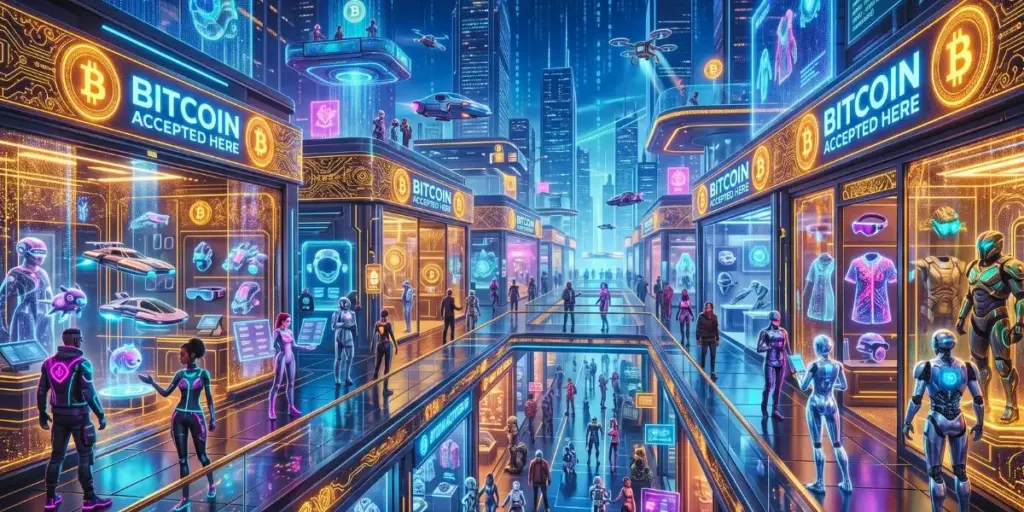

Virtual worlds generate tens of billions of dollars every year. Yet players are still stuck inside walled gardens. When a game shuts down, digital assets vanish. When a platform changes the rules, user wealth gets frozen. Bitcoin offers a way out of that centralized fragility. By adding decentralized settlement layers, virtual environments can evolve from closed corporate ecosystems into open, user-owned economies.
In this article, you’ll learn exactly how Bitcoin could support virtual economies, what problems it can solve, where it falls short, and how a real‑world implementation could look in 2026. We’ll cover payments, wallets, NFTs, interoperability, incentives and the limits of using BTC in virtual worlds.
What Role Does Bitcoin Play in Virtual Economies?
Bitcoin works as a decentralized, borderless settlement layer and a rock-solid store of value for digital worlds. It bypasses traditional banking friction and corporate gatekeepers.
Unlike centralized platform credits that can be inflated or devalued whenever a company decides, Bitcoin has a fixed supply of 21 million coins. That gives it a hard monetary anchor. When virtual economies peg their internal pricing or reserve assets to Bitcoin, they create absolute scarcity.
That shifts power from platform creators to users. Digital labor and virtual goods keep a verifiable, external value.
The Lightning Network and Micropayments
Virtual economies live on high-frequency, low-value transactions. Buying a digital sword, tipping a virtual guide, or grabbing a skin often costs fractions of a cent. The Bitcoin base layer can’t handle that kind of throughput efficiently.
That’s where the Lightning Network comes in.
By opening payment channels, Lightning lets millions of transactions happen off-chain. Only the final net balance settles on the main Bitcoin blockchain. That pushes transaction fees to near zero and confirms payments in milliseconds.
For a virtual economy, this means seamless, instant micro-purchasing. Users never have to worry about network congestion or absurd gas fees.
Store of Value vs. Medium of Exchange
A common misconception is that Bitcoin has to be the daily medium of exchange inside a game. In reality, Bitcoin often works best as the reserve asset.
Virtual economies might use a stablecoin or utility token for everyday transactions, but hold their treasury reserves in Bitcoin. That protects the platform’s purchasing power against fiat inflation and gives a reliable baseline for valuing high-ticket virtual real estate.
What Are Virtual Economies and Why They Need Better Money
Virtual economies are the systems of production, exchange and consumption that happen inside games, metaverses and other digital worlds. They include virtual goods, services, land, avatars, experiences and increasingly real‑world value.
Key components:
-
Digital assets: items, skins, land, avatars, collectibles.
-
Currencies: in‑game tokens, platform tokens, stablecoins, crypto.
-
Marketplaces: where users buy, sell and trade.
-
Incentives: rewards for creators, players and contributors.
The problem: most of these systems are siloed, controlled by a single company, and don’t talk to each other.
How Bitcoin Could Act as a Neutral Value Layer
Bitcoin could act as a neutral, borderless layer for value transfer across virtual platforms, reducing reliance on a single company’s currency. Because BTC is not controlled by any one metaverse, it can serve as a common denominator between worlds.
Potential roles:
-
Cross‑platform payments: pay in one world, spend in another.
-
Store of value for users who want to hold earnings outside a specific game.
-
Settlement layer between platforms, creators and users.
-
Incentive token for rewards, bounties and play‑to‑earn mechanics.
This is not about Bitcoin replacing every in‑game token; it’s about adding a shared monetary layer.
Bitcoin vs Native Metaverse Tokens
Not all virtual currencies are equal; Bitcoin and native metaverse tokens serve different purposes.
This table shows why a hybrid model (BTC as settlement, native token for in‑world actions) is often more realistic.
Wallets as the Bridge Between Bitcoin and the Metaverse
Wallets are the practical bridge that lets users hold, send and receive Bitcoin inside virtual environments. In 2026, metaverse wallets are evolving to support multi‑chain assets, NFTs and in‑world commerce.
What modern wallets enable:
-
Multi‑currency support (BTC, ETH, stablecoins, game tokens).
-
NFT storage and display of digital collectibles.
-
In‑world payments for goods, services and experiences.
-
Identity and access to dApps and virtual worlds.
Pro tip: For frequent small payments in virtual worlds, Lightning‑based BTC wallets can reduce fees and improve user experience.
Bitcoin, NFTs and Digital Ownership
Bitcoin can support digital ownership by acting as the monetary layer behind NFT marketplaces and asset transfers. While most NFTs today live on Ethereum or other chains, BTC can still be used to price, buy or settle those assets.
How this works:
-
NFTs represent ownership of virtual items (land, avatars, art).
-
BTC can be used as a pricing and settlement currency in marketplaces.
-
Wallets link the user to both their NFTs and their BTC balance.
-
Smart contracts and oracles can automate transfers when conditions are met.
This creates a clearer link between money, ownership and usage rights.
How Does Bitcoin Enable Cross-Platform Interoperability?
Bitcoin enables cross-platform interoperability by acting as a universal base-layer asset. It can be bridged into different metaverse environments without relying on centralized corporate databases.
True interoperability means a digital asset earned in one virtual world can be used or sold in another. Bitcoin helps make that possible through wrapped versions and sidechains.
Tokenized Virtual Goods and Wrapped Bitcoin
To interact with complex smart contracts—the kind needed for trading, lending, or advanced in-game logic—Bitcoin has to be represented on compatible networks.
Wrapped Bitcoin (WBTC) or native sidechain tokens, like STX on the Stacks network, let Bitcoin’s liquidity flow into decentralized applications, or dApps.
When a user buys a virtual plot of land, the smart contract can automatically execute the transfer of wrapped Bitcoin. The underlying asset stays backed 1:1 by actual Bitcoin held in reserve. That keeps the security and trust of the Bitcoin network while using the programmability of the sidechain.
Bitcoin vs. Altcoins vs. Centralized Credits
To understand Bitcoin’s unique position, it helps to compare it against other settlement layers. Here’s how they stack up for virtual economy integration.
| Feature | Bitcoin (via L2/Sidechains) | Ethereum (L1/L2) | Centralized Platform Credits |
|---|---|---|---|
| Transaction Speed | Milliseconds (Lightning Network) | Seconds to minutes (rollups) | Instant (internal database) |
| Security Model | Proof-of-Work (highest hashrate) | Proof-of-Stake (high security) | Centralized corporate firewall |
| Smart Contracts | Limited (requires sidechains) | Native and highly advanced | None (proprietary code) |
| Supply Dynamics | Hard-capped (21 million) | Inflationary / variable | Infinite (controlled by company) |
| Trust Requirement | Trustless (mathematical consensus) | Trustless (code consensus) | High (trust in company) |
Expert Insight: Managing Fee Volatility in Virtual Worlds From my experience auditing Web3 gaming tokenomics, the biggest hurdle for Bitcoin integration is price volatility. A virtual sword priced at 0.0001 BTC might double in fiat value overnight, breaking the game’s internal economy. The solution? Implement dynamic pricing oracles. Price the item in fiat terms within the UI, but execute the final settlement in Bitcoin at the exact millisecond of purchase. This protects both the player’s purchasing power and the developer’s revenue margins.
Why Choose Bitcoin Over Altcoins for Metaverse Payments?
Bitcoin offers unmatched security, network effect, and brand recognition. That makes it the most trusted reserve asset for high-value virtual real estate and digital goods.
Yes, alternative Layer 1 blockchains offer faster native smart contracts. But they often lack Bitcoin’s institutional adoption and macroeconomic legitimacy. When users put hundreds or thousands of dollars into virtual assets, they want the underlying settlement layer to be as secure as possible.
Bitcoin’s decade-long track record of zero downtime and its status as a globally recognized digital asset provide a psychological and technical safety net that newer networks simply can’t match.
On top of that, integrating Bitcoin taps into a massive existing user base. Millions of people already hold Bitcoin in self-custody wallets. Letting them spend those holdings in virtual environments removes the friction of forcing them to buy some new, obscure platform token.
Step-by-Step: Integrating Bitcoin into a Virtual World
Building a Bitcoin-backed virtual economy takes careful architectural planning. Developers have to bridge the gap between decentralized settlement and a smooth user experience. Here’s the technical blueprint.
Step 1: Establish the Lightning Node Infrastructure
The foundation of real-time virtual payments is a robust Lightning Network node. Developers need to set up routing nodes to ensure liquidity.
Using tools like LND (Lightning Network Daemon) or Core Lightning, the platform creates payment channels with enough capacity to handle peak gaming hours. That way, when 10,000 players try to buy items at the same time, the network doesn’t suffer routing failures.
Step 2: Implement Smart Contract Bridging
For complex assets like virtual real estate or unique avatars, the Lightning Network isn’t enough. Developers need to deploy a sidechain or use a Layer 2 smart contract platform like Stacks.
The virtual asset is minted as a non-fungible token (NFT) on the sidechain. The payment logic is programmed so the NFT only transfers to the buyer’s wallet once the Lightning payment is cryptographically verified.
Step 3: Abstract the User Experience
The golden rule of Web3 gaming is simple: hide the blockchain.
End users shouldn’t need to understand channel capacities, routing fees, or gas limits. The virtual world’s UI should integrate a custodial or non-custodial wallet provider that generates Lightning invoices in the background.
The player just clicks “Buy,” scans a QR code or confirms a browser extension prompt, and the item appears in their inventory.
Real‑World Use Cases and Case Study
Real‑world examples show how Bitcoin and crypto are already being used in virtual economies, even if adoption is still uneven.
Case Study: Cross‑Platform Creator Economy
Imagine a creator who sells digital wearables in one metaverse and wants to accept payments from users in another. With a Bitcoin‑enabled wallet:
-
The creator lists items priced in BTC or a stablecoin.
-
Buyers pay from their wallets, regardless of which platform they’re on.
-
The creator receives BTC directly, without a platform‑specific token.
-
Earnings can be held, spent or converted outside the game.
This reduces platform lock‑in and gives creators more control over their income.
Other Use Cases
-
Play‑to‑earn rewards paid in BTC or convertible tokens.
-
Virtual real estate purchases settled in BTC.
-
Microtransactions for tips, access passes or in‑game boosts.
-
Cross‑border payments for global user bases.
Limitations and What Bitcoin Cannot Solve Alone
Bitcoin is not a magic solution; it has real limitations in speed, fees and user experience for mass‑market virtual economies.
Key limitations:
-
Scalability and fees: base‑layer BTC can be slow and costly for microtransactions.
-
User experience: managing keys and wallets is still hard for non‑crypto users.
-
Platform adoption: many metaverses prefer their own tokens for control and incentives.
-
Volatility: pricing goods directly in BTC can be risky for users and merchants.
-
Regulatory uncertainty: rules around crypto payments vary by jurisdiction.
Blockchain and Bitcoin improve rails, but they don’t automatically fix UX, governance or business model issues.
Actionable Steps: Testing Bitcoin in a Virtual Economy
You can experiment with Bitcoin in a virtual economy without rebuilding everything from scratch.
Step 1 — Choose a Pilot Use Case
Pick one narrow scenario: tips for creators, paid access to an event, or a small marketplace.
Step 2 — Select Wallet and Payment Rails
Decide between on‑chain BTC, Lightning, or a wrapped/bridged version, depending on speed and cost needs.cryptoslate
Step 3 — Integrate With Existing Systems
Use APIs and SDKs to connect your wallet, marketplace and game engine. Avoid a full rebuild.
Step 4 — Define Pricing and Volatility Policy
Decide if prices are fixed in BTC, stablecoin‑pegged, or dynamically converted.
Step 5 — Measure and Iterate
Track conversion rates, transaction costs, user feedback and support tickets. Iterate monthly.
Expert insight: Start with a small, high‑value use case where users already understand crypto; expand only after you’ve proven UX and economics.
Key Takeaways and Next Steps
Bitcoin could support virtual economies by providing a neutral, borderless layer for payments, settlement and value storage across metaverse platforms. It works best as a complement to native tokens, not a replacement, and its success depends on wallets, UX and platform adoption.
Next steps:
-
Map where BTC could reduce friction in your virtual economy.
-
Pilot a small Bitcoin‑enabled payment flow with real users.
-
Monitor fees, volatility and user feedback before scaling.
If you want, I can help you design a concrete pilot for your own metaverse project or client.
FAQs
Can Bitcoin be used as money in the metaverse?
Yes. Bitcoin can be used to buy, sell and trade virtual items, and it can act as a store of value across platforms. However, many metaverses still rely on their own native tokens for in‑world actions.
Do I need a special wallet to use Bitcoin in the metaverse?
In most cases, yes. You’ll need a crypto wallet that supports BTC and, ideally, multi‑chain assets and NFTs. Metaverse wallets are designed to store, manage and transfer virtual assets securely.
Is Bitcoin better than native metaverse tokens?
Not necessarily. Bitcoin is more neutral and global, while native tokens are tightly integrated with a specific platform’s economy and governance. A hybrid approach is often most practical.
Can Bitcoin be used for NFTs in the metaverse?
Bitcoin can be used to price and settle NFT purchases, even if the NFT itself lives on another chain. Wallets and marketplaces can link BTC payments to NFT ownership and transfers.
How does the Lightning Network help virtual economies?
The Lightning Network enables off-chain payment channels, allowing millions of microtransactions to happen instantly with near-zero fees. That high throughput is essential for virtual economies that rely on frequent, low-value purchases like digital items or in-game tips.
What is Wrapped Bitcoin (WBTC) in virtual worlds?
Wrapped Bitcoin is a tokenized version of Bitcoin pegged 1:1 to the original asset. In virtual worlds, WBTC lets Bitcoin be used in smart contracts on other networks. That enables complex transactions, like trading virtual real estate, while maintaining Bitcoin’s value.
Is Bitcoin too slow for virtual economy transactions?
The Bitcoin base layer is too slow, processing only seven transactions per second. However, Layer 2 solutions like the Lightning Network process millions of transactions per second, making Bitcoin highly efficient and fast enough for real-time virtual economy needs.