











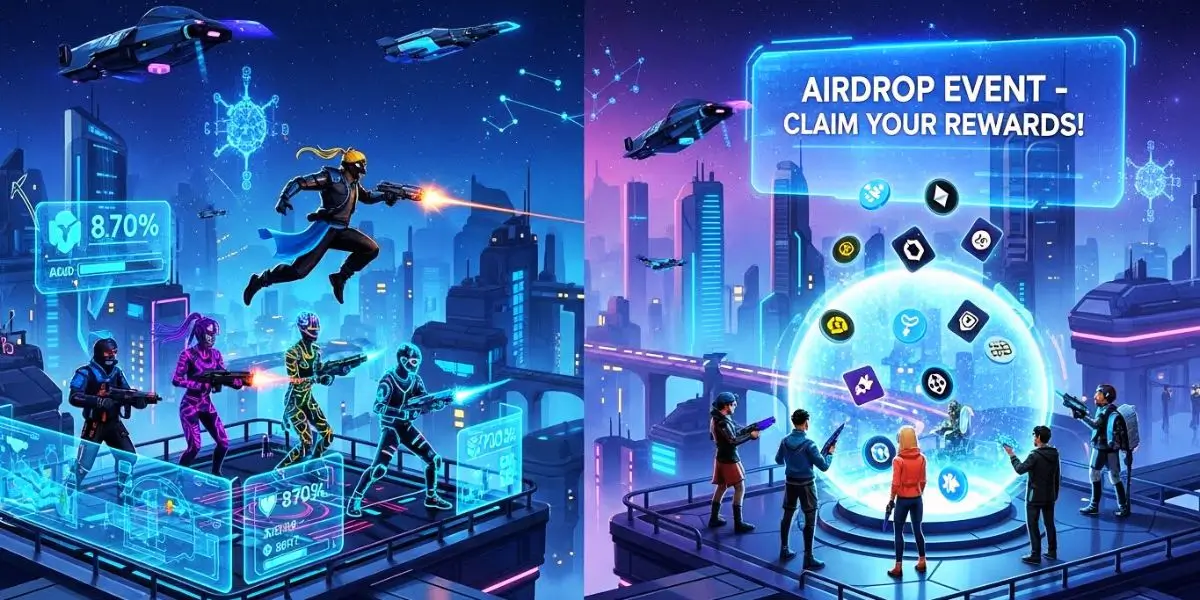
Ever wondered if your gaming skills could translate directly into a tangible financial asset? You’re not alone. The fusion of blockchain technology and interactive entertainment has birthed a new economic paradigm where gaming and airdrops are no longer separate concepts but a unified, powerful strategy. Welcome to the frontier of play-to-earn metaverses, where the next evolution is already underway: Play-to-Airdrop (P2A).
This isn’t just another speculative trend. Play-to-airdrop represents a fundamental shift in how game developers build communities and how players extract value. Forget the passive hopes of traditional airdrops or the often-grueling grind of early play-to-earn games. This model rewards skill, dedication, and genuine engagement with future token allocations.
Think of it as building an on-chain resume. Every mission you complete, every leaderboard you top, and every community event you participate in is a line item that could qualify you for a significant airdrop when the game launches its token. The question isn’t whether this model works—it’s how you can master it. This guide is your blueprint. We’ll dissect the mechanics, provide actionable strategies for combining gaming and airdrops, and show you how to position yourself at the forefront of the most promising play-to-earn metaverses.
The Strategic Shift from Earning to Farming Airdrops
The evolution from Play-to-Earn (P2E) to Play-to-Airdrop (P2A) represents a fundamental shift in Web3 gaming strategy. Play-to-earn models, popularized by games like Axie Infinity, focused on direct, often daily, cryptocurrency rewards for in-game achievements. While revolutionary, this model frequently led to unsustainable inflation and constant sell pressure on the game’s token.
Play-to-airdrop flips this script. Here, your in-game activities—whether winning PvP battles, completing quests, or simply consistent daily engagement—accumulate points or prove your participation. This activity is tracked, and later, it qualifies you for an airdrop of the game’s native tokens or rare NFTs. You’re not earning day-by-day; you’re farming a future allocation based on your proven contribution and loyalty.
Why does this matter for you? It means the goal is no longer just to “earn.” The goal is to strategically position yourself within a game’s ecosystem to maximize your share of a future, often significant, token distribution. This guide will show you exactly how to do that.
Understanding the Core Models: P2E vs. P2A
To build an effective strategy, you must first understand the battlefield. The play-to-earn (P2E) and play-to-airdrop (P2A) models are often mentioned together, but their mechanics and player incentives differ dramatically.
What is Play-to-Earn (P2E)?
Play-to-earn is a straightforward model where players earn cryptocurrency or NFTs directly and immediately through gameplay. The economics are transparent: complete a quest, earn 10 tokens; win a battle, earn a specific NFT. Games like Axie Infinity pioneered this, creating vibrant in-game economies where assets have real-world value. The focus is on continuous, daily earning, turning gameplay into a potential income stream.
What is Play-to-Airdrop (P2A)?
Play-to-airdrop is the strategic evolution. Here, players engage with a game—often during its beta or early stages—and accumulate points, achievements, or leaderboard status. These actions don’t yield immediate tokens. Instead, they serve as a record of your contribution. At a future date, typically the project’s Token Generation Event (TGE), this record determines the size of your token airdrop.
The Critical Difference:
Reward Timing & Certainty: P2E offers immediate, predictable rewards. P2A offers future, potential rewards based on your tracked activity.
Player Motivation: P2E can incentivize repetitive grinding for daily yield. P2A incentivizes deep engagement, skill mastery, and community building to maximize a future, one-off allocation.
Economic Design: P2A is seen by many developers as more sustainable. It delays token distribution until the game has an established community, avoiding the instant sell-pressure that plagued many early P2E economies.
*Which model is right for you? If you seek regular, smaller payouts, P2E might fit. But if you have a high-risk tolerance and believe in a project’s long-term vision, the leveraged potential of P2A can be far greater.*
The Mechanics of a Successful Play-to-Airdrop Campaign
Participating in play-to-airdrop is more than just playing a game. It’s a calculated campaign. Here’s how successful projects structure it and how you can navigate the process.
The Developer’s Blueprint: How P2A Works
Early Access & Tracking: A project launches its game in open beta or alpha. As players participate, their on-chain and in-game actions are meticulously tracked via a points or “season pass” system.
Defining Eligibility Criteria: Developers set clear (or sometimes opaque) metrics for the airdrop. This can include:
Total hours played or levels achieved.
Specific mission or quest completion.
Leaderboard ranking in competitive (PvP) modes.
Participation in special beta-testing events.
Social media engagement and community contributions.
The Snapshot & Airdrop: At a predetermined time, a “snapshot” is taken of all player records. Following the TGE, tokens are airdropped directly to the qualifying players’ connected wallets based on their tier of achievement.
The Player’s Playbook: How to Maximize Your Allocation
Your goal is to move from a casual player to a top-tier eligible participant.
Phase 1: Research & Selection. Don’t play every game. Focus on projects with strong backing, a clear roadmap, and a documented plan for a token. Your time is your primary investment; allocate it wisely.
Phase 2: Onboarding & Setup. You’ll need a self-custody Web3 wallet (like Trust Wallet or MetaMask) to interact with the game and receive future airdrops. Never use an exchange wallet.
Phase 3: Strategic Gameplay. Understand the scoring criteria. If leaderboards matter, focus on PvP. If quest completion matters, be a completionist. Consistency is often key—daily logins and engagement can be heavily weighted.
Phase 4: Community Engagement. Join the official Discord and Telegram. Being a helpful, active community member can sometimes be a factor, and it’s your primary source for critical rule updates.
Case Study: Deconstructing a Live P2A Campaign
Let’s analyze a real-world example to see the theory in action. In mid-2024, Community Gaming, an automated tournament platform, launched its “Summer Points Program”.
The Campaign Structure:
Objective: Incentivize platform activity and reward early users ahead of their CGX token launch.
Mechanics: Users earned points through:
Daily logins and spinning a reward wheel.
Completing social quests (following on X, reposting content).
Hosting and participating in tournaments.
Making predictions on esports outcomes.
The Airdrop Hook: While not explicitly guaranteed, the program heavily teases that points would be linked to eligibility for the upcoming CGX token airdrop.
Key Takeaways for Players:
Multi-faceted Participation: The campaign rewarded not just skilled play (tournaments) but also social promotion and platform engagement. Successful P2A hunters diversify their activities.
Clear Progression System: The points system provided transparent, immediate feedback, allowing users to track their progress toward the potential airdrop.
Alignment with Platform Goals: The tasks directly benefited Community Gaming by growing its user base and engagement metrics—a hallmark of a well-designed P2A model.
Decoding the Play-to-Airdrop Ecosystem: Core Mechanics You Must Master
To win at P2A, you must understand the machinery behind the curtain. These are not just games; they are sophisticated incentive systems with specific economic levers.
The Fundamental P2A Workflow
The process follows a clear, strategic path:
Active Gameplay & On-Chain Engagement: You participate in the game. Your actions, wallet interactions, and achievements are recorded on the blockchain.
Accumulation of “Proof-of-Participation”: Instead of immediate tokens, you build a record of your engagement. This could be a public points system, a hidden loyalty score, or simply a verifiable on-chain history.
The Snapshot & Airdrop Event: At a predetermined time (the snapshot), the project takes a record of all eligible participants and their level of activity. Subsequently, tokens are airdropped directly to the connected wallets of qualifying players.
Key Economic Drivers: Emissions, Multipliers, and Snapshots
Your potential reward is dictated by three critical concepts:
Token Emission Schedules: This is the project’s reward budget. Most projects front-load emissions, meaning the rewards for early, pioneering players are vastly larger than for those who join later. Actionable Insight: Your highest ROI comes from being an early adopter. Identify promising games in alpha or beta stages.
Point Multipliers: This is your personal reward accelerator. Projects use multipliers to incentivize specific behaviors that benefit the ecosystem. Common multipliers include:
Daily Login Streaks: Encouraging consistent engagement.
Social Referrals: Rewarding community growth.
Premium Actions: Linking a self-custody wallet, holding a partner NFT, or completing special missions.
The Critical Snapshot: This is the moment that defines eligibility. The most common pitfall is assuming you’re safe to stop playing before the airdrop is actually claimable. Snapshot traps occur when the date is unannounced or when you split your activity across multiple wallets, diluting your score. Golden Rule: Maintain consistent activity until the tokens are in your wallet.
Your Action Plan: A Step-by-Step Strategy for 2026 and Beyond
Transforming from a novice to a proficient play-to-airdrop strategist requires a system. Follow this actionable plan.
Step 1: Portfolio Construction & Due Diligence
Treat your P2A pursuits like an investment portfolio.
Diversify: Engage with 3-5 promising games across different genres and blockchains to spread risk.
Vet Relentlessly: Look for:
Experienced Teams: Do they have a track record in gaming or crypto?
Funding: Are they backed by reputable venture capital or angel investors?
Tokenomics Preview: Is there a whitepaper or litepaper discussing the future token’s utility?
Community Health: Is the Discord/Telegram active with genuine discussion, or is it just airdrop hunters?
Step 2: The Technical Setup & Security Foundation
Security is non-negotiable. A single mistake can cost you all your potential rewards.
Dedicated Wallet: Use a fresh, dedicated wallet for P2A activities. This isolates risk.
Bookmark Official Links: Always navigate to game portals from official Twitter/Discord links. Phishing sites are the #1 threat.
Never Share Seed Phrases: Legitimate projects will never ask for your seed phrase or private key.
Step 3: In-Game Execution & Optimization
Once you’ve selected a game, play to win the airdrop, not just the game.
Decode the Rules: Scour announcements and FAQs. What exactly is being tracked? “Active gameplay” could mean time in-match, not just the app being open.
Focus on Weighted Actions: If the game values “rare achievement” unlocks, pursue those. If it values daily streaks, make logging in a non-negotiable habit.
Document Your Activity: Keep simple records of your achievements, scores, and hours. This can be crucial if there’s a dispute about your eligibility snapshot.
Step 4: The Claiming Process
When the airdrop is announced, the work isn’t over.
Verify Eligibility: Use only the official eligibility checker, connecting the exact wallet you used to play.
Claim Securely: Follow the official claim guide. You will need native cryptocurrency (e.g., ETH, SOL, TON) in your wallet to pay the gas fee for the claim transaction.
Post-Claim Strategy: Decide your plan for the claimed tokens. Will you hold, stake them within the ecosystem for further rewards, or take profits? Have a plan before you claim.
Comparison of Play-to-Earn vs. Play-to-Airdrop Models
Use this table to understand the strategic differences at a glance.
| Feature | Play-to-Earn (P2E) | Play-to-Airdrop (P2A) | Strategic Implication |
|---|---|---|---|
| Reward Timing | Immediate, daily/continuous. | Delayed, retroactive. | P2A requires patience and long-term conviction in the project. |
| Primary Goal | Generate daily income. | Farm a large, one-time future allocation. | Shift from a “salary” mindset to a “venture capital” mindset. |
| Entry Cost | Often high (NFT purchase required). | Typically free or very low. | Lower barrier allows for diversified farming across multiple games. |
| Economic Pressure | High sell pressure from daily earners. | Lower immediate sell pressure. | Potential for more sustainable token price action post-airdrop. |
| Key Skill | Gaming skill for consistent wins. | Strategic participation and ecosystem contribution. | Success hinges on research and strategy over pure gaming prowess. |
Top Play-to-Airdrop Verticals and Games to Watch in 2026
The P2A model is spreading across genres. Here are the most promising verticals, based on current traction and ecosystem development.
Telegram-Based Tappers & Idle Games: Pioneered by Notcoin and Hamster Kombat on the TON blockchain, these games offer ultra-low-friction onboarding. Strategy: Perfect for beginners; focus on daily taps, daily combo missions, and referral boosts.
Strategic PvP and Card Battlers: Games like Wild Forest (RTS) reward skilled players who win battles and climb leaderboards. Strategy: Here, skill directly translates to higher points. Focus on mastering the meta and competing in ranked seasons.
Open Metaverse & Social Worlds: Platforms like The Sandbox and Decentraland often reward early landowners, content creators, and active event participants with airdrops. Strategy: Engagement is key—attend live events, build experiences, and participate in governance forums.
AAA RPGs and Shooters: Upcoming titles from major studios are experimenting with P2A for launch. Strategy: Follow announcements for “founder” programs or early beta tests where participation is tracked.
Navigating the Risks: A Realistic Look at P2A
Ignoring the risks is a surefire way to get burned. Here’s what you must acknowledge:
Time Investment Risk: Your primary cost is time. A project could fail, change its airdrop rules, or delay its token indefinitely, rendering your effort worthless.
Smart Contract Risk: Interacting with any dApp, even a game, carries the risk of smart contract bugs or exploits.
Regulatory Uncertainty: The legal status of gaming airdrops is evolving. They could be classified as income, securities, or fall into gambling regulations depending on your jurisdiction.
Market Volatility: Even if you receive a valuable airdrop, crypto market swings can dramatically affect its value by the time you can access or sell it.
Mitigation Strategy: Never invest more time than you can afford to lose. Consider P2A a high-risk, high-potential-reward activity within your broader Web3 engagement. Always prioritize projects that value fun and gameplay first; a good game retains value even if the tokenomics shift.
The Future of Gaming and Airdrops: What’s Next for P2A?
The play-to-airdrop model is not the end state; it’s a transition. As play-to-earn metaverses mature, we will see more hybrid and sophisticated models.
Convergence with Traditional Gaming: AAA game studios are exploring blockchain. Future campaigns may see P2A mechanics in major franchise pre-launch betas.
Sophisticated On-Chain Reputation: Your P2A history across multiple games could become a portable “gamer score,” unlocking benefits, exclusive access, or boosted allocations in new projects.
Dynamic, Multi-Event Airdrops: Instead of a one-time drop, games may host seasonal airdrop events, continually rewarding their most active and skilled player cohorts.
The core principle will remain: aligning player incentives with long-term network growth. The projects that master this will build the most resilient and valuable virtual economies.
Conclusion
The opportunity to combine gaming and airdrops is more than a niche crypto trend; it’s a fundamental reimagining of the player-developer relationship. Play-to-airdrop puts the power of early adoption directly into the hands of skilled and dedicated gamers. You are no longer just a consumer; you are a potential stakeholder.
The path is clear. Start by educating yourself, then move to cautious, selective participation. Build your security protocols, develop your gameplay strategies, and engage authentically with communities. The goal isn’t to chase every potential drop but to identify and deeply commit to the play-to-earn metaverses you genuinely believe have a future.
The next major gaming airdrop is already being seeded in a beta test happening right now. The question is, will you be a passive observer or an active participant building your on-chain legacy?
Ready to level up your strategy? Share your favorite P2A discovery or ask your most pressing question in the comments below. Let’s build the future of gaming, together.
Frequently Asked Questions (FAQ)
What is the difference between play to airdrop and play-to-earn?
The core difference is the timing and certainty of rewards. Play-to-earn (P2E) provides direct, immediate cryptocurrency or NFT rewards for in-game actions. Play-to-airdrop (P2A) involves accumulating points or achievements during a game’s early phase, which later qualifies you for a future token distribution event (the airdrop). P2E is about consistent earning, while P2A is about earning a potential future allocation based on your early support and skill.
Are play-to-earn games profitable?
Profitability varies wildly and is not guaranteed. Some players have generated significant income, especially in early, booming economies like Axie Infinity. However, profitability depends on factors like the game’s token economy (inflation vs. deflation), your initial investment in NFTs, your skill level, and the overall crypto market conditions. Many treat it as a side income or a high-risk investment rather than a stable job.
How to claim community gaming airdrop?
While specific steps depend on the project, the general process for claiming any gaming airdrop is universal:
Wait for Official Announcement: Only act after an official announcement from the project’s verified channels.
Check Eligibility: Visit the official airdrop portal or eligibility checker and connect the wallet you used for gameplay.
Follow Claim Instructions: If eligible, follow the on-screen instructions to sign a claim transaction. You will need the blockchain’s native token (e.g., ETH for Ethereum) to pay the gas fee.
Verify Receipt: Confirm the tokens appear in your wallet by checking the transaction on a block explorer.
Critical Security Note: Never use links from DMs or unverified websites. Never pay a fee to “unlock” an airdrop. Legitimate airdrops only require a gas fee for the claim transaction.
Is play-to-earn real?
Yes, play-to-earn is a very real and established sector within the blockchain industry. It represents games where in-game assets (cryptocurrencies, NFTs) are owned by the player and can be traded for real-world value on external marketplaces. The model has been proven by games with multi-billion dollar economies and millions of users. However, “real” does not mean “risk-free” or “guaranteed profit.” It is a nascent, volatile, and complex space that requires research and caution.
Disclaimer: This article is for informational and educational purposes only. It is not financial, investment, legal, or tax advice. The content discusses highly speculative activities in the blockchain gaming and cryptocurrency space, which involve substantial risk. You could lose all of your invested time and capital. Always conduct your own independent research (DYOR) and consider consulting with a qualified professional before making any financial decisions. The writer and publisher are not responsible for any financial losses or damages resulting from actions taken based on the information in this article. Airdrop eligibility and rewards are determined solely by the issuing projects and are subject to change.