

In the ever-evolving economy of Roblox, where fleeting trends and “brain rot” simulators often dominate the charts, a structural shift is taking place. The platform is maturing, actively prioritizing novel experiences with deep retention mechanics over hyper-casual, short-lived hits. At the precise intersection of this strategic pivot stands Wonder Works Studio, the commercial powerhouse behind the #1 top-earning licensed game on the platform, SpongeBob Tower Defense.
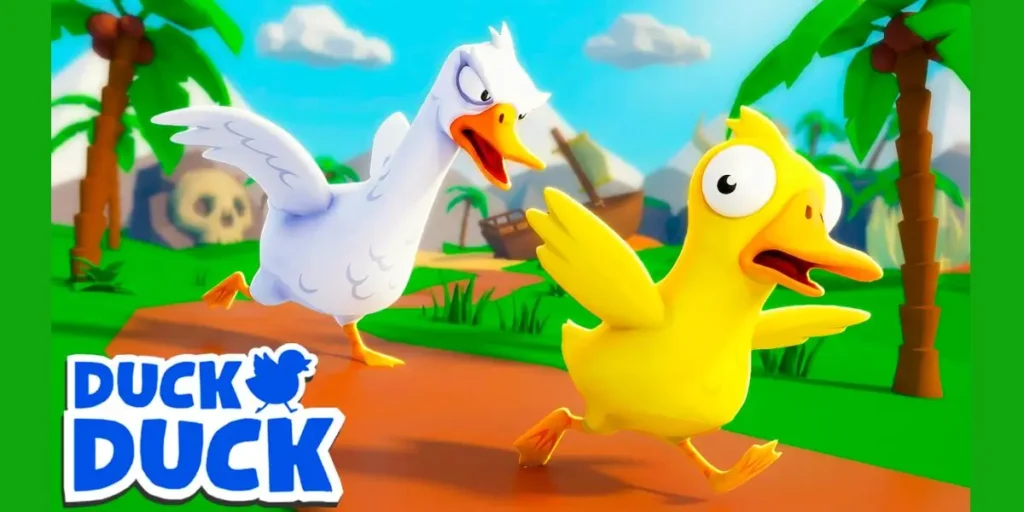
But today, the studio is doing something radically different. They are shedding the safety net of billion-dollar IP. On June 25, 2026, at 10:00 AM Central Time, Wonder Works is launching Duck Duck, a chaotic social race of betrayal, screaming ducks, and hot potato mechanics. More importantly, it’s the studio’s first original IP in over two years.
This is not just a game release; it is an assertion. According to the studio, the future of Roblox isn’t just about bigger trends—it’s about stronger identities. Duck Duck is their bet on worlds that players want to belong to, not just visit.
What is Duck Duck? A Chaotic Social Race of Betrayal
If you can imagine a frantic hybrid of the classic playground game “Duck, Duck, Goose” and the tense item-passing mechanics of “Hot Potato,” you begin to grasp the gameplay loop of Duck Duck. However, this description only scratches the surface of the pandemonium that Wonder Works Studio has engineered.
At its core, the objective is brutally simple: geese chase ducks, ducks avoid geese, and the last duck standing wins. The game strips away the complex simulation mechanics of other Roblox titles and replaces them with pure, adrenaline-fueled social deduction and reflex-based survival. It’s a game of proximity, deception, and sudden violence—where a quiet moment of grazing can instantly turn into a screaming dash for survival.
Unlike many “round-based” experiences where death means pulling out your phone, Duck Duck keeps the spectator experience engaging. The tension mounts as the pool of surviving ducks shrinks, forcing players to make split-second decisions that will either crown them the winner or leave them as feathery collateral damage. The “betrayal” aspect isn’t just a tagline; it’s a mechanic that plays on the social dynamics inherent in multiplayer lobbies, encouraging friendly fire and tactical sacrifice.
Breaking Roblox Conventions: Beyond the Platform Avatar
To understand why Duck Duck is being hailed internally as a “premium indie multiplayer game,” one must look at the technical and design frameworks it breaks. For years, the Roblox ecosystem has been defined by the platform’s standard blocky avatars. While highly customizable, these avatars create a homogenous visual identity across experiences.
Wonder Works Studio has rejected this standard entirely.
Duck Duck features fully original characters. You do not play as your Roblox avatar wearing a duck costume; you play as a bespoke, custom-designed duck with its own rig, animations, and personality. This is a seismic shift in design philosophy. It’s a move that prioritizes artistic cohesion over mass-market avatar integration.
“We built a world of our own,” said Zach Letter, CEO of Wonder Works Studio. “It looks and feels like a game you’d expect to buy on Steam, but it’s free, it’s on Roblox, and it replaces the standard Roblox avatar with a custom duck that players can shape, collect for, and make unmistakably theirs.”
This displacement of the platform avatar is a direct response to the demands of high-retention gaming. By creating a closed visual loop, Wonder Works ensures that all progression, status, and identity are tied exclusively to the Duck Duck economy—not to a marketplace hat the player bought in 2021.
Progression, Trading, and the Economy of Bread
If the chaotic gameplay is the hook, the progression system is the anchor designed to retain players for months. Duck Duck introduces a bespoke progression system built around a primary currency: Bread. Players earn Bread through active engagement in matches, completing quests, and unlocking achievements.
This isn’t a passive income system. It demands interaction with the game’s chaotic core loop. Once players accumulate enough Bread, they access one of the most robust cosmetic systems on Roblox: over 300 unlockable, tradeable accessories.
With billions of unique combinations available, the customization suite is a mathematical marvel. Every duck becomes a unique canvas. This depth is critical because it fuels the game’s secondary economic layer: player trading. By enabling a direct trade economy, Duck Duck fosters a community-driven market where rarity, aesthetics, and personal expression dictate value.
In an era where platforms are wary of “loot box” controversies, this earn-and-trade system provides a transparent, meritocratic pathway to rarity. It removes borrowed IP constraints and allows Wonder Works to design cosmetics that are perfectly native to the game’s absurdist, avian humor.
“SpongeBob Tower Defense proved we could take an iconic brand and build something players actually wanted to come back to every week. Duck Duck is different. Duck Duck is the game where we stopped borrowing someone else’s world and built one of our own. It looks and feels like a game you’d expect to buy on Steam, but it’s free, it’s on Roblox, and it replaces the standard Roblox avatar with a custom duck that players can shape, collect for, and make unmistakably theirs. To me, that’s where Roblox is heading: not just bigger trends, but stronger identities. Games that feel like worlds. Games players want to belong to. Duck Duck is our bet on that future,” said Zach Letter, CEO of Wonder Works Studio.
This “feature-complete” launch includes:
-
Full cross-platform play: Seamless integration across PC, mobile, tablet, and console.
-
A unified art direction: No reliance on disparate user-generated assets.
-
Integrated social systems: Built for the “screaming ducks” chaos that demands voice or rapid text communication.
-
A static identity: The IP belongs to the studio, meaning no licensing expiration dates can kill the game.
The Strategic Shift: Why Roblox is Moving Away from “Brain Rot”
The timing of Duck Duck’s release aligns with a much-discussed algorithm and editorial shift on Roblox. For years, the platform has battled the stigma of hosting “brain rot” content—hyper-casual, low-effort, high-click games designed to exploit the attention of very young children with flashing lights and minimal gameplay depth.
The recent platform directives have been clear: longevity and session depth now trump rapid, disengaged clicking. Roblox is rewarding developers who build sticky, meaningful worlds where 30-day retention metrics matter more than peak concurrent click-through rates.
Wonder Works built Duck Duck for this exact shift. The game is engineered with a live-ops cadence that is astonishingly aggressive. New content is expected to ship every Friday, continuing the studio’s signature weekly refresh cycle perfected on SpongeBob Tower Defense.
This weekly cadence serves two masters: it satisfies the player’s hunger for new toys (cosmetics), and it satisfies the algorithm’s hunger for a constantly updating experience. By choosing an original IP, Wonder Works also avoids the bureaucratic approval bottlenecks that come with licensed brands, allowing them to pivot, meme, and react to their community at the speed of internet culture.
Wonder Works Studio: A Legacy of Scale
To appreciate the risk and potential of Duck Duck, one must consider the gravitational pull of Wonder Works’ previous success. Founded in 2019 in Arlington, Texas, by Zach Letter and Megan Letter, the studio has over 20 years of combined gaming and entertainment industry experience.
Their magnum opus, SpongeBob Tower Defense, is a juggernaut. With over 672 million visits, it stands as the highest-earning licensed game on the platform. It validated the thesis that a beloved IP, treated with mechanical respect rather than as a lazy cash grab, could generate consistent, long-term revenue.
Wonder Works is not a hobbyist group; they are a featured entity in Forbes, Bloomberg, CNBC, and NPR. They are the go-to partner for IP owners. This background makes the launch of Duck Duck a watershed moment. The studio is leveraging the financial security and operational expertise earned from SpongeBob to establish an IP that they own outright.
“This is the game where we stopped borrowing someone else’s world and built one of our own,” Letter confirmed, drawing a clear line in the sand between their service work and their future ambitions.
Live-Ops Mastery: New Content Every Friday
The “Friday drop” culture is a staple of the fashion and sneaker world. Wonder Works has successfully ported this cultural heartbeat to Roblox. The promise of shipping new content every single Friday is a massive operational burden, but it creates an appointment-viewing dynamic that is the holy grail of live-service games.
In Duck Duck, this manifests as a constantly expanding wardrobe of 300+ accessories. Players don’t just log in to survive the goose onslaught; they log in to see what’s new in the shop, what limited item they can acquire, and what the trading floor value of their inventory is. This transforms the game from a casual party title into a hobby. It becomes a destination where economic and social status unfolds in real-time, dressed in the feathers of a hilarious, screaming duck.
Free to play on Roblox PC, mobile, tablet, and console. Duck Duck Game Page.
ABOUT WONDER WORKS STUDIO
Founded in 2019 in Arlington, Texas, by Zach Letter and Megan Letter, Wonder Works Studio is one of Roblox’s leading game development studios. With 20+ years of combined gaming and entertainment industry experience, the founders built a studio designed to bring any IP to life at scale. Featured in Forbes, Bloomberg, CNBC, and NPR, Wonder Works has become the go-to partner for IP owners seeking a meaningful, long-term presence on Roblox. For more information on Wonder Works Studio, visithttps://wonderworks.gg.
Conclusion
Duck Duck is more than a game about geese and hot potatoes. It’s a calculated, high-stakes pivot by one of Roblox’s most commercially successful studios. By launching an original IP with a hard break from platform avatars, a bespoke economy, and a Steam-level visual polish, Wonder Works is betting that the future of the metaverse lies in strong, singular identities.
The game arrives at a crucial moment when the gates of Roblox are closing on low-effort trend chasers and opening for studios capable of building worlds. Zach Letter’s vision is clear: “Games that feel like worlds. Games players want to belong to.” With Duck Duck, Wonder Works is no longer just renting land on someone else’s IP; they are staking a claim on an absurd, feathery, and entirely original future.
Duck Duck is free to play on Roblox PC, mobile, tablet, and console. You can visit the experience page here to prepare for the June 25th chaos.