
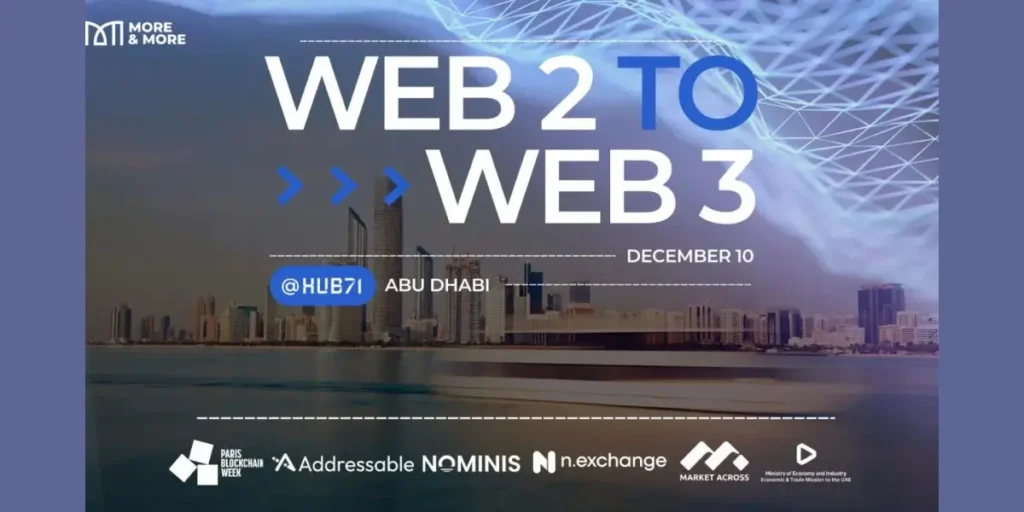

The digital transformation of global finance has reached an unprecedented inflection point. On December 10, 2025, the Web2 to Web3 Conference will convene at HUB71 in Abu Dhabi’s Global Market district—bringing together an unprecedented convergence of global finance leaders, digital asset pioneers, and regulatory authorities for what promises to be a defining moment in the institutional adoption of blockchain technology and decentralized systems.
This exclusive gathering, limited to just 150 senior participants, represents a critical bridge between traditional financial systems and the emerging Web3 infrastructure that’s reshaping how value is created, transferred, and owned worldwide. With financial institutions no longer questioning if they should explore Web3, but rather how to do so securely and at scale, this conference arrives at precisely the right moment to shape the compliant future of digital finance.
Why This Conference Matters Now More Than Ever
Consider this pivotal shift: According to industry analyses, the transition from Web2 to Web3 represents more than just technological evolution—it’s a fundamental restructuring of ownership models, incentive structures, and community engagement that creates entirely new business paradigms. Where Web2 platforms centralized control and data ownership with tech giants, Web3 introduces decentralized frameworks where users maintain control of their assets and data through blockchain technology.
The United Arab Emirates, and Abu Dhabi in particular, has emerged as a global epicenter for this transformation. With clear regulatory frameworks and strategic positioning as a gateway between East and West, the UAE offers the regulatory clarity and innovation-friendly environment that institutional players require before making substantial commitments to digital assets and blockchain infrastructure. This conference capitalizes on that unique positioning to accelerate practical pathways forward.
“This conference reflects the momentum we are seeing as global financial institutions look to adopt Web3 infrastructure responsibly,” said Tal Mor, Founder of More & More, the conference organizer. “Industry leaders want clarity, collaboration, and real-world solutions. Bringing them together in Abu Dhabi creates an environment where meaningful progress can happen.”
From Concept to Reality: Understanding the Web3 Revolution
Before delving into the conference specifics, it’s essential to grasp why Web3 represents such a fundamental shift in how we conceptualize digital interactions and financial systems. According to PwC’s comprehensive analysis, Web3 is far more than just cryptocurrencies and NFTs—it represents “the next chapter in the evolution of the internet” that introduces new ownership, incentive, and community models through blockchain technology.
The Three Pillars of Web3 Transformation
The transition from today’s internet (Web2) to tomorrow’s decentralized ecosystem (Web3) rests on three transformative pillars that redefine digital interactions:
-
Ownership and Control: Unlike Web2 platforms where companies control user data and digital assets, Web3 enables true digital ownership through tokenization on blockchain networks. Users can take their digital assets wherever they go and transfer them to others—much like physical property.
-
Aligned Incentives: Web3 creates tighter alignment between brands and consumers through shared ownership structures. Consumers become partners and stakeholders rather than just customers, creating a new class of highly engaged brand advocates with financial interests in success.
-
Community Governance: Decentralized autonomous organizations (DAOs) and token-based governance enable communities to collectively make decisions about the platforms they use, rather than having those decisions made unilaterally by corporate executives.
Consider this practical example: A prominent athletic shoe company could create a unique, limited edition shoe NFT available only to its community members. This NFT could represent both a digital wearable for avatars and a purchase order for a physical pair of shoes. Community members could trade these NFTs, with the brand potentially earning royalties on secondary sales—creating a continuous revenue stream and deeper brand engagement.
The Business Imperative: Why Leaders Can’t Afford to Wait
Forward-thinking institutions recognize that Web3 adoption isn’t merely an optional innovation—it’s becoming a competitive necessity. Companies that understand and effectively implement Web3 strategies can gain significant advantages, much like early adopters of e-commerce or social media marketing.
The business implications are staggering. Web3 introduces new revenue streams through initial digital asset sales and perpetual royalties on secondary market transactions. It enables token-based loyalty programs with transferable points, creates verifiable supply chain transparency, and establishes new models for customer engagement and community building.
Perhaps most importantly for traditional financial institutions, Web3 technologies offer solutions to longstanding challenges around settlement times, cross-border transactions, asset provenance, and fractional ownership—all within frameworks that can be designed with regulatory compliance and institutional security requirements at their core.
Exclusive Speaker Insights: Wisdom from the Frontlines
The Web2 to Web3 Conference brings together an extraordinary roster of industry pioneers, regulatory experts, and institutional leaders who will share their practical experiences and strategic visions for the future. These aren’t just theoretical discussions—they’re insights forged through real-world implementation and leadership.
Meet the Visionaries Shaping Our Digital Future
-
Michael Amar, CEO and Founder of Paris Blockchain Week: Bringing European blockchain innovation perspectives to the Middle East context, Amar understands both the technological possibilities and regulatory considerations that enable sustainable growth.
-
Ouriel Ohayon, CEO and Founder of Zengo: As a leader in non-custodial wallet security, Ohayon provides crucial insights into how institutions can maintain control of digital assets while ensuring security and recoverability—a fundamental concern for regulated entities.
-
Ran Goldshtein, VP of Payments at Fireblocks: With Fireblocks securing over $4 trillion in digital asset transactions, Goldshtein offers unparalleled perspective on institutional-grade security frameworks and payment infrastructure for the Web3 era.
-
Tomer Sharoni, CEO and Founder of Addressable: Sharoni’s expertise in bridging Web2 marketing data with Web3 communities reveals how traditional customer engagement models are evolving toward token-based incentive systems and on-chain relationship management.
-
Nevo Lapidot, Director of Crypto Compliance at eToro: Lapidot provides essential regulatory perspective from one of the world’s largest social trading platforms, offering practical guidance on navigating compliance requirements across jurisdictions.
What burning questions would you ask these industry pioneers if you had the opportunity? What specific challenges is your organization facing in its Web3 transition that our speakers might address?
Critical Discussion Themes: Where Theory Meets Implementation
The conference agenda has been meticulously crafted to address the most pressing questions and opportunities facing institutions exploring Web3 infrastructure. These aren’t academic discussions—they’re practical, solution-oriented sessions designed to equip leaders with actionable insights and partnership opportunities.
Institutional-Grade Infrastructure: Security, Custody, and Settlement
One of the primary barriers to institutional adoption has been concerns around security and infrastructure maturity. Sessions will explore:
-
Multi-party computation (MPC) and institutional custody solutions that eliminate single points of failure while maintaining operational efficiency
-
Cross-chain settlement systems that enable seamless asset transfers across different blockchain networks
-
Regulatory-compliant wallet architectures that meet know-your-customer (KYC) and anti-money laundering (AML) requirements without compromising user sovereignty
Compliance Frameworks and Regulatory Alignment
As Tal Mor noted, “Institutions are no longer asking if they should explore Web3, but how to do it securely, transparently, and at scale.” This shift necessitates deep dives into:
-
Cross-border regulatory harmonization initiatives that create predictable operating environments
-
Financial crime prevention in decentralized systems through advanced analytics and identity solutions
-
Global standards development for token classification, taxation, and disclosure requirements
Tokenization of Real-World Assets: The Trillion-Dollar Opportunity
Beyond cryptocurrencies, perhaps the most significant institutional opportunity lies in tokenizing traditional assets. Conference sessions will examine:
-
Fractional ownership models for real estate, fine art, and alternative investments that increase liquidity and accessibility
-
Supply chain transparency solutions that use blockchain to verify provenance, authenticity, and sustainability claims
-
Digital identity frameworks that enable verified credentials while maintaining user privacy and control
Enterprise Web3 Use Cases Already in Production
The most compelling sessions may showcase actual implementations already delivering value:
-
Financial institutions using private permissioned blockchains for interbank settlements and trade finance
-
Media companies creating new creator economy models with transparent royalty distribution
-
Luxury brands combating counterfeiting while building engaged collector communities
-
Gaming studios developing player-owned economies with true digital asset ownership
Abu Dhabi’s Strategic Position as a Global Web3 Gateway
The choice of Abu Dhabi as the conference venue is no accident. The UAE has strategically positioned itself as a global hub for fintech innovation and digital asset adoption, creating regulatory frameworks specifically designed to attract responsible innovators while maintaining rigorous compliance standards.
Regulatory Clarity: The UAE’s Competitive Advantage
While many jurisdictions struggle with regulatory uncertainty around digital assets, the UAE has established clear guidelines through:
-
The Virtual Assets Regulatory Authority (VARA) in Dubai creating comprehensive frameworks for digital asset service providers
-
The Financial Services Regulatory Authority (FSRA) of Abu Dhabi Global Market developing progressive regulations for digital securities and tokenization
-
National blockchain strategies that prioritize government adoption and public-private partnerships
This regulatory clarity has created a virtuous cycle, attracting established financial institutions, innovative startups, and supporting service providers to establish regional headquarters in the UAE. The concentration of talent, capital, and regulatory predictability makes Abu Dhabi an ideal testing ground for institutional Web3 solutions before scaling globally.
The MENA Region’s Digital Transformation Momentum
The conference occurs against a backdrop of extraordinary digital transformation across the Middle East and North Africa. According to GSMA research:
-
The mobile sector is set to contribute $470 billion to MENA’s economy by 2030, up from $350 billion in 2024
-
5G adoption is accelerating rapidly, expected to rise from 7% of total connections in 2024 to 48% by 2030
-
Enterprise spending on digital transformation will average 9.8% of revenues across MENA between 2025 and 2030
This digital infrastructure investment creates fertile ground for Web3 applications, particularly in financial services where mobile penetration often exceeds traditional banking access. The intersection of high smartphone adoption, progressive regulation, and institutional capital makes the MENA region potentially the most dynamic testing ground for next-generation financial infrastructure.
Beyond Panels: Networking, Partnerships, and Deal-Making
While the educational content provides tremendous value, the real magic of the Web2 to Web3 Conference happens in the conversations between sessions, during curated networking events, and in private meeting rooms. This is where partnerships are formed, deals are initiated, and collaborative solutions are designed.
The Power of Curated Connections
Unlike massive industry gatherings where meaningful connections can be challenging, this intimate conference of 150 senior leaders enables:
-
Strategic alignment meetings between financial institutions and technology providers
-
Cross-sector collaborations between traditional finance, fintech, and Web3 native companies
-
Regulatory dialogues that shape future policy developments based on industry input
-
Investment discussions that connect promising projects with institutional capital
The conference organizers have specifically designed the experience to maximize these connections through structured networking sessions, curated introductions, and dedicated spaces for private discussions.
Building the Institutional Web3 Ecosystem
The partnerships formed at this conference will extend far beyond the event itself, contributing to:
-
Standards development for interoperability between different institutional solutions
-
Best practice sharing around security, compliance, and risk management
-
Talent development through cross-organizational knowledge transfer
-
Joint innovation initiatives that pool resources for shared infrastructure development
The Future of Institutional Web3: Trends, Predictions, and Opportunities
As we look beyond the conference, several emerging trends will shape how traditional financial institutions engage with Web3 technologies in the coming years. Forward-thinking leaders are already positioning their organizations to capitalize on these developments.
Convergence of AI and Blockchain Technologies
Perhaps the most significant trend involves the intersection of artificial intelligence and decentralized systems:
-
AI-powered smart contracts that can adapt to changing conditions while maintaining auditability
-
Predictive token economics models that use machine learning to optimize incentive structures
-
Decentralized AI training that protects data privacy while improving model accuracy
-
Automated compliance monitoring that identifies suspicious patterns across blockchain networks
Mainstream Adoption Through Regulatory Innovation
The institutional floodgates will open as regulatory frameworks mature:
-
Bank-issued stablecoins that combine the stability of traditional finance with the efficiency of blockchain settlements
-
Tokenized government securities that create new liquidity options for treasury management
-
Central bank digital currencies (CBDCs) that integrate with commercial bank tokenization platforms
-
Cross-border regulatory sandboxes that allow testing of innovative solutions across jurisdictions
Sustainability and Social Impact Applications
Web3 technologies offer powerful tools for addressing pressing global challenges:
-
Carbon credit tokenization that creates transparent, verifiable environmental markets
-
Humanitarian aid distribution through blockchain-based identity and payment systems
-
Supply chain transparency for ethical sourcing and fair trade verification
-
Community-owned renewable energy projects enabled by fractional ownership models
Your Invitation to Shape the Future of Finance
The Web2 to Web3 Conference represents more than just another industry event—it’s a strategic inflection point where the foundational decisions will be made about how traditional finance integrates with decentralized technologies. The insights gained, partnerships formed, and solutions developed during this gathering will reverberate through global financial systems for years to come.
As we stand at this historic crossroads, the question isn’t whether your organization should engage with Web3 technologies, but rather how strategically and proactively you will do so. The institutions that approach this transition with informed curiosity, collaborative spirit, and decisive action will define the next era of financial services—creating unprecedented value for their clients, stakeholders, and society.
Your Next Steps Toward Web3 Leadership
-
Deepen your understanding of how Web3 technologies specifically apply to your industry vertical and organizational priorities
-
Identify pilot projects that offer meaningful learning opportunities with contained risk exposure
-
Build cross-functional teams that combine technical, business, legal, and compliance perspectives
-
Engage with regulators to shape balanced frameworks that enable innovation while protecting consumers
-
Join the conversation at gatherings like the Web2 to Web3 Conference where practical solutions are being developed
The future of finance is being built at the intersection of tradition and innovation, regulation and decentralization, institutions and communities. Your leadership in navigating this complex landscape will determine not just your organization’s success, but the fundamental fairness, accessibility, and resilience of our global financial systems.
What role will your organization play in this transformation? How will you contribute to building a financial future that leverages the best of traditional systems and innovative technologies?
Frequently Asked Questions
Who should attend the Web2 to Web3 Conference in Abu Dhabi?
This conference is specifically designed for senior executives and decision-makers from global banks, institutional investment firms, fintech companies, regulatory bodies, and established Web3 infrastructure providers. With attendance limited to 150 participants, it targets leaders who are actively shaping their organization’s approach to digital assets and blockchain integration. The intimate setting ensures meaningful dialogue among peers facing similar strategic challenges.
What makes this conference different from other blockchain events?
Unlike broader cryptocurrency conferences, this gathering focuses specifically on institutional adoption pathways and regulatory-compliant solutions. The collaboration with organizations like Paris Blockchain Week and HUB71 ensures global perspective with regional relevance, while the exclusive participant list enables deeper discussions than typically possible at larger events. Every session addresses practical implementation challenges rather than theoretical possibilities.
How does Web3 fundamentally differ from current Web2 systems?
Web3 represents a paradigm shift from the centralized platforms dominating today’s internet (Web2) to decentralized user-owned networks. While Web2 platforms control user data and digital interactions (think social media companies owning your content and attention data), Web3 enables true digital ownership through blockchain technology. Users control their assets, data, and digital identities, participating in governance and value creation rather than merely being products sold to advertisers.
Why is Abu Dhabi considered an ideal location for this discussion?
Abu Dhabi has established itself as a global hub for fintech innovation with clear regulatory frameworks specifically designed for digital assets. The Abu Dhabi Global Market district offers a progressive regulatory environment that balances innovation with institutional safeguards. Additionally, the UAE’s strategic position between Eastern and Western markets, combined with substantial sovereign investment in technology infrastructure, creates an ideal testing ground for solutions intended for global scale.
What are the most immediate practical applications of Web3 for traditional finance?
Financial institutions are finding immediate value in asset tokenization (creating digital representations of real-world assets), cross-border settlement systems that reduce time and cost, and digital identity solutions that streamline compliance while improving user privacy. Perhaps most significantly, Web3 technologies enable entirely new product categories like programmable assets, decentralized autonomous organizations for investment pooling, and transparent supply chain financing.
How are regulatory concerns being addressed for institutional Web3 adoption?
The conference dedicates significant attention to compliance frameworks and regulatory alignment, featuring speakers from both regulatory bodies and institutions navigating these requirements. Key focus areas include cross-border regulatory harmonization, financial crime prevention in decentralized systems, global standards development for token classification, and practical implementations of travel rule compliance for digital assets. The UAE’s progressive regulatory approach serves as a case study for balanced innovation.
Can organizations attend if they’re just beginning their Web3 exploration?
Absolutely. The conference is designed to serve organizations at various stages of their Web3 journey—from those formulating initial strategies to institutions with live implementations. Sessions cover foundational concepts alongside advanced implementation discussions. The exclusive networking opportunities are particularly valuable for organizations in exploratory phases, as they can connect with potential technology partners, regulatory experts, and peer institutions who have navigated similar early-stage challenges.