
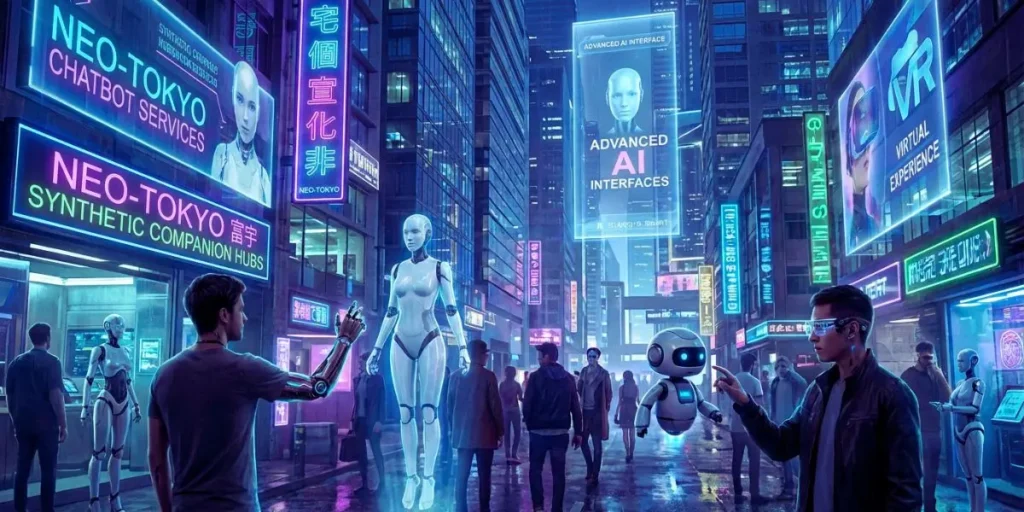

Remember when asking a website a question meant sifting through a clunky FAQ page? Then, the chatbot arrived. It was a helpful, albeit robotic, step forward. But we’ve all had that frustrating conversation with a text bot that just didn’t understand the nuance of our question. The digital landscape is shifting again, and it’s doing so at warp speed. We are moving beyond text-based interactions into a world where AI avatar video generator free tools are putting hyper-realistic, conversational digital beings at the forefront of customer engagement, education, and entertainment.
This isn’t just about having a face on a screen; it’s about the Human-AI Symbiosis. It’s the powerful collaboration where artificial intelligence handles the heavy lifting of content creation—generating lifelike avatars, syncing lip movements, and personalizing interactions—so that we, the humans, can focus on strategy, creativity, and genuine connection. What if you could create a digital twin that speaks to your audience in 50 different languages, works 24/7, and never gets tired? The technology is here, and much of it is surprisingly accessible. Are you ready to see how this symbiosis is reshaping the web?
In this guide, we’ll dive deep into the mechanics of this revolution. We’ll explore the best tools, from a simple AI avatar generator free to a full-featured AI talking avatar free platform. We’ll answer the burning question, “How to create AI avatar video for free?” and look at the future, from podcasting to personalized avatars that drive unprecedented engagement. Let’s explore the new frontier of digital interaction.
What Is Human-AI Symbiosis and Why Does It Matter?
Pro Tip: The most successful implementations of Human-AI symbiosis start with a clear understanding of your audience’s pain points. What questions do they ask repeatedly? Where do they drop off in your funnel? Let data guide your AI strategy.
From Basic Chatbots to Intelligent AI Avatars: The Evolution
The Key Differences at a Glance
|
Feature
|
Traditional Chatbot
|
Modern AI Avatar
|
|---|---|---|
|
Technology
|
Rule-based scripts
|
Machine learning + NLP
|
|
Personalization
|
Generic responses
|
Context-aware, user-specific
|
|
Learning Ability
|
Static, manual updates
|
Continuous, autonomous learning
|
|
Emotional Intelligence
|
None
|
Sentiment analysis + adaptive tone
|
|
Integration
|
Limited to one channel
|
Omnichannel (web, app, voice, social)
|
Quick Insight: AI avatars don’t just respond—they anticipate. By analyzing user behavior patterns, they can proactively offer help, suggest relevant content, or guide visitors toward conversion points before frustration sets in.
Key Benefits of Implementing AI Avatars on Your Website
1. 24/7 Availability Without Burnout
2. Hyper-Personalized User Experiences
3. Reduced Support Costs, Increased Efficiency
4. Rich Data Collection for Smarter Decisions
5. Enhanced Brand Perception
Real-World Example: A leading e-commerce brand implemented an AI avatar that guided users through product selection based on style preferences and budget. Result? A 40% increase in average order value and a 25% reduction in cart abandonment.
The Great Shift: From Text Boxes to Talking Faces
The first wave of AI interaction was functional. Chatbots were designed to answer basic queries, guide users through funnels, and reduce the load on human support teams. They were successful, but they lacked a critical component: human connection. We are visual creatures. A study by the University of California, Los Angeles (UCLA) found that up to 93% of communication effectiveness is determined by non-verbal cues.
This is where the talking avatar AI technology bridges the gap. By combining Natural Language Processing (NLP) with computer vision and generative AI, we now have avatars that don’t just speak; they express. They use gestures, maintain eye contact, and convey empathy. This shift from a text box to a talking avatar AI dramatically increases trust and retention.
Think about the last time you watched a tutorial. Would you rather read a block of text or watch a friendly face guide you through the steps? The answer is almost always the latter. This is why businesses are scrambling to adopt this technology. They are moving from simply answering questions to building relationships with digital representatives.
Why Text is No Longer King in Engagement
Let’s face it: attention spans are shrinking. In a world flooded with content, getting someone to read a 1,000-word article is a challenge. Getting them to watch a 60-second video is much easier.
-
Emotional Connection: A talking avatar AI can smile, look concerned, or express excitement, creating an emotional bond that text alone cannot.
-
Accessibility: Avatars break down literacy barriers and are more accessible to people with visual impairments or learning disabilities.
-
Higher Conversion Rates: Video content consistently outperforms text in conversion. According to HubSpot, 54% of consumers want to see more video content from brands they support. An AI avatar video generator free tool puts that power in your hands without needing a full production studio.
The Ultimate Toolkit: Your Guide to AI Avatars
You might be thinking, “This sounds expensive. I can’t afford a Hollywood CGI team.” The incredible part of this technological leap is its democratization. You no longer need a studio. You just need the right software. Here are the tools leading the charge in the Human-AI Symbiosis movement.
The Power of “Free”: What You Can Achieve at Zero Cost
One of the biggest misconceptions is that quality requires a massive budget. Many platforms offer a AI avatar generator free tier or a AI avatar video generator free trial that allows you to create professional content without spending a dime. These free versions are perfect for testing the waters, creating short social media clips, or personalizing sales outreach.
Key Features to Look For:
-
Voice Cloning: The ability to make your avatar sound like you.
-
Language Support: Generating content in multiple languages to scale globally.
-
Custom Backgrounds: Placing your avatar in a virtual studio, office, or anywhere your brand exists.
When searching for a AI avatar generator free tool, focus on the output quality. Does the lip-sync match the audio? Are the movements natural? A jerky, robotic avatar can harm your brand more than a simple text chatbot.
HeyGen AI Avatar: The Industry Standard
When discussing high-quality, accessible avatars, one name consistently rises to the top: HeyGen AI avatar. HeyGen has become a gold standard for creating studio-quality videos with digital avatars. Its platform allows you to generate a talking avatar AI in minutes.
Why HeyGen Stands Out:
-
Photorealistic Avatars: Their library of avatars is incredibly lifelike.
-
Instant Video Creation: Simply type your script, choose a voice, and the HeyGen AI avatar tool generates a video instantly.
-
Custom Avatars: You can create a custom avatar that looks exactly like you or a brand representative.
Let’s look at a quick case study. Imagine you run an online course. Instead of filming yourself for every update or module, you create a HeyGen AI avatar of yourself. You feed it the scripts for your weekly lessons. The result? Consistent, high-quality video content delivered on demand, freeing you up to mentor students or develop new courses. This is the essence of symbiosis: AI handles the production, while you handle the creative direction.
AI Image to Talking Avatar: The Magic of Animation
What if you have a specific illustration, a logo, or a photo of a historical figure you want to bring to life? This is where the AI image to talking avatar technology is truly revolutionary. These tools use sophisticated AI to analyze a static image and animate it, mapping facial features to a voice track.
You can take a vintage photo of a company founder and have them “welcome” new employees. You can take a mascot and have it introduce a new product. The AI image to talking avatar feature allows you to resurrect brand assets in a way that was previously impossible without expensive animation software. It’s a game-changer for storytelling and historical engagement.
How to Design AI Interactions That Feel Human (Not Robotic)
Use Natural, Conversational Language
Incorporate Empathy and Emotional Intelligence
Offer Clear Escalation Paths
Test, Iterate, and Optimize
Actionable Checklist: Human-Centered AI Design
- ✅ Write scripts in your brand’s voice, not “robot speak”
- ✅ Include empathetic responses for common frustration points
- ✅ Add quick-reply buttons for common questions to reduce typing
- ✅ Ensure mobile responsiveness—most interactions happen on phones
- ✅ Monitor conversations weekly to identify improvement opportunities
Practical Use Cases: Where Human-AI Symbiosis Shines
E-Commerce: Personalized Shopping Assistants
SaaS: Onboarding and Feature Adoption
Content Publishers: Engagement and Discovery
Healthcare (Non-Diagnostic): Appointment Scheduling and FAQs
Case Study Snapshot: A financial education platform integrated an AI avatar that answered beginner questions about investing. Within three months, they saw a 50% increase in newsletter sign-ups and a 30% longer average session duration.
Common Pitfalls to Avoid When Deploying AI Solutions
❌ Over-Promising Capabilities
❌ Ignoring Data Privacy and Consent
❌ Neglecting the Human Handoff
❌ Failing to Train on Relevant Data
Pro Warning: Avoid “set it and forget it.” Conversational AI requires ongoing monitoring and refinement. User language evolves, new products launch, and expectations shift. Schedule quarterly reviews to keep your AI avatar sharp and relevant.
Step-by-Step Checklist: Launching Your AI Avatar Strategy
Phase 1: Strategy & Planning
- Define clear objectives: What problem are you solving? (e.g., reduce support tickets, increase conversions)
- Map your user journey: Identify key touchpoints where AI avatars can add value
- Choose your technology partner: Evaluate platforms based on NLP capabilities, integration options, and scalability
- Establish success metrics: Track engagement rate, resolution time, conversion lift, and user satisfaction
Phase 2: Design & Development
- Craft conversation flows: Write scripts for common scenarios, including empathetic responses
- Integrate with your tech stack: Connect your AI avatar to CRM, analytics, and support tools
- Implement privacy safeguards: Ensure data handling complies with regulations
- Test extensively: Run internal tests, then beta with a small user group
Phase 3: Launch & Optimization
- Soft launch: Deploy to a segment of users first to gather feedback
- Monitor key metrics: Use dashboards to track performance in real-time
- Iterate based on insights: Refine responses, add new intents, and improve personalization
- Scale gradually: Expand to more channels or user segments as confidence grows
Quick Win: Start small. Implement your AI avatar on one high-traffic page (like pricing or support) before rolling out site-wide. This minimizes risk and lets you prove value quickly.
The Future of Human-AI Collaboration on the Web
- Voice-First Interactions: As smart speakers and voice search grow, AI avatars will adapt to natural speech patterns, making interactions even more seamless.
- Multimodal Experiences: Imagine AI avatars that combine text, voice, images, and even AR to guide users—like showing a 3D product demo while answering questions.
- Predictive Assistance: Instead of waiting for users to ask, conversational AI will anticipate needs based on behavior, context, and even external factors like weather or location.
- Ethical AI Frameworks: As adoption grows, so will the focus on transparency, fairness, and accountability. Brands that prioritize ethical AI avatars will earn deeper trust.
Forward-Thinking Insight: The brands that thrive won’t be those with the most advanced technology, but those that use Human-AI symbiosis to create genuinely valuable, human-centered experiences. Technology is the enabler; empathy is the differentiator.
How to Create AI Avatar Video for Free: A Step-by-Step Guide
You’re convinced of the power, but you want to start now. Here is a practical, actionable guide on how to create AI avatar video for free. While specific steps vary by platform, the general process remains consistent. For this guide, we’ll assume you’re using a top-tier platform that offers a AI avatar video generator free trial or credits.
Step 1: Define Your Goal
What do you want your avatar to do? Are you creating a product explainer, a welcome video for new subscribers, a Podcast Avatar AI episode, or a social media ad? Your goal determines the script and the avatar’s tone.
Step 2: Choose Your Avatar
Browse the library of avatars. Look for one that aligns with your brand. If the platform offers it, consider creating a custom HeyGen AI avatar to truly personalize the experience. For a AI avatar generator free test, start with a stock avatar that feels authentic.
Step 3: Write the Script
This is the most critical step. The AI will use this script to generate speech and lip movements. Write in a conversational tone. Keep sentences short. Remember, you are writing for a talking avatar AI, so think about pauses and emphasis.
Step 4: Select the Voice
Choose a voice that matches your avatar’s appearance and your brand’s tone. Many platforms offer a vast library of natural-sounding voices in multiple languages and accents. Test a few to find the perfect fit.
Step 5: Generate and Edit
Hit generate. The AI talking avatar free tool or paid version will process your request. This usually takes a few minutes. Once done, review the video. Does the lip-sync match? Is the pacing correct? Many tools allow you to edit the background, add text overlays, or insert music to polish the final product.
Step 6: Download and Deploy
Download your video in high resolution. You now have a professional-grade video ready for your website, YouTube channel, email campaign, or social media feed.
The Rise of the Podcast Avatar AI
One of the most exciting and practical applications of this technology is the Podcast Avatar AI. The podcasting world is booming, but the barrier to entry—equipment, a studio, editing skills—is high. A Podcast Avatar AI eliminates these barriers.
Imagine hosting a daily news podcast where your avatar, a digital news anchor, delivers the top stories with perfect clarity and expression. You never need to set up a camera, worry about lighting, or spend hours editing. You simply write the script, and your Podcast Avatar AI goes live.
This isn’t just for solo podcasts. You can create “interview” style podcasts by creating two different avatars and having them converse. The Human-AI Symbiosis here is profound: you become the writer, producer, and director, while the AI handles the performance and distribution. This allows for an unprecedented scale of content production. Can you imagine scaling a podcast network with just a few editors and a bank of talking avatar AI hosts?
Use Cases That Deliver Real Results
Let’s move from theory to practice. How are businesses actually using this Human-AI Symbiosis to drive tangible results?
1. E-commerce at Scale
An online store selling skincare products uses an AI avatar video generator free tool to create personalized product recommendation videos. A customer looking for moisturizers sees a video of a friendly avatar explaining the benefits of each product. This increases average order value and reduces return rates because customers feel more informed.
2. Onboarding and Training
A SaaS company replaces a 50-page PDF manual with a series of 2-minute videos created with a talking avatar AI. New user activation rates increase by 40% because the visual, conversational format is easier to digest and follow than text.
3. Global Marketing
A startup uses an AI image to talking avatar to create localized ad campaigns. They take a photo of their CEO, animate it, and have it deliver the same pitch in 10 different languages. They scale their marketing globally without hiring a single international actor or renting a studio abroad.
4. Internal Communications
A large corporation uses a Podcast Avatar AI to host weekly internal updates. Employees can “tune in” to the avatar podcast to get the latest news, replacing long, boring email chains. Engagement with internal communications soars.
Common Pitfalls to Avoid
While the technology is powerful, it’s not a magic wand. To truly succeed with AI avatar video generator free or paid tools, avoid these common mistakes.
-
The Uncanny Valley: Using an avatar that looks almost human but has stiff movements or a mismatched voice can be unsettling. Choose quality avatars that look natural, or stylized ones that are clearly digital.
-
Script Snoozefest: A beautiful avatar can’t save a boring script. Your content must be engaging, valuable, and well-paced. Write for the ear, not the eye.
-
Ignoring the Audio: Bad audio ruins any video. Invest time in choosing a high-quality, natural-sounding voice that matches the avatar’s personality.
-
Over-Automation: Symbiosis means balance. Don’t replace all human interaction. Use avatars to enhance your team’s capabilities, not to hide from your audience. People still crave genuine human connection, especially in sales and support.
The Future of Human-AI Symbiosis
What we are seeing now is just the beginning. The next wave will involve even deeper integration. We are moving toward real-time AI avatars that can converse with you live, reacting to your facial expressions and tone of voice. Imagine a customer support call where you’re talking to a lifelike avatar that can see your frustration and immediately adjust its demeanor to de-escalate the situation.
We are also looking at the democratization of digital identity. Soon, creating a custom HeyGen AI avatar of yourself will be as common as taking a profile picture. You’ll have a digital twin that can attend meetings for you, represent you in the metaverse, or help you create content without the need for cameras or microphones.
The question isn’t if you should adopt this technology, but how quickly you can integrate it into your strategy. The web is no longer just a place for static text and recorded videos. It is becoming a living, interactive environment populated by digital beings designed to help, educate, and connect.
Frequently Asked Questions (FAQs)
1. What is the best AI avatar generator free tool available?
There are several excellent options, but platforms like HeyGen offer a generous AI avatar video generator free tier that allows you to create several minutes of content per month, giving you full access to their library of avatars and voices. The “best” tool depends on whether you prioritize photorealism, customization, or language support.
2. Can I use an AI image to talking avatar for commercial purposes?
Yes, most platforms offer commercial licenses with their paid plans. Always check the terms of service. If you are using a AI avatar generator free tier, there may be restrictions on commercial use or a watermark on the final video. Upgrading typically unlocks full commercial rights.
3. How do I make a talking avatar AI that looks like me?
You can achieve this using a platform that offers custom avatar creation. The process usually involves uploading a short video of yourself speaking, which the AI uses to train a model of your face and movements. This is often a premium feature, going beyond a standard AI talking avatar free offering, but it’s the most powerful way to create a personalized digital twin.
4. Is it hard to create a Podcast Avatar AI show?
Not at all. The process is streamlined. You choose or create your avatar, write your script, select a voice, and generate the video. You can then compile multiple videos into a full episode. A Podcast Avatar AI allows you to maintain a consistent release schedule without the logistical challenges of traditional podcast recording.
5. What’s the difference between a talking avatar and a deepfake?
The key difference is consent and intent. A talking avatar AI is created using a platform’s stock models or, with your explicit consent, your own uploaded images. Deepfakes are typically created without consent to impersonate someone for malicious purposes. Ethical platforms prioritize transparency and require users to have rights to the faces they animate.
6. Can I use an AI avatar video generator free to create videos for my YouTube channel?
Yes, you can. Using a AI avatar video generator free tool is an excellent way to start a YouTube channel without showing your face. However, to build a loyal audience, ensure the content is high-value. Use the avatar as a tool to deliver unique insights and information, and be transparent with your viewers about your use of AI if you feel it adds to the trust.
7. How do I ensure my AI avatar videos rank on Google?
Optimize your video title, description, and tags with relevant keywords. Embed the video on a well-structured page with a transcript. Google can’t “watch” a video, but it can read the surrounding text. A detailed article (like this one) around your talking avatar AI video helps search engines understand the context and rank it for relevant queries.
8. Are there any risks to using AI avatars in my business?
The primary risks are related to brand perception if the avatar looks inauthentic, and data privacy if you use a platform with unclear security policies. Always choose reputable vendors. Also, be mindful of creating an over-reliance on automation. The goal is Human-AI Symbiosis, not replacement. Use avatars to enhance human effort, not eliminate the human touch entirely.
Disclaimer: This article provides information on AI avatar technologies. While we strive for accuracy, technology and platform features evolve rapidly. We recommend readers review the specific terms of service, privacy policies, and commercial use rights of any AI tool they choose to use.